Baby Jet Lag: How to Reset Sleep After Crossing Time Zones

You're standing in a hotel room at 3 a.m. with a wide-awake baby, and you're wondering how to manage baby sleep after crossing time zones without wrecking everything you've built. We've been there, and the good news is that baby jet lag is far more predictable than your own. Babies respond fast to light, timing, and routine when you work with their biology instead of against it.
In our research across pediatric sleep guidance, the working rule of thumb holds up: most babies need roughly one day per time zone crossed to adjust, so a six-hour transatlantic shift takes about six days. The American Academy of Pediatrics (AAP) confirms that consistent routines and morning light exposure are the two biggest levers you control. Here's how to decide what your specific trip actually needs.
Quick Answer: The 1-Day-Per-Time-Zone Rule (And When to Ignore It)
To manage baby sleep after crossing time zones, plan on about one adjustment day per time zone crossed. Get your baby into morning daylight as soon as you land. Cap naps so nighttime sleep consolidates.
Shift bedtimes 15 to 30 minutes daily toward destination time. Keep the home bedtime routine identical in every room.
Why Time Zones Wreck Baby Sleep: Circadian Rhythm, Wake Windows, and Sleep Pressure
Your baby's body clock runs on three signals. The circadian rhythm is the internal 24-hour clock that tells the body when to release melatonin (the sleep hormone) and cortisol (the wake hormone). Light is the master switch for that clock.
Feedings and naps then layer on top.
The second force is sleep pressure, sometimes called homeostatic sleep drive. It's the tiredness that builds every hour your baby stays awake. Wake windows are the age-based chunks of time a baby can comfortably stay up between sleeps.
A six-month-old handles about 2.5 hours. A one-year-old handles closer to 3.5.
Jet lag breaks both systems at once. The clock says it's midnight, but local daylight says it's morning. Sleep pressure says nap now, but the schedule says bedtime is hours away.
That mismatch is why your baby wakes up refreshed at 3 a.m. and melts down at 6 p.m.
One more thing worth knowing before we build your plan: direction matters. Flying west is easier because your baby's day stretches longer, and most babies can push bedtime later. Flying east compresses the day, which is why US-to-Europe trips tend to hit harder than the return leg.
Your Decision Tree: The Four Questions That Determine Your Strategy
There's no single right method. The answer changes based on your trip and your baby. Work through these four questions in order.
How many time zones are you crossing?
If you're crossing one or two zones, treat it like a mild schedule shift. Push or pull bedtime by an hour and let daylight do the rest. If you're crossing five or more zones, you need a real adjustment plan with light exposure and capped naps.
East or west, which direction are you flying?
If you're flying west, stretch the day. Keep your baby up 30 to 60 minutes later than usual starting a few days before departure. If you're flying east, pull bedtime earlier in 15-minute increments for three or four days before the trip.
If you skipped the pre-shift, expect a rougher first two nights and lean harder on morning light after arrival.
Is this a short trip or a long stay?
If you're gone three days or fewer, consider keeping your baby on home time. Keep naps and bedtime on your original clock, especially for westward trips. If you're staying a week or more, commit fully to destination time from day one.
Half-adjusted schedules produce the worst sleep of all.
How flexible is your baby's sleep right now?
If your newborn is on an on-demand schedule, you're lucky. There's nothing rigid to break, so just follow local light from day one. If you have a sleep-trained toddler on a fixed 7 p.m. bedtime, protect the routine and adjust the clock time gradually.
If your baby just started a sleep regression or is teething, delay the expectation of a smooth adjustment and focus on survival basics.
Step-by-Step: Before the Flight, In the Air, and the First 72 Hours
Here's the full workflow, in order.
Pre-trip: shift the schedule 15 to 30 minutes a day
Start three to five days before departure. Move bedtime, naps, and wake time toward destination time in small daily increments. Shift 30 minutes a day for a six-hour difference and you'll arrive already halfway adjusted.
You don't need perfection. Even a one-hour pre-shift cuts arrival pain noticeably.
Flight day: mimic the home routine at 35,000 feet
If it's an overnight flight, treat the cabin like bedtime. Change into pajamas, bring the familiar lovey, and run your normal wind-down sequence once the seatbelt sign dims. Feed on descent to help ears.
If it's a daytime flight, let naps happen but cap them at normal lengths so your baby isn't wide awake at destination bedtime. Book bassinet seats early if your airline offers them, since most carriers set weight limits around 20 pounds (9 kg).
Arrival: morning daylight, capped naps, and a boring 3 a.m.

Day one is where most parents blow it. Do these three things:
- Get outside within an hour of waking. Morning light is the strongest reset signal for your baby's circadian clock. Even 20 minutes of outdoor light beats a dim hotel room.
- Cap the naps. If your baby wants a three-hour crash nap at 10 a.m., wake them after 60 to 90 minutes. That nap is stealing nighttime sleep.
- Hold a real bedtime. Aim for local bedtime, or slightly early if the day was rough. An overtired baby wakes more, not less.
If your baby wakes at 3 a.m. happy and chatty, keep the room dark and boring. No lights, no playing, minimal talk. Feed only if it's a genuine hunger feed.
Per AAP safe sleep guidance, that means a firm flat mattress, baby on their back, and a bare sleep space even in a travel crib. Most babies reconnect within 30 to 60 minutes if you don't escalate.
The Travel Sleep Kit: Portable Gear That Actually Makes a Difference
You don't need much. You need four things that recreate the home sleep environment anywhere.
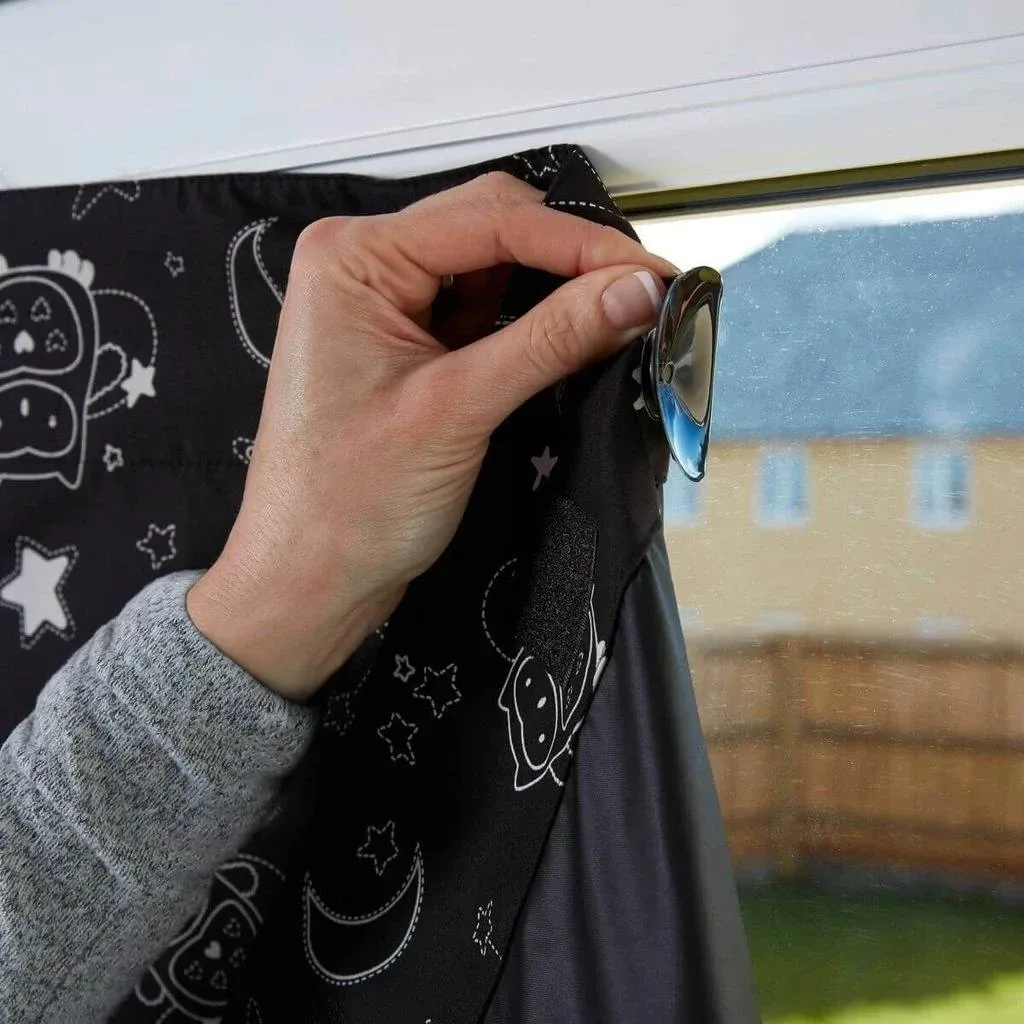
- Blackout solution. Portable travel blackout blinds with suction cups cover rented-crib corners and thin hotel curtains. Dark rooms trigger melatonin; slivers of dawn light end mornings early.
- White noise machine. A small battery-powered portable sound machine masks hallway noise, siblings, and street sound. Per manufacturer specifications, most travel models run 8 to 20 hours per charge.
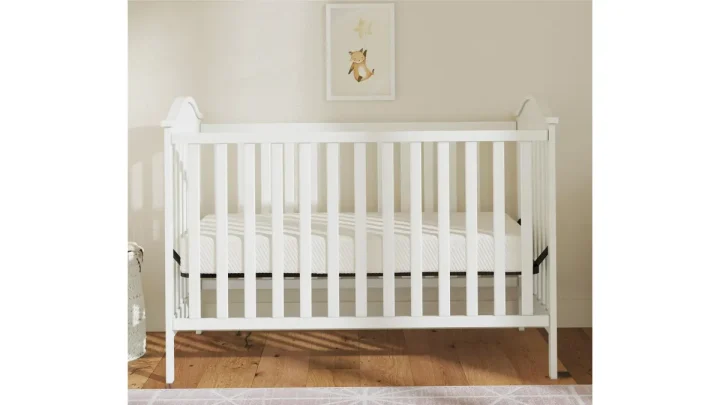
- A safe sleep surface. A certified travel crib or playard meeting ASTM standards (look for JPMA certification) beats an unknown hotel crib. If you use a hotel crib, check the mattress fit and search the CPSC database for recalls before your baby sleeps in it.
- The comfort objects. Same sleep sack, same lovey, same pajama routine. Babies cue off sensory sameness more than location.
One skip worth mentioning: never use melatonin supplements or sedating antihistamines like diphenhydramine (Benadryl) to force adjustment. The FDA has warned about dosing variability in melatonin gummies, and sedating medications aren't approved for infant sleep in any travel context. Light and timing do the job safely.
Five Mistakes That Turn a Bad First Night into a Bad Entire Week
These five errors show up in almost every rough travel story we've reviewed, and every one is avoidable.
- Letting the crash nap happen. A three-hour nap at 9 a.m. feels merciful. It guarantees a 2 a.m. party. Cap it at 60 to 90 minutes and wake your baby.
- Keeping the room dim all day. If your baby never sees real morning light, their clock has no reason to move. Twenty minutes outdoors beats four hours near a window.
- Dropping the bedtime routine. A bath, book, and feed sequence is your portable sleep cue. Skip it and every night becomes an experiment.
- Introducing new sleep crutches. Contact naps, stroller rocking, and car-seat bouncing work on vacation. They're also hard to unwind at home. Use them sparingly, not by default.
- Trading shifts with no plan. Parents running on jet lag default to inconsistent responses. Agree on the 3 a.m. protocol before you land: dark room, boring interactions, feed only if needed.
Getting Home: Re-Adjusting Without Losing Your Sleep Training Progress
The return trip is often harder than the outbound one. You're tired, the suitcase is unpacked, and motivation is gone. Fight that drift for three to five days.
If you flew east to come home, pull bedtime earlier by 15 to 30 minutes per day. If you flew west, push it later by the same amount. Re-anchor the morning wake time immediately, even if that means a 5:45 a.m. start for a couple of days.
Morning light plus a fixed wake time is what rebuilds the schedule.
Expect regression in night wakings for the first two or three nights. Respond exactly as you did during training, and most sleep-trained babies settle back within a week. If wakings persist past 10 to 14 days, that's a schedule problem, not travel damage.
Revisit wake windows rather than restarting sleep training from zero.
FAQs
How long does it take a baby to adjust to a new time zone?
Plan on roughly one day per time zone crossed. A two-hour trip adjusts in a couple of days. A six-hour transatlantic shift typically takes five to seven days.
Younger babies on flexible schedules often adapt faster than rigidly scheduled toddlers.
Should I keep my baby on home time during a short trip?
If you're staying three days or fewer, keeping home time often works better. This is especially true for westward trips, where your baby's early bedtime falls at a reasonable local hour. For longer stays, switching fully to destination time prevents a second readjustment at home.
Is it safe to give my baby melatonin for jet lag?
No. Melatonin supplements aren't approved for infant sleep, and the FDA has flagged wide dosing variability in gummy products. Sedating antihistamines like Benadryl carry similar risks and aren't recommended for sedation at any age under two.
Morning light and schedule shifts do the same job safely.
What's the best flight time when traveling with a baby across time zones?
For eastward long-haul trips, an evening departure lets your baby sleep a stretch in the air and land in the morning. For westward trips, a daytime flight lets you cap naps and land in the evening for a natural bedtime. Book bassinet seats early if your baby is under the airline's weight limit, usually around 20 pounds (9 kg).
Do blackouts and white noise really matter for baby jet lag?
Yes, more than most parents expect. Darkness triggers melatonin release, and even a strip of dawn light through hotel curtains can end the night at 4:30 a.m. White noise masks unfamiliar hallway and street sounds.
Together they recreate the home sleep environment, which shortens adjustment.
My baby adjusted fine going but is a mess after returning home. What now?
That's common, especially after eastward returns. Re-anchor the morning wake time, get outside within an hour of waking, and shift bedtime in 15 to 30 minute steps toward normal. Most babies bounce back within a week.
If night wakings persist past two weeks, check wake windows before assuming sleep training is lost.

Similar Posts