Baby on the Move? How to Keep Their Sleep Space Safe
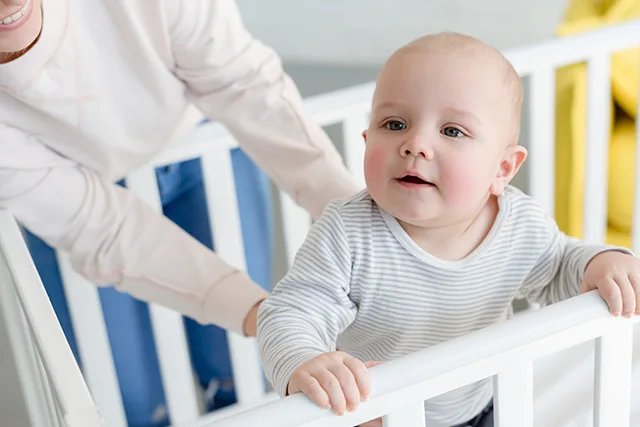
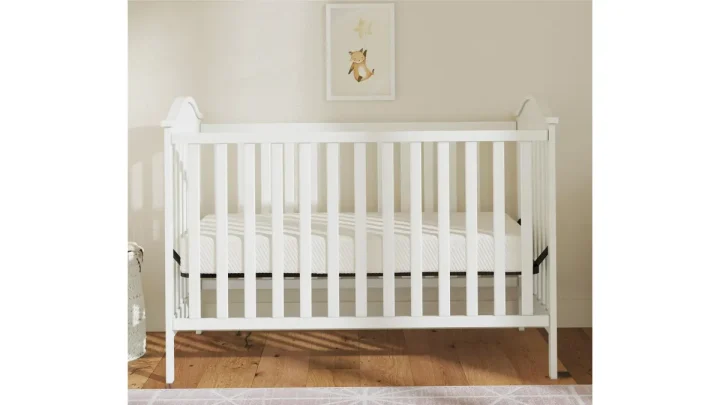
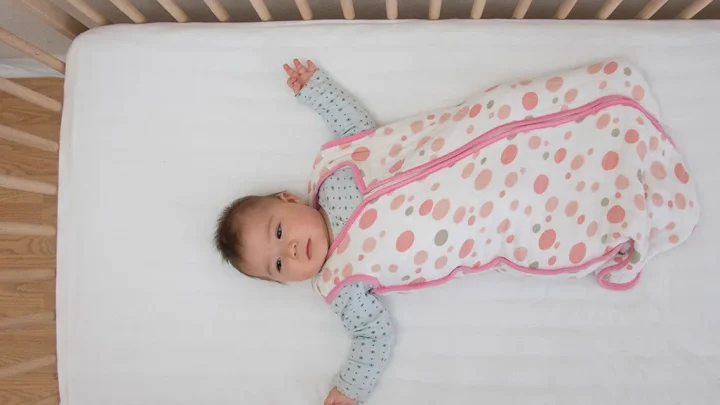
One day your baby sleeps peacefully in a tidy crib. A few weeks later, they're rolling across the mattress, dragging their legs over the rail, and trying to climb like a tiny escape artist. That shift is exactly when you need to rethink how to maintain a safe sleep space when baby becomes mobile, because the setup that worked at two months becomes risky fast.
Here's the part most parents miss: safe sleep rules don't change with milestones, but the adjustments around them do. The American Academy of Pediatrics has held its core guidance steady for years, and as of 2026 it still calls for a bare crib, a firm flat mattress, and back-sleeping on every sleep. What changes is the hardware around it.
The mattress height, the swaddle, the bassinet, even the furniture near the crib. Each new skill your baby learns triggers a specific adjustment, and the next section maps it all out.
Image source: Web (Bing) / oviahealth.com (Web image (fair-use with source credit))
Why Mobility Changes Everything About Safe Sleep (And Why Outdated Advice Is Dangerous)
A mobile baby can roll, scoot, and eventually stand. That means they can move toward hazards instead of away from them. A blanket that sat harmlessly at the foot of the crib at three months becomes a face-covering risk at five months, once rolling starts.
The stakes are real. Per CPSC data, crib-related deaths among infants are dominated by soft bedding and entrapment, not by freak accidents. Older advice makes it worse.
Well-meaning grandparents often recommend bumpers, wedges, or sleep positioners. All of those are now off the table. Crib bumpers are actually banned from sale in the US under the Safe Sleep for Babies Act of 2022.
So the rule of thumb is simple: the more your baby moves, the emptier and more adjusted the sleep space needs to be. Mobility doesn't add gear. It removes it.
Quick Answer
To maintain a safe sleep space when baby becomes mobile, stop swaddling at the first sign of rolling, keep the crib bare with only a firm mattress and fitted sheet, and lower the mattress once your baby sits or pushes up. Move it to the lowest setting when they pull to stand. Anchor nearby furniture, remove cords and climbable objects, and transition to a toddler bed if climbing starts.
Check that your crib meets current CPSC standards.
Milestone Map: What Each New Skill Means for the Sleep Space
Think of each milestone as a trigger for one specific change. Here's the map in order.
| Milestone | What changes | Why |
|---|---|---|
| First roll (any direction) | Drop the swaddle immediately | A swaddled baby who rolls face-down can't reposition |
| Sitting independently | Lower the mattress one level | Sitting babies launch themselves over rails |
| Pushing up on hands and knees | Drop mattress lower, remove anything climbable | Kneeling babies use objects as step stools |
| Pulling to stand | Lowest mattress setting, bare crib | Standing babies reach and tumble |
| Climbing out | Move to a toddler bed | Falls from the top rail cause serious injury |
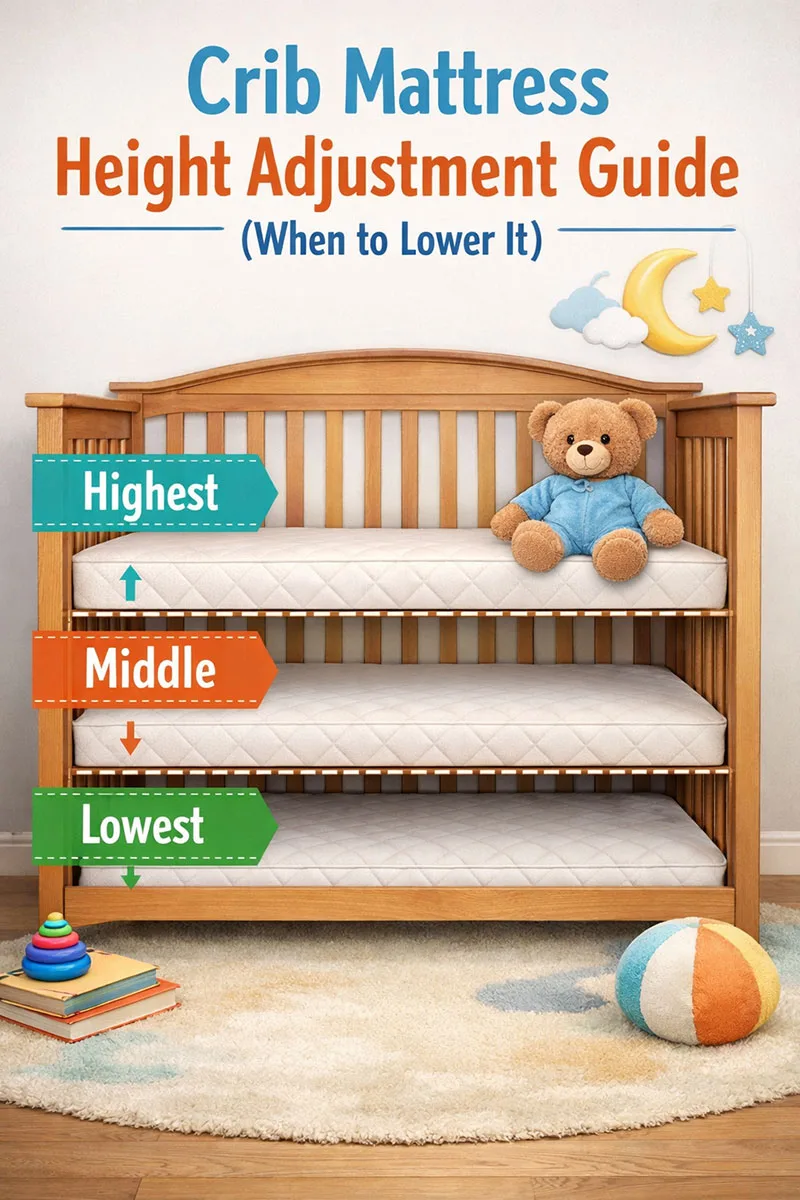
Image source: Web (Bing) / unique-baby-gear-ideas.com
Notice the pattern. Each skill arrives earlier than parents expect, and some babies skip straight from rolling to pulling up. Check the crib height after every well-baby visit, because milestones move quickly around the 4-to-9-month window.
Step-by-Step: Adjusting the Sleep Space for a Mobile Baby
Work through these steps in order. Each takes minutes, and together they cover most mobile-baby risks.
- Unswaddle the night rolling starts. Switch to a sleep sack sized by weight, not age. Manufacturer sizing specs confirm weight-based fit prevents loose neck openings.
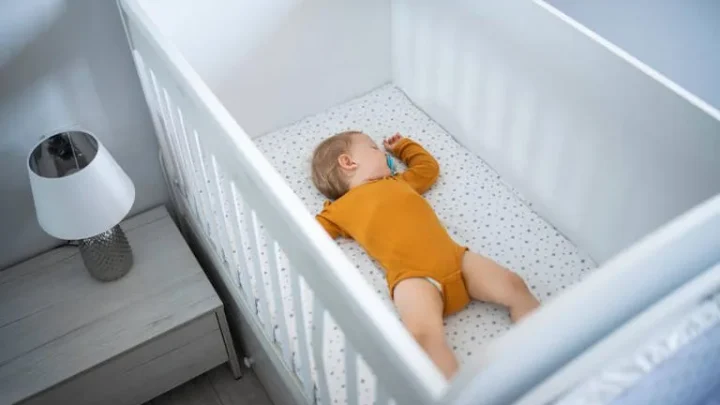
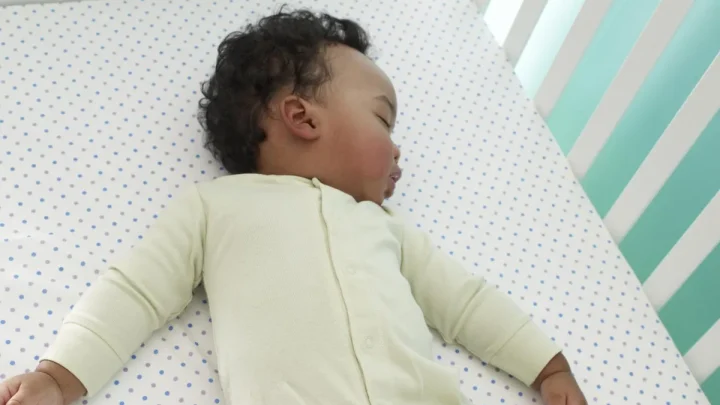
- Strip the crib to mattress plus fitted sheet. No pillows, blankets, loveys, or bumpers. If you worry about cold hands, use footed pajamas under the sleep sack.
- Lower the mattress. Once your baby sits or pushes up on hands and knees, drop the mattress so the top rail sits above their chest when standing.
- Clear the crib's surroundings. Move changing tables, bookshelves, and dressers at least an arm's length away. Anchor tall furniture with anti-tip straps per ASTM F2057.
- Fix the cords. Use cordless window coverings or tie cords well out of reach. The CPSC considers corded blinds one of the top hidden strangulation hazards in nurseries.
- Retire the bassinet. Most bassinets carry a 15-to-20-pound limit and a hard "stop at rolling" rule. Check your model's manual.
The Wrong Products Parents Reach For (And Safer Swaps)
Marketing makes this stage confusing. Aisles full of "sleep helpers" exist precisely because parents of mobile babies are tired and anxious. Most of them add risk instead of removing it.
Here's the honest breakdown:
| Tempting product | Why it's a problem | Safer swap |
|---|---|---|
| Crib bumpers (even mesh) | Suffocation and entrapment risk; fabric bumpers banned since 2022 | Bare crib slats |
| Sleep positioners and wedges | babies roll off or face into them | Flat firm mattress, back-sleeping |
| Weighted blankets or sleep sacks | Pressure on a small chest, can't be kicked off | Regular TOG-rated sleep sack |
| Loose comforters "for warmth" | Face-covering hazard | Footed pajamas plus sleep sack |
| Wearable movement monitors | False alarms, no proven SIDS benefit | Standard audio or video monitor |

Image source: Web (Bing) / etsy.com
A good sleep sack is the one product worth buying at this stage. Pick the TOG rating to match your nursery temperature: roughly 0.5 for warm rooms around 75°F, 1.0 to 1.5 for the 68-to-74°F range, and 2.5 for rooms below 65°F. The American Academy of Pediatrics sleep guidance supports wearable blankets as the safe replacement for loose bedding.
One swap, and the whole blanket question disappears.
Common Mistakes That Create Real Risk
Even careful parents slip on the same few things. These are the errors we see reported most often, and each one has a simple fix.
- Re-adding comfort items during sleep regressions. A rough week of wakings tempts parents to toss in a lovey or blanket. Don't. Most sleep regressions at 4 and 8 months trace back to milestones, not missing gear.
- Trusting a hand-me-down bassinet past its limits. A 17-pound roller in a bassinet rated for 15 pounds is a tip-over waiting to happen. Check the manual, not the vibe.
- Skipping furniture anchors. Dressers and bookshelves near the crib become climbing frames. Per CPSC data, a child dies roughly every two weeks in the US from furniture tip-overs.
- Leaving the monitor cord within reach. A cord draped over the crib rail is a strangulation hazard. Route cords behind furniture, at least three feet from the crib.
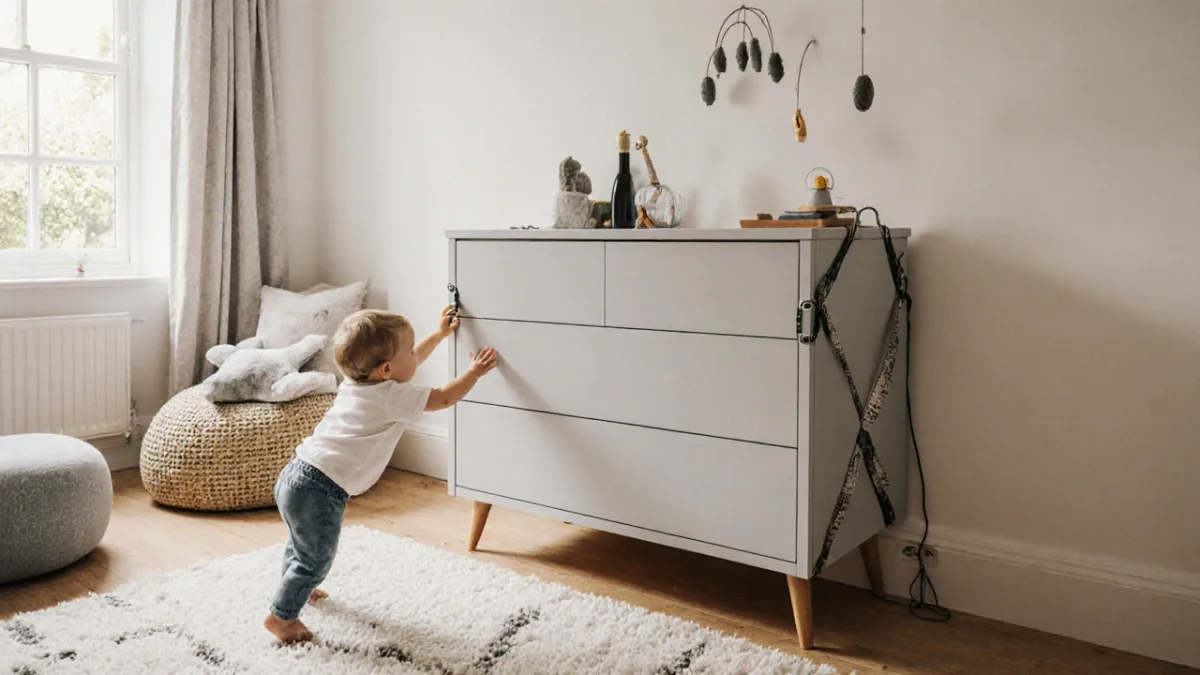
Image source: Web (Bing) / beautifulbowsw12.co.uk
One more quiet mistake: loose hardware. Babies shaking the crib rail works bolts loose over months. Give the frame a quick wiggle test at every mattress adjustment.
When Your Baby Stands, Cries, or Gets Stuck: What to Actually Do
Yes, you should go in, but how you respond matters more than how fast. Here's the playbook for the three most common midnight scenarios.
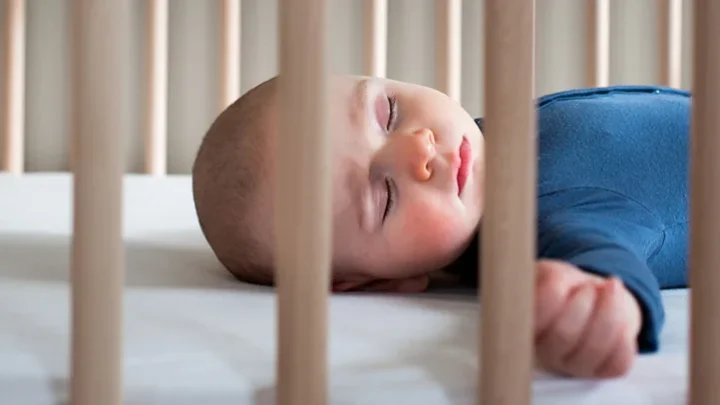
Baby rolls onto their tummy and cries. If they rolled there themselves, the AAP says you don't need to flip them back. Let them try. If they're genuinely stuck and furious, roll them onto their back calmly and leave.
Keep your hands off their position once they can roll both ways.
Baby is standing and screaming at 2 a.m. Go in, lay them back down with minimal words and light, and leave. If they pop right back up, that's normal for the first week or two after a new skill. Do not add pillows or bumpers to "stop the standing." Consistency wins, usually within 7 to 14 nights.
Baby gets an arm or leg wedged in the slats. Standard cribs built to the 2 3/8-inch slat rule rarely trap a limb fully. If it happens repeatedly, measure your slats. Wider gaps mean the crib predates current CPSC standards and should be retired, not patched with padding.
The emotional part is harder than the mechanics. Hearing your baby fuss in a bare crib feels wrong, but intervention rolling and re-positioning every ten minutes teaches neither of you anything useful.
Safety Standards and Recalls Every Parent Should Check
A safe sleep space starts with hardware that was legally required to meet real standards. Here's what applies as of 2026.
| Standard | What it covers |
|---|---|
| CPSC 16 CFR 1219/1220 | Full-size and non-full-size cribs: slat strength, hardware, mattress support |
| ASTM F1169 | Crib performance and testing requirements |
| ASTM F406 | Playards and non-full-size cribs |
| Safe Sleep for Babies Act (2022) | Bans crib bumpers and inclined sleepers from US sale |
| ASTM F2057 | Furniture tip-over restraint requirements |
Three practical checks. First, buy new or verify the model. Drop-side cribs were banned from US sale in 2011, and secondhand cribs built before the 2011 federal standard often fail current tests.
Second, search your crib model on the CPSC recall database before every big adjustment. Recalls on mattress supports and hardware do happen, and registration cards exist for a reason. Third, look for JPMA certification when buying new gear.
It signals third-party verification against ASTM standards, not just manufacturer claims.
FAQs
When should I lower the crib mattress?
Lower it one level when your baby can sit independently, and move it to the lowest setting the moment they push up on hands and knees or pull to stand. As a rule, the mattress should sit at least at chest height below the top rail with your baby standing in the crib.
Do I have to stop swaddling as soon as my baby rolls?
Yes, immediately, even if the roll only happened once. A swaddled baby who ends up face-down cannot use their arms to push away or reposition, which raises suffocation risk. Switch to a weight-appropriate sleep sack that leaves both arms free.
Some babies roll surprisingly early, around 3 to 4 months.
Is it safe for my baby to sleep on their stomach now that they can roll?
If your baby rolls to their stomach independently, you don't need to flip them back during the night, per AAP guidance. Always place them on their back to start every sleep, keep the crib bare, and stop swaddling. Once rolling is consistent in both directions, tummy sleeping on a firm bare mattress is acceptable.
When should I move my baby out of the crib into a toddler bed?
Move to a toddler bed when your baby climbs out, or when their chest is level with the top rail, whichever comes first. That's typically between 18 months and 3 years, but strong climbers do it sooner. Once climbing starts, the fall risk outweighs any crib benefit.
Are mesh crib liners safe for a mobile baby?
No. Even mesh liners can come loose, create entrapment gaps, or encourage climbing, and the AAP advises against all liners. The bare crib remains the safest option.
Modern crib standards make slat entrapment rare, and arms or legs poking through slats is generally harmless.
Can my baby have a blanket or lovey in the crib yet?
Not yet. Keep the crib bare until at least 12 months of age, per AAP recommendations. After the first birthday, a small thin blanket becomes lower risk, but many families simply stick with sleep sacks since they can't be kicked off and keep temperature regulation simple.
Your Mobile-Baby Sleep Space Checklist
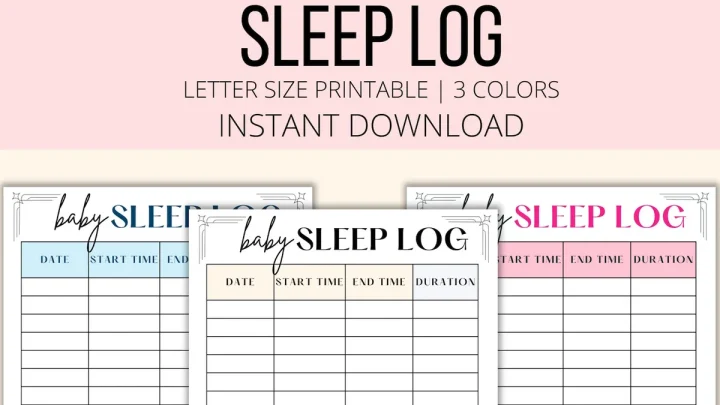
Print this, tape it inside the nursery closet, and re-run it after every milestone or well-baby visit.
- Swaddle retired at first roll
- Crib bare: firm mattress, fitted sheet, nothing else
- Mattress at the correct height for the current milestone
- Bassinet retired if weight or rolling limits are hit
- Sleep sack sized by weight and matched to room temperature
- Dresser, shelves, and changing table anchored and pushed away from the crib
- Cords for monitors and blinds fully out of reach
- Crib model checked against the CPSC recall database
- Frame wiggle-tested and hardware tightened
- Toddler bed transition planned before the climbing stage
Do these ten things and you've covered the risks that actually matter. A mobile baby needs less in their sleep space, not more. Trust the empty crib.

Similar Posts