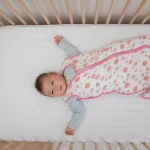
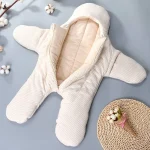
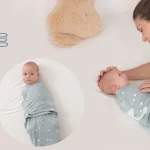
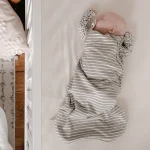
Why Weighted Swaddles Aren’t Safe for Baby Sleep
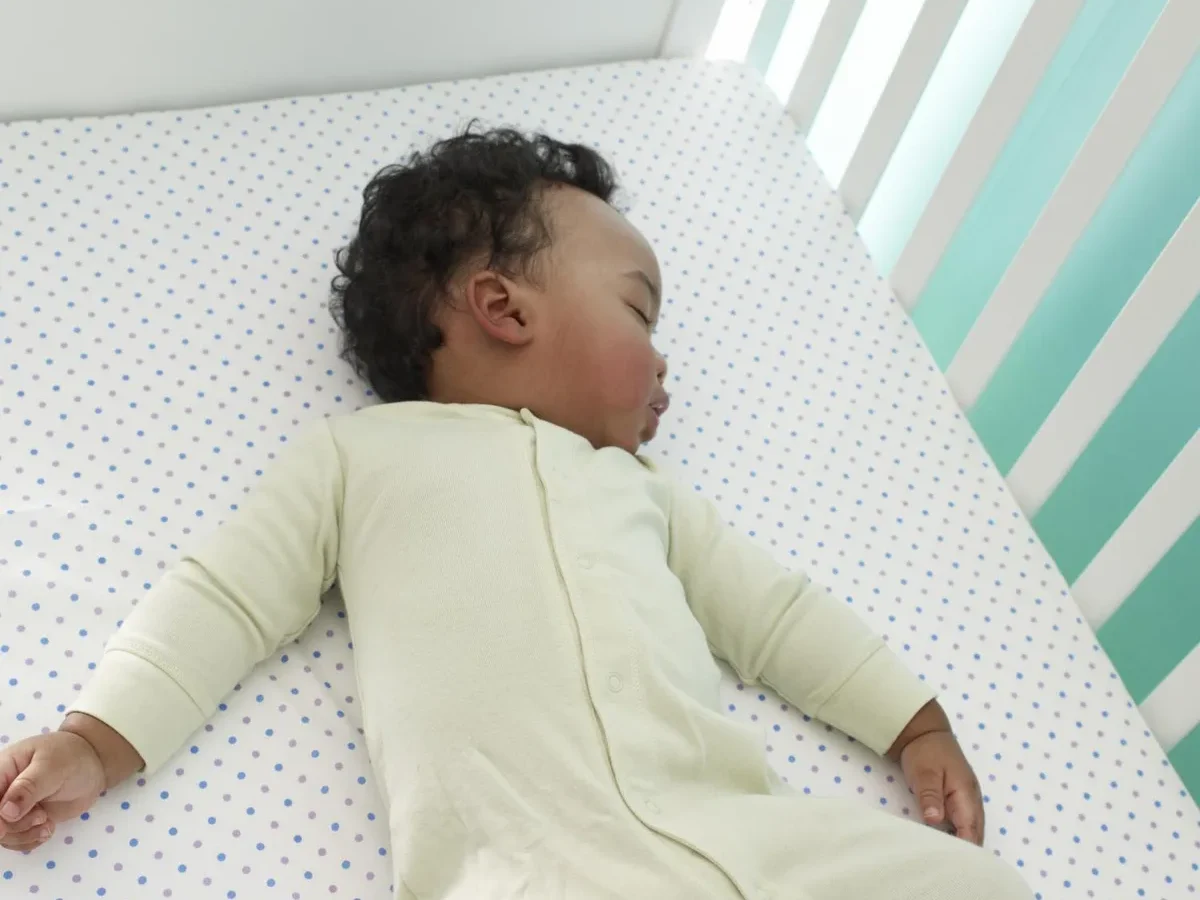
If you've registered for baby gear lately, you've probably seen weighted swaddles everywhere. They promise better sleep, and they're sold by major retailers with zero warning labels. The reason experts keep explaining why weighted swaddles are not recommended for infant sleep comes down to one thing: added weight on a baby's chest makes breathing harder, not easier.
In our research, the guidance is unusually clear for a baby-safety topic. The American Academy of Pediatrics (AAP) updated its safe sleep policy in 2022 to specifically advise against weighted blankets and weighted sleepers for infants. That matters, because as of 2026 these products still sit on store shelves and gift registries without a dedicated federal safety standard.
Quick Answer
Why weighted swaddles are not recommended for infant sleep comes down to basic physiology. Added weight rests on a baby's chest and restricts breathing effort. The weight also pins a baby's arms so they can't reposition if their airway gets blocked.
The American Academy of Pediatrics advises against weighted sleep products for infants. No independent safety standard currently exists to test them for sleep use.
What Weighted Swaddles Actually Are (And Why the Marketing Sounds So Convincing)
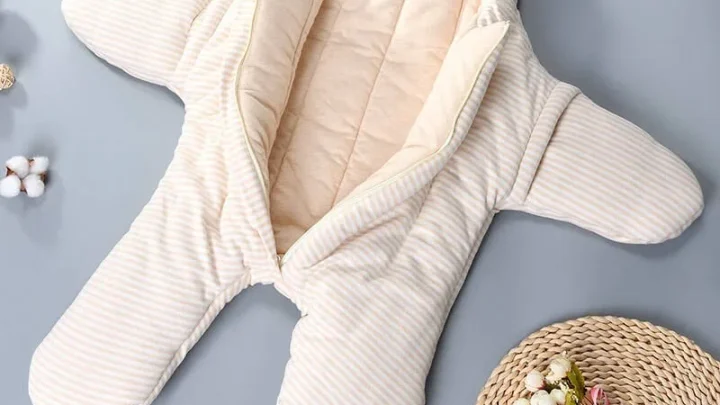
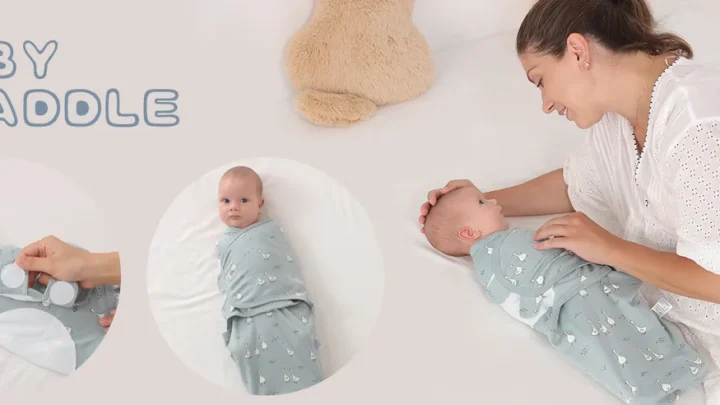
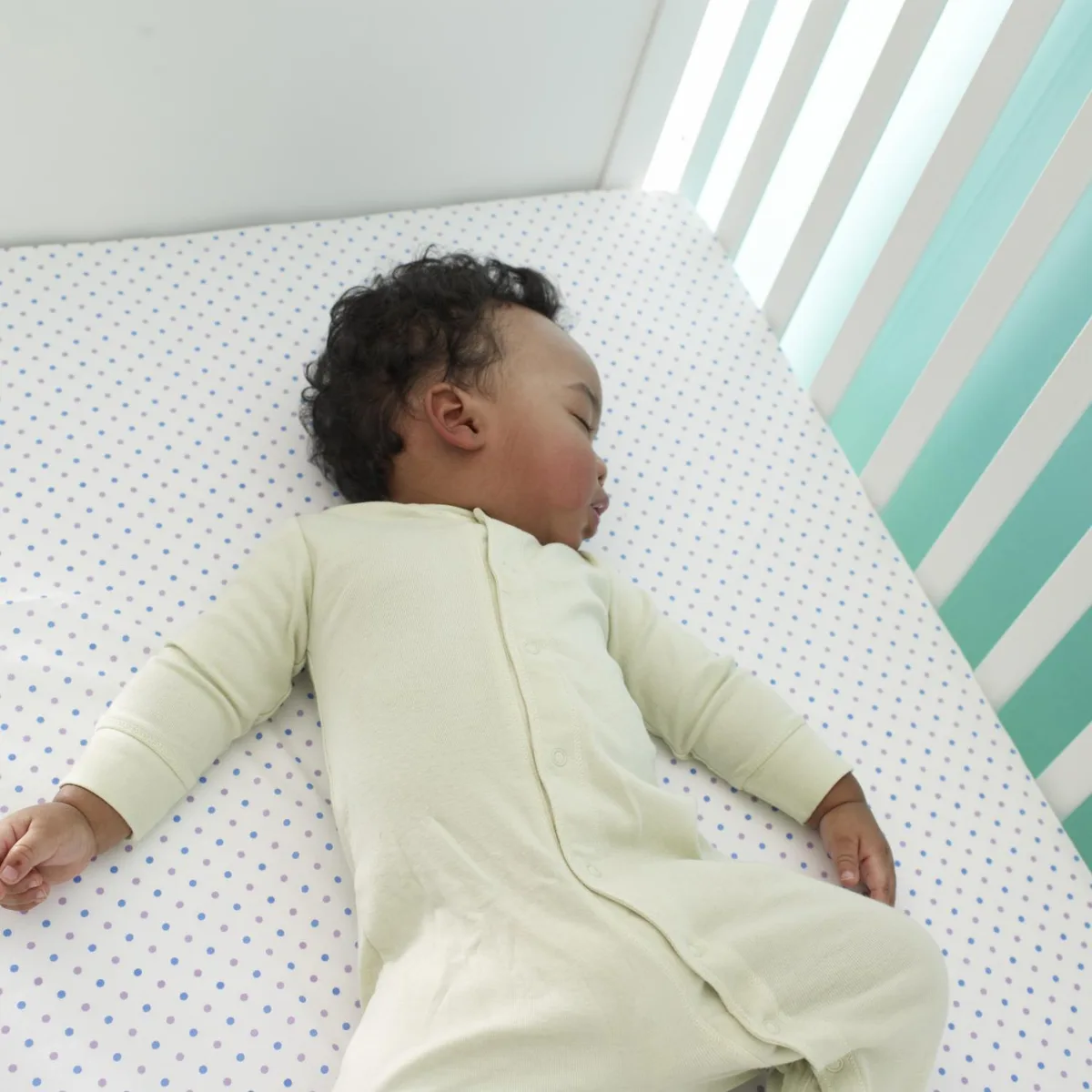
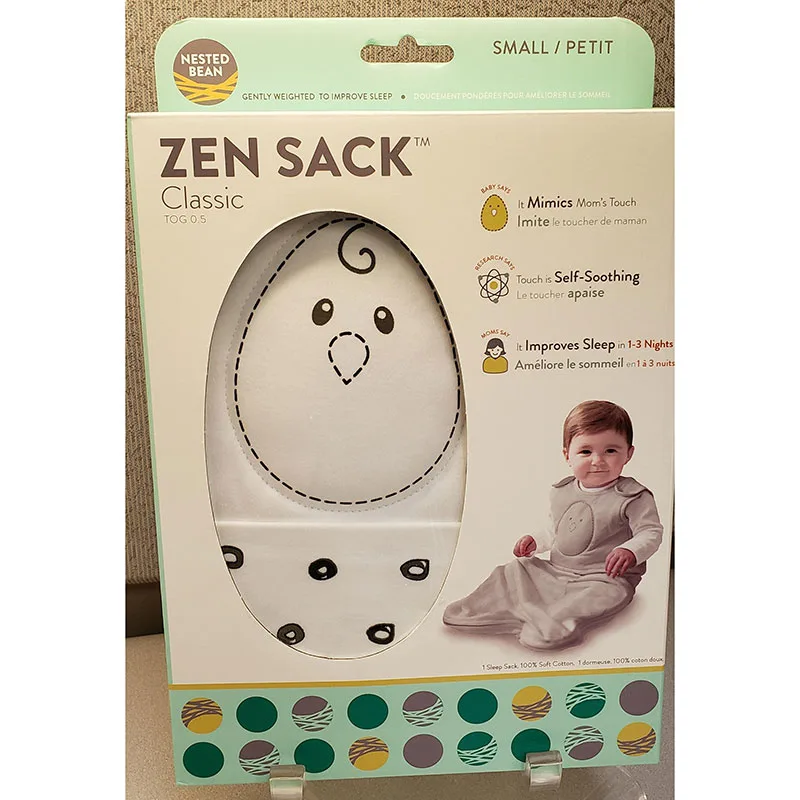
A weighted swaddle is a wearable infant blanket with added material sewn into the fabric. Most brands use micro-beads, glass beads, or weighted panels placed across the chest and torso. The category grew out of the adult weighted blanket trend, and brands like Nested Bean (makers of the Zen Swaddle) and Dreamland Baby built large followings on it.
The pitch sounds scientific. Brands talk about "deep pressure stimulation," a real concept from occupational therapy where gentle pressure calms the nervous system. What the marketing skips is that deep pressure research involves adults and older children, not newborns on their backs in a crib.
Manufacturer specifications indicate most of these products add between 1 and 5 pounds. That may not sound like much until you do the math against a 7-pound newborn. We'll get to that shortly.
The convincing part isn't malice. It's familiarity. Parents already know weighted blankets help them sleep, so a baby version feels like common sense.
Retail registries reinforce it, and verified buyer reviews report calmer babies and longer stretches. Most of those reports, though, describe supervised calming while a parent holds the baby awake. That's a different situation from an unsupervised infant sleeping alone.
The Real Safety Risks: Breathing, Overheating, and Repositioning
There are three distinct risks, and they stack.
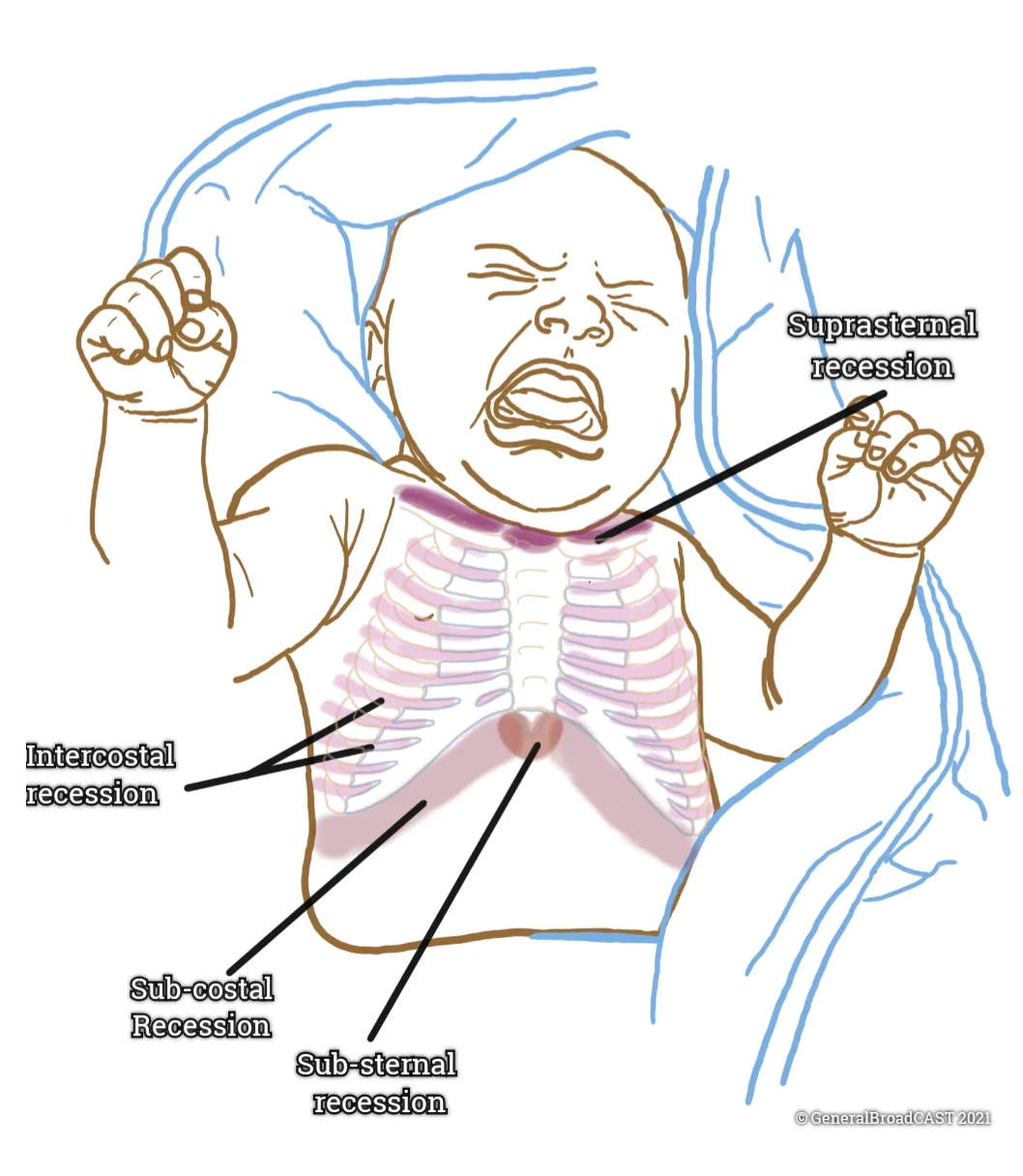
Risk one: restricted breathing. Newborns breathe using their diaphragm, and their chest walls are soft and pliable. Weight across the chest makes every breath more work. Pediatric research on chest wall compression shows that even modest external load can reduce a young infant's breathing effort.
Babies won't cry out or struggle visibly. They just work harder, quietly, all night.
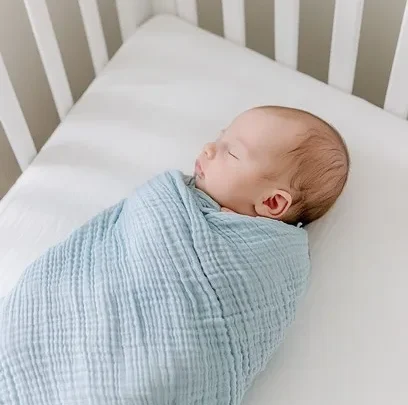
Risk two: no repositioning. Unweighted swaddles already restrict a baby's arms, which is why safe swaddling has strict hip and arm rules. Add weight to that, and a baby who ends up face-down or with an airway obstruction can't push free. A swaddled baby can't use hands to move fabric away from the face.
Weight makes that worse.
Risk three: overheating. Many weighted products use thicker, multi-layer fabric. Overheating is a known risk factor for SIDS. Add a heavier TOG rating (a measure of fabric insulation) on top of a warm nursery, and you've stacked another risk onto an already risky product.
| Risk | What happens | Why babies can't compensate |
|---|---|---|
| Chest pressure | Harder breathing effort | Soft chest wall, diaphragm breathing |
| Restrained movement | Can't reposition if airway blocked | Arms pinned, no trunk strength yet |
| Overheating | Elevated SIDS risk factor | Babies can't shed blankets or layers |
Here's the part that keeps pediatricians up at night: a baby in breathing distress from chest weight may not make a sound. Quiet isn't always good news in a nursery.
What the AAP, CPSC, and Safe Sleep Research Actually Say
The authority on this question is unambiguous, so let's walk through it.
The AAP's Task Force on SIDS publishes the safe sleep policy most pediatricians follow. In its 2022 update, the AAP specifically advised against weighted blankets, weighted sleepers, and weighted swaddles for infants. This wasn't a soft suggestion.
It sits inside the same policy statement that covers crib bumps, positioners, and inclined sleepers.
The Consumer Product Safety Commission (CPSC) has also moved on weighted infant products. The agency has proposed rules covering infant sleep products, and weighted infant sleepwear has drawn specific scrutiny. As of 2026, there's still no dedicated federal safety standard that tests these products for infant sleep use.
That's the core problem: a product can be sold without ever proving it's safe for the exact use it's marketed for.
You can review the full federal guidance on the NIH Safe to Sleep campaign, which consolidates AAP recommendations for parents.
Independent research backs the position. A 2021 peer-reviewed study published in the journal Pediatrics examined a popular weighted swaddle and found measurable effects on infant heart rate and oxygen levels during sleep. Small sample, yes.
But the direction of the finding matched what physiologists predicted.
One more thing worth knowing: the AAP guidance covers sleep. Nobody's telling you the product is dangerous when you're awake, watching, and holding your baby. The risk is unsupervised sleep, which is exactly what the packaging implies these products are for.
The "10% Rule" Lie: Where That Advice Comes From and Why It Doesn't Apply to Babies
Here's the claim you'll see in every product listing: the weight equals "about 10% of your baby's body weight," just like adult weighted blankets. It sounds like a real standard. It isn't.
The 10% guideline for adults comes from occupational therapy practice with weighted blankets, and even there, the evidence base is thin. Manufacturers borrowed the number and applied it to infants because it makes the products sound clinically grounded.
The math falls apart fast. Ten percent of a 150-pound adult is 15 pounds spread across a large torso. Ten percent of a 7-pound newborn is 0.7 pounds, yet most weighted swaddles add a flat 1 to 2 pounds regardless of sizing.
On a small newborn, that can approach 15 to 25% of body weight concentrated on the chest.
| Product type | Body weight | Added weight | Proportional load |
|---|---|---|---|
| Adult weighted blanket | 150 lbs | ~15 lbs | ~10% |
| Infant weighted swaddle | 7 lbs | 1 to 2 lbs | ~14 to 28% |
Then there's the surface area problem. An adult blanket distributes weight across hundreds of square inches. A swaddle panel concentrates it on a chest the size of your palm.
Proportionally, a baby under one of these panels carries far more load than any adult ever would.
If a number only appears in marketing copy and never in a safety standard, treat it as marketing. That's exactly what it is here.
Safer Alternatives That Actually Help (From Swaddles to Sleep Sacks to Sleep Routines)
The good news is you don't need weight to get a baby to sleep well. Every tool below is either endorsed by the AAP or firmly inside safe sleep practice.
Traditional swaddling. Done right, a plain swaddle calms the Moro reflex just as effectively as any weighted product. Keep it snug at the arms, loose at the hips, and stop the moment your baby shows signs of rolling.
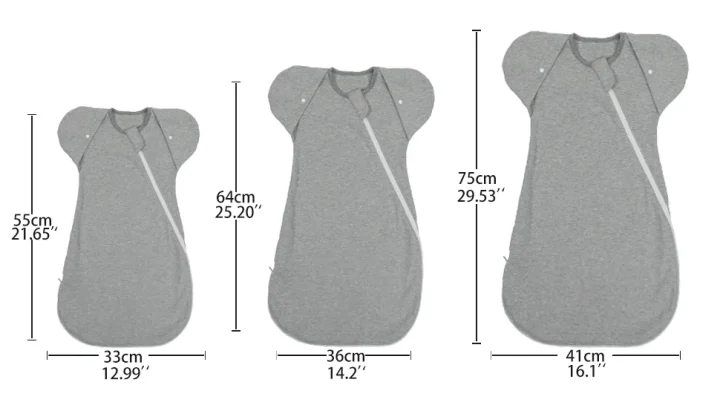
Transition swaddles. Once rolling starts, move to a one-arm-out or arms-free transitional design. These are unweighted and widely available.
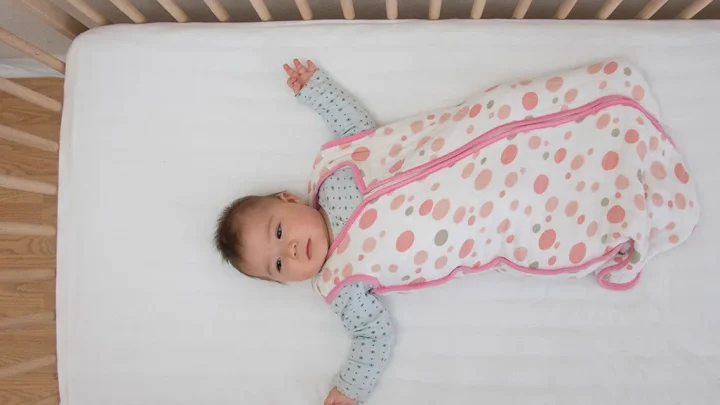
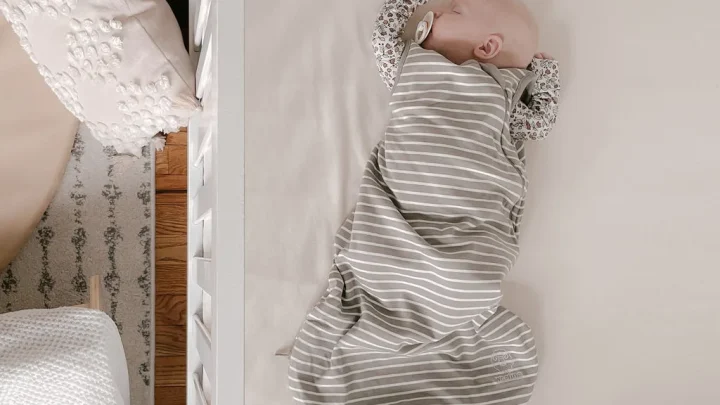
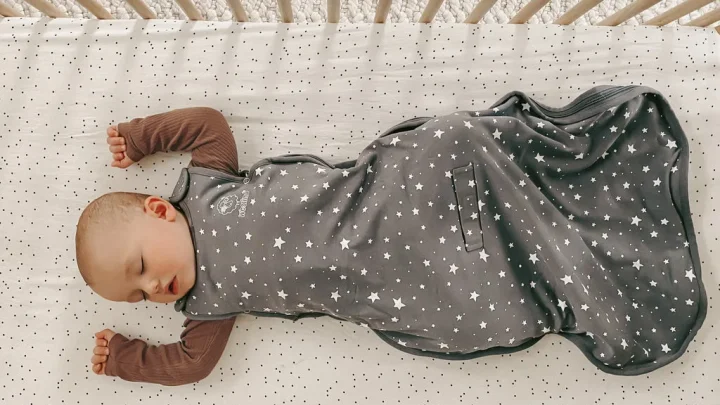
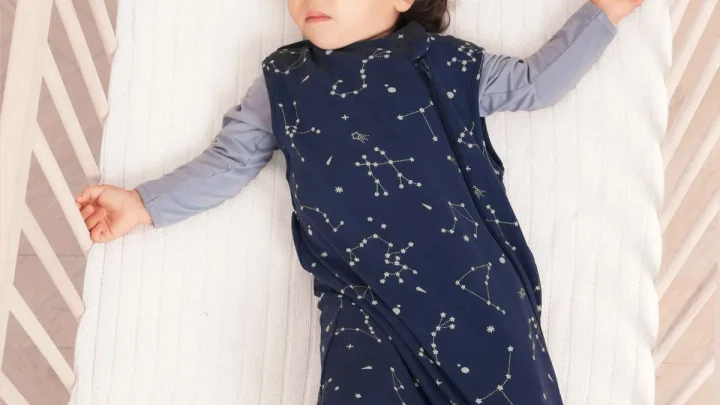
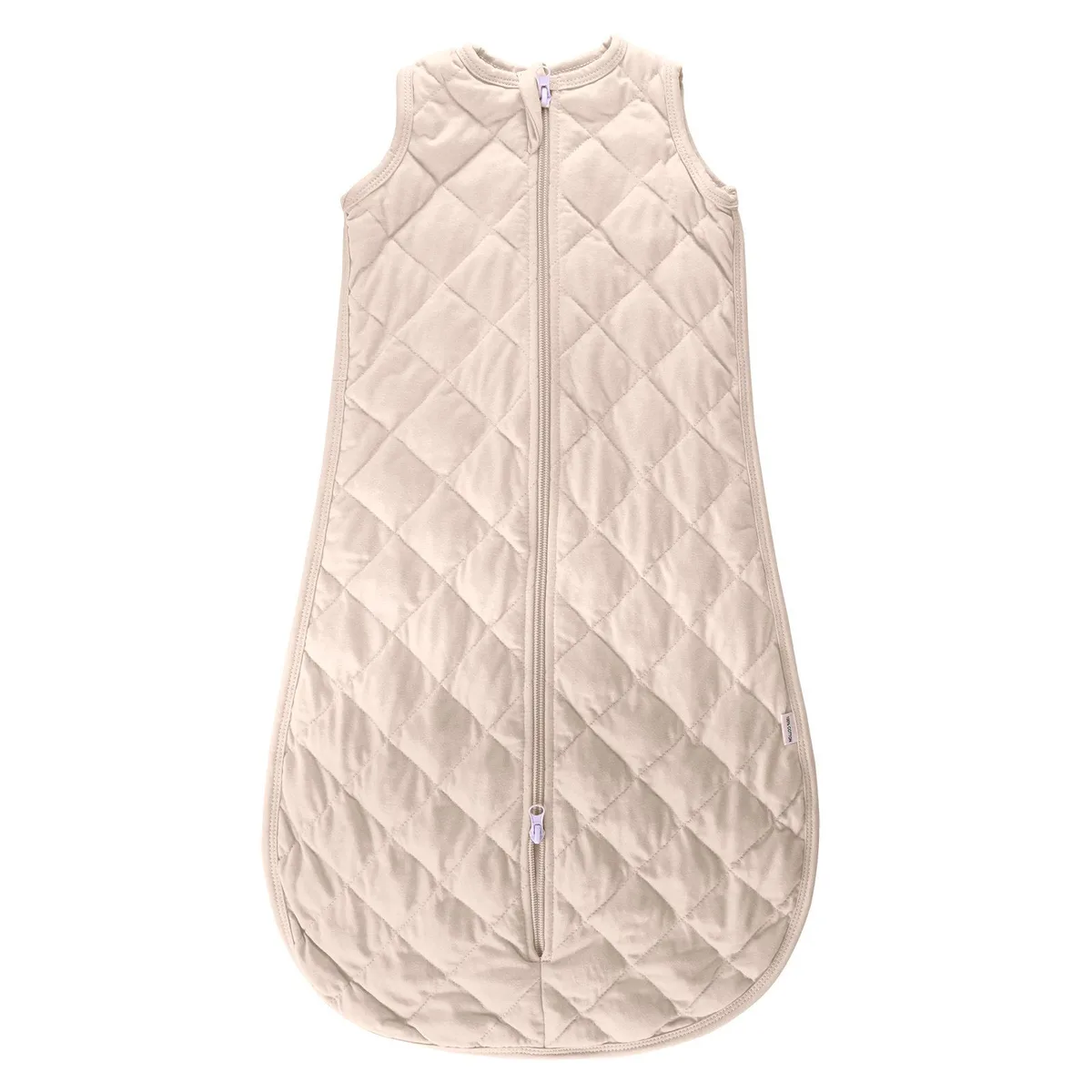
Wearable blankets. A regular sleep sack is the standard post-swaddle step. It keeps a baby warm with no loose bedding and no chest load. Pick the right TOG rating for your room temperature instead of adding weight.
Everything else that actually moves the needle:
- White noise at a low, steady volume, placed away from the crib
- A pacifier at sleep onset, which research links to reduced SIDS risk
- Room-sharing (not bed-sharing) for at least the first six months
- A consistent wind-down routine: feed, dim lights, down drowsy but awake
If your baby genuinely fights sleep despite all of this, that's a pediatrician conversation, not a product problem. Reflux, allergies, and other issues often masquerade as "bad sleep," and no amount of added weight fixes a medical cause.
Common Mistakes Exhausted Parents Make With Weighted Sleep Products
Most parents using these products aren't being careless. They're being marketed to at 3 a.m. These are the traps we see most often.
Trusting the packaging over the pediatricians. If a product says "doctor developed" or "safe for sleep," check who actually endorses it. AAP guidance outweighs any brand claim.
Using it awake, then drifting off. This is the big one. You hold your baby for a calm nap, you get drowsy, and suddenly everyone's asleep with the weighted garment on. If you want to use one for supervised soothing, set an alarm and transfer your baby out of it before crib time.
Accepting registry gifts blindly. These items show up at baby showers constantly. Many parents never read up on them at all.
Doubling up on warmth. A thick weighted sack plus a onesie plus a warm room stacks overheating risk. Babies need one more light layer than you'd wear, not three.
Missing the recall and rulemaking news. The CPSC continues reviewing weighted infant products, so check the agency's recall database before reusing hand-me-downs or storage-bin purchases.
Delaying the swaddle transition. Weight or no weight, swaddling must end at the first sign of rolling. If a weighted product made your baby "dependent" on extra pressure, wean to a regular sleep sack rather than going cold turkey to nothing.
When to Call Your Pediatrician, and Questions to Ask at Your Next Visit
Call your pediatrician right away if your baby has already slept with a weighted swaddle and shows any of the following: fast or labored breathing, unusual lethargy, poor feeding, bluish tint around the lips, or excessive sweating during sleep. Most babies will be fine, but these symptoms deserve a same-day check.
Ask for an urgent evaluation if you ever found your baby face-down or wedged while wearing one.
For routine visits, bring these questions:
- "Is my baby's startle reflex normal for this age, and when does it fade?"
- "When exactly should we stop swaddling and switch to a sleep sack?"
- "Our nursery runs warm. What TOG or layering do you recommend?"
- "Is there a medical reason my baby sleeps this poorly?"
That last question matters more than parents realize. Chronic night waking, arching during feeds, or congestion at night can point to reflux, milk protein sensitivity, or airway issues. Solving the underlying problem beats any sleep product on the market.
If you need reliable general guidance between visits, the CDC's SUID prevention page mirrors the federal safe sleep recommendations and stays current.
Frequently Asked Questions
Are weighted swaddles safe for supervised naps?
The AAP advises against weighted sleep products for infant sleep, supervised or not. If a baby falls asleep mid-snuggle wearing one, transfer them to the crib without it. Supervision reduces risk but doesn't remove the chest pressure problem.
Treat any sleep in one of these garments as a mistake to correct, not a safe habit.
What about weighted products for babies with special needs, like autism or hypotonia?
Older children with sensory processing needs sometimes benefit from deep pressure therapy, but that's a therapist-directed decision. Weighted products are not appropriate for infants under 12 months, period. If your child has a diagnosed condition, ask an occupational therapist for age-appropriate guidance before using any weighted item.
Why are weighted swaddles still sold if they're not recommended?
The short answer: no federal safety standard currently prohibits them. The CPSC has scrutinized weighted infant sleepwear, and proposed infant sleep rules are still evolving. Products can be marketed and sold until a rule formally restricts them.
That regulatory gap is exactly why pediatric guidance, not packaging, should drive your choices.
Can I use a weighted swaddle with my baby's arms out?
No. The core risk is weight on the chest and torso, not the arms. Arm-out versions still put load directly on the diaphragm area during sleep.
The AAP's 2022 guidance covers weighted sleepwear broadly, regardless of swaddle configuration. Stick with unweighted options for all unsupervised sleep.
At what age could a weighted sleep product become safe?
Most experts draw the line at 12 months, when SIDS risk drops sharply and babies can move independently. Even then, check with your pediatrician first and verify whether any official safety standard has emerged. Keep the weight proportionate, the fit snug but not tight, and the sleep space bare.
My baby slept great in a weighted swaddle. Should I feel guilty?
No. You trusted a product sold in major stores with confident marketing. Now that you know better, transition to a regular sleep sack and move on.
The overwhelming majority of babies who used these products experienced no harm. Guilt doesn't help your baby sleep. A safe, consistent setup does.

Similar Posts