Comfy Sleep Clothing Tips for the Swaddle Transition
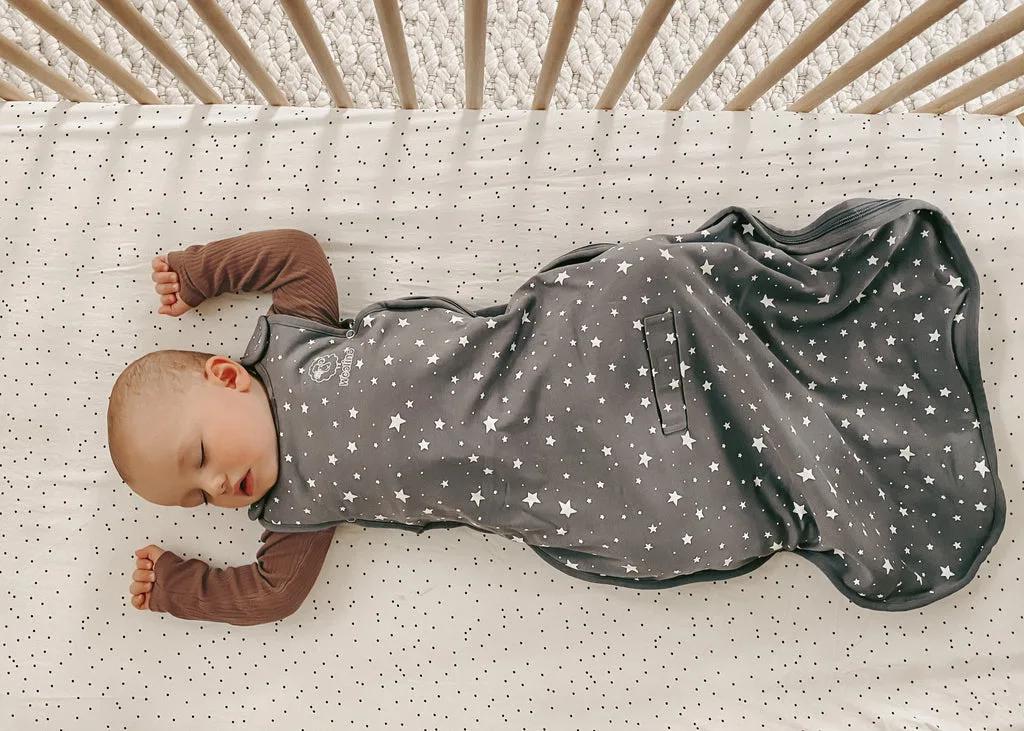
Your baby's outgrowing the swaddle, and suddenly sleep is falling apart. The good news is that how to keep sleep clothing comfortable during swaddle transition comes down to a simple staged process: release arms gradually, match the layers to the room temperature, and swap gear at the right moments. Get those three things right and most babies adjust within a week.
Timing matters more than you'd think. The American Academy of Pediatrics advises stopping swaddling at the first sign of rolling, which often shows up around 3 to 4 months. And the clothing you dress baby in underneath changes too, because a sleep sack traps more warmth than an open swaddle.
As of 2026, most pediatric guidance and manufacturer TOG charts agree on the same layering logic we'll walk through below.
Quick Answer
Keeping sleep clothing comfortable during the swaddle transition means moving in stages. Release one arm first, then both, then switch to a sleep sack. Match layers to the room using TOG ratings, aiming for a nursery around 68 to 72°F.
Check your baby's chest or neck to confirm they're comfortable, not sweaty or cold.
Why Comfort Falls Apart During the Swaddle Transition
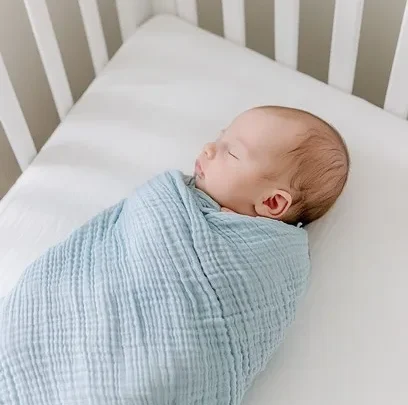
Here's the problem in plain terms. A swaddle holds your baby's arms snug, which suppresses the Moro reflex, that sudden startle jerk that wakes newborns. The moment you loosen the swaddle, that reflex comes back.
Baby flails, startles awake, and everyone's up at 2 a.m. wondering what changed.
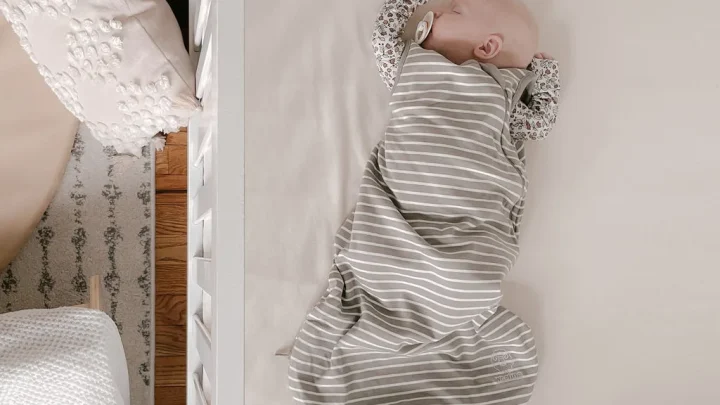
There's a second issue hiding underneath: heat. Swaddles are typically a single muslin layer with air circulation around the arms. A sleep sack wraps the whole torso in an insulated pocket.
If you dress your baby in the same footed pajamas they wore under the swaddle, they can overheat fast. Overheating is a recognized risk factor for SIDS, per CDC safe sleep guidance, so this isn't just a comfort issue.
The fix isn't luck. It's a sequence. Below we'll cover the readiness check, the stage-by-stage release, the layering math, and the mistakes that trip people up.
Image source: Bing (Web (fair-use with source credit))
Know Your Starting Point: Is Your Baby Actually Ready?
Start here, because the transition route changes based on your answer. Ask yourself these questions in order:
- Is baby showing any sign of rolling? Even a half-roll onto one shoulder counts. If yes, stop swaddling with arms in immediately. Move to arms-out gear right away, no gradual release.
- Is baby breaking out of the swaddle nightly? Escaping means the swaddle is loosening on its own. That's your cue to transition before loose fabric becomes a hazard.
- Is the startle reflex still strong? If baby still jolts hard at every sound, a staged transition (one arm out first) will go smoother.
- How old is baby? Before 8 weeks, most babies still need the swaddle. Past 3 to 4 months, the reflex is usually fading and most babies handle arms-out sooner.
Use this simple branch: if rolling has started, skip Stage 1 below and go straight to a sleep sack or transitional swaddle with arms free. If no rolling and the reflex is strong, take the slow route. If no rolling and baby's already sleeping with arms escaping happily, you can jump ahead too.
One more check before you start: make sure the nursery runs between 68 and 72°F. That number anchors every layering decision later.
The Stage-by-Stage Transition Workflow (One Arm Out → Both Arms Out → Sleep Sack)
This is the core of the whole process. Most babies do best moving through three stages, spending about 3 to 7 nights in each. If your baby hasn't started rolling, work through them in order.
Stage 1: One Arm Out
Keep the swaddle but release one arm. Pick the arm baby fights hardest to free, since it's clearly the one that wants out. Expect a rough first two nights as the startle reflex kicks in on that side.
By night three or four, most babies adjust and start using the free hand to self-soothe, often by sucking on fists.
Stage 2: Both Arms Out
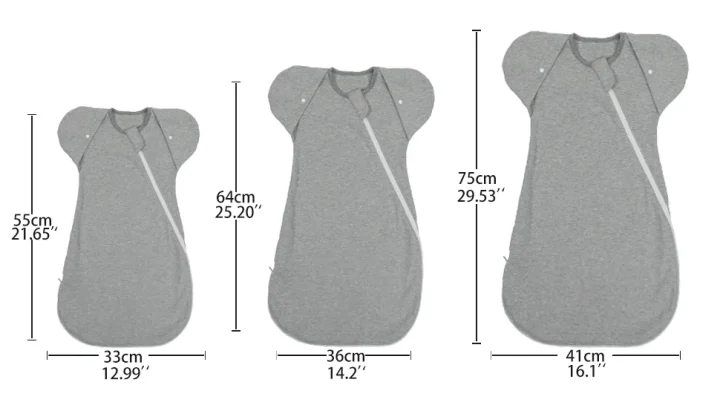
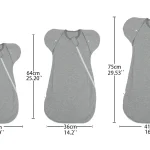
Next, release the second arm or switch to a transitional swaddle, a hybrid garment with snug arms-free sleeves and a weighted-feel torso (no actual weighting). These keep some torso pressure while letting both arms move. A photo of a typical transitional swaddle shows the difference instantly: a fitted bodysuit shape with a looser skirt or sack below the hips.
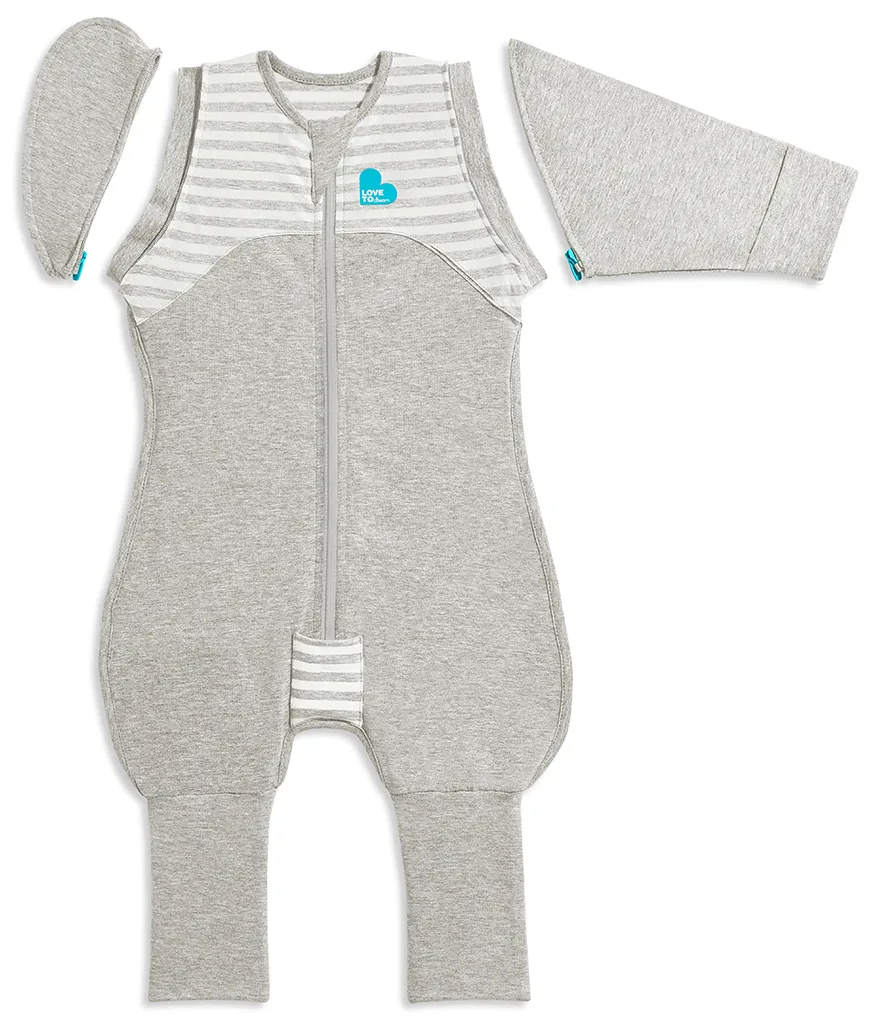
Image source: Bing (Web (fair-use with source credit))
Stage 3: Full Sleep Sack
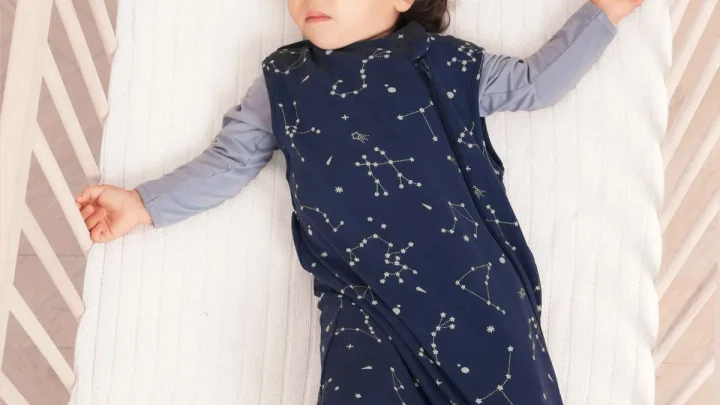
Now move entirely into a wearable blanket, or sleep sack. Keep the familiar bedtime routine unchanged. The sack itself becomes the sleep cue.
Give it a full week before judging whether it's working.
A quick reference table:
| Stage | Sleepwear | Nights | Watch for |
|---|---|---|---|
| 1 | Swaddle, one arm out | 3–7 | Excess flailing, face scratching |
| 2 | Arms out / transitional swaddle | 3–7 | Rolling, overheating |
| 3 | Sleep sack | Ongoing | Comfortable temperature, longer stretches |
If baby rolls at any point, drop the stages and go arms-out permanently that same night. Safety outranks comfort every time.
Dressing for Temperature: TOG Ratings and Layering That Actually Work
TOG stands for thermal overall grade, a standard measure of fabric insulation. Higher TOG means warmer. This is the number that prevents both sweaty babies and shivering ones, and it's printed right on the packaging of most quality sleep sacks.
The logic is simple: as the sleep sack replaces the swaddle, you usually thin out the base layer underneath. A swaddle-wrapped baby in footed pajamas becomes a sleep-sack baby in just a onesie, keeping total warmth about the same.
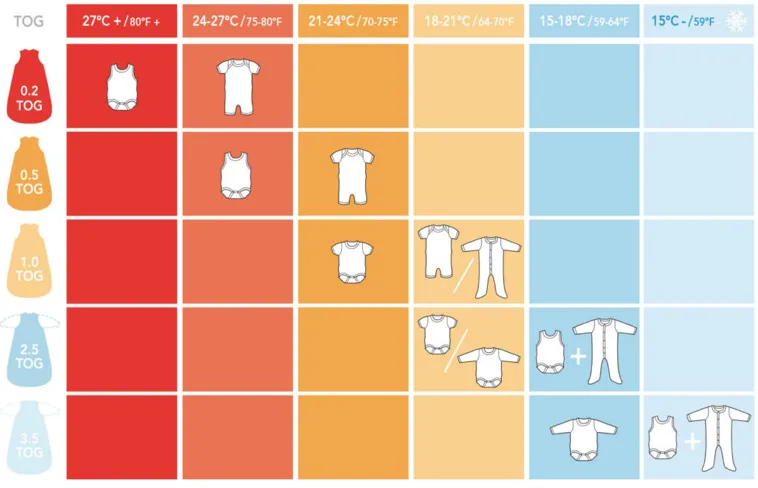
Image source: Bing (Web (fair-use with source credit))
Use this chart as your starting point, then adjust for your own nursery:
| Room temp | Sleep sack TOG | Base layer |
|---|---|---|
| 75°F+ (24°C+) | 0.2 | Short-sleeve bodysuit only |
| 68–74°F (20–23°C) | 0.5 | Short or long-sleeve bodysuit |
| 61–67°F (16–19°C) | 1.0 | Footed pajamas |
| Below 61°F (16°C) | 2.5 | Footed pajamas plus the warm sack |
The touch test settles any doubt. Feel baby's chest or the back of their neck. Warm and dry means you've nailed it.
Sweaty or clammy means remove a layer. Cool hands and feet are normal and don't mean baby is cold.
One trap to avoid: fabric type changes the math. Fleece runs far warmer than its TOG suggests, while bamboo viscose and muslin breathe better. If your sack is fleece, drop the TOG one step.
The Transition Sleepwear Options, Compared
There's no single right product. Each option fits a different baby and stage, so here's the honest breakdown.
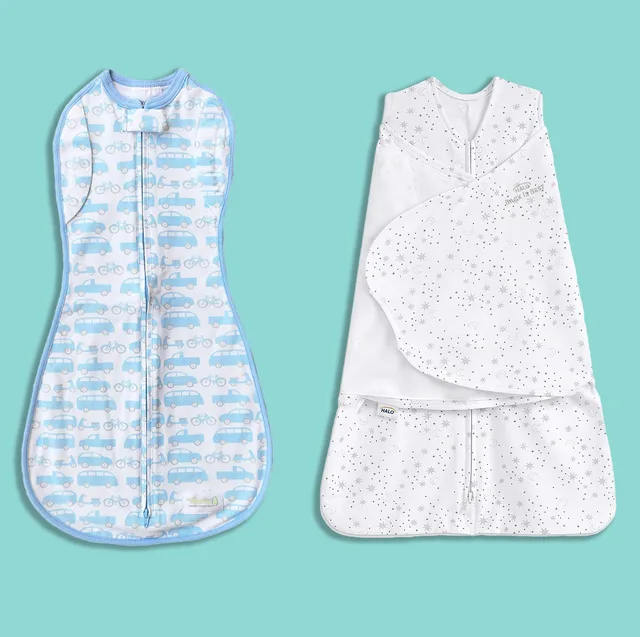
Image source: Bing (Web (fair-use with source credit))
| Option | Best for | Drawbacks |
|---|---|---|
| Transitional swaddle | Strong startle reflex, no rolling yet | Short useful window, usually outgrown by 6 months |
| Standard sleep sack | Most babies past the reflex stage | No arm containment, so rough first nights |
| Convertible arm-pocket swaddle | Babies who need flexibility night to night | Velcro or zippers can wear out; pricier |
| Bodysuit + sleep sack combo | Warm rooms, easy diaper changes | Two garments to manage |
| Footed pajamas alone | Babies who run hot or hate any sack | Offers no warmth buffer on cold nights |
Who each one suits best:
- Strong reflex, no rolling? A transitional swaddle buys you a smoother Stage 2.
- Already rolling? Skip straight to a standard sleep sack. Nothing else is safe with arms in.
- Hot climate or summer baby? A lightweight 0.2 TOG muslin sack over a bodysuit is all you need.
- Daycare baby? A simple zipper sleep sack is easiest for caregivers, and many centers require arms-out gear anyway.
Per manufacturer sizing guides, always size by weight, not age. A sack sized by age runs loose on a lighter baby, and excess fabric around the neck or face is a suffocation hazard, not a comfort feature.
Mistakes That Sabotage Comfort (And How to Fix Them)
Most transition misery comes from a handful of predictable errors. Here's what our editorial analysis of parent experiences flags most often:
- Keeping the same base layers. The sleep sack adds warmth the swaddle didn't. Thin the layer underneath when you switch, or baby runs hot by midnight.
- Rushing the stages. Bouncing from swaddle to full arms-out in one night works for a lucky few. For most babies it means three rough nights that a slower ramp would have avoided.
- Blaming the clothing for everything. Around 4 months, many babies hit a genuine sleep regression. If baby settles fine and wakes hourly anyway, the sleepwear probably isn't the problem.
- Sizing by age instead of weight. Too-big sacks bunch up near the face. Too-small ones compress the hips.
- Swaddling too tight at the hips. Even during the transition, legs need room to bend and splay. Tight wrapping raises hip dysplasia risk, per guidance from the International Hip Dysplasia Institute.
- Changing the whole routine at once. New sleepwear plus a new bedtime plus a new room equals chaos. Change one thing.
If comfort goes sideways mid-transition, fix layers first. Nine times out of ten it's a temperature issue, and the touch test tells you in ten seconds.
Safety Rules You Can't Skip During the Switch
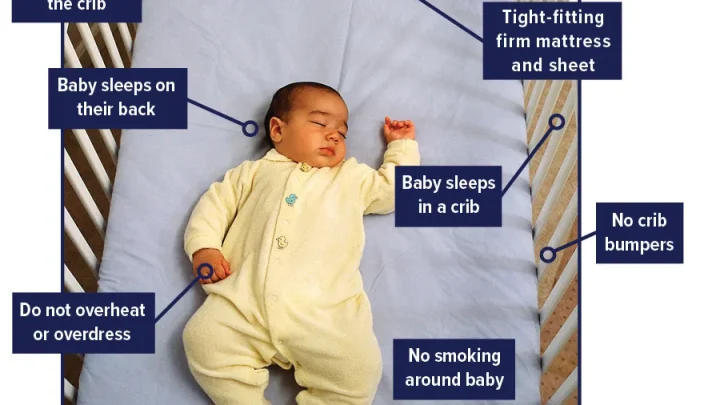
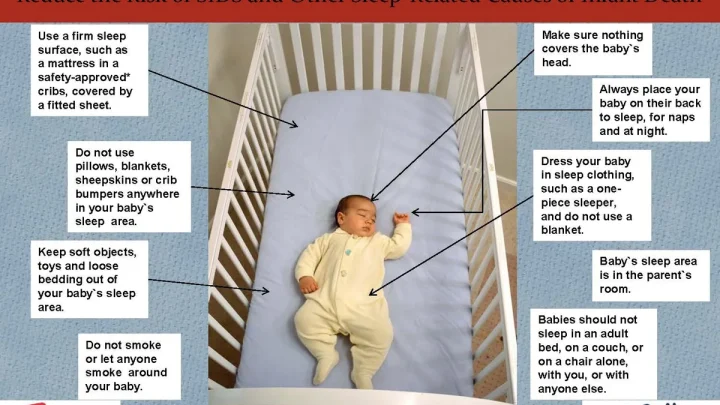
Comfort never overrides safe sleep, and the transition period is exactly when safe-sleep rules get tested. The CDC safe sleep recommendations spell out the non-negotiables:
- Stop swaddling at the first sign of rolling. A swaddled baby who rolls onto their stomach can't push back up. This is the single most important rule in the entire process.
- No loose blankets, pillows, or hats in the crib. The sleep sack replaces the blanket entirely. That's its whole purpose.
- Watch for overheating. Sweaty hair, flushed cheeks, or rapid breathing mean remove a layer now. Overheating is a documented SIDS risk factor.
- Never use weighted sleepwear or weighted swaddles on infants. The American Academy of Pediatrics advises against them due to breathing and movement concerns.
- Follow the manufacturer's weight and age limits on every garment, and retire anything baby has outgrown.
- Baby sleeps flat on their back on a firm, empty surface, every sleep, day and night.
Check the fit after every wash too. Shrunken neck openings or stretched-out arm holes are signs the garment is done. When in doubt about your specific baby, especially preemies or babies with health conditions, run your layering plan past your pediatrician.
They've fielded this question a thousand times.
Frequently Asked Questions
How long does the swaddle transition take?
Most babies need 7 to 14 nights total, split across the stages. A baby with a strong startle reflex often needs the full two weeks, while one already breaking free of the swaddle may adjust in 3 to 4 nights. If rolling starts, the timeline shortens to zero.
Arms come out that same night regardless of where you are in the process.
Should I transition naps first or nighttime first?
Start with naps if you want a lower-stakes test run. Naps are shorter, so a rough one costs everyone less sleep. If baby handles arms-out naps for 3 to 4 days, the nighttime swap usually goes easier.
If naps fall apart completely, some parents do the reverse: transition nights first, since deep sleep suppresses the startle reflex more than light daytime sleep.
Why does my baby wake more during the transition?
Two culprits cover most cases. First, the returning startle reflex, which fades as baby approaches 4 to 6 months and learns to self-soothe with free hands. Second, a temperature mismatch from keeping the old base layers under a warmer sleep sack.
Run the touch test on the chest or back of the neck before assuming the transition itself has failed.
What TOG sleep sack should I use in summer and winter?
Per standard manufacturer TOG charts, use a 0.2 to 0.5 TOG sack in warm weather, over just a bodysuit. In winter, a 1.0 TOG sack over footed pajamas covers most homes kept near 68°F. Go to 2.5 TOG only if your nursery drops below 61°F.
Always confirm with the touch test, since every baby runs a little different.
Can I use a sleep sack before the transition is done?
Yes, and many parents do. A convertible swaddle with zip-off or snap-off arm wings bridges the gap, keeping the torso snug while the arms go free. If baby is already rolling, skip anything with containment and go straight to a standard sleep sack.
The familiar snug feel at the torso often eases the switch for babies who resist change.
When should I call the pediatrician about sleep issues?
Call if baby sweats heavily during sleep, breathes rapidly, or seems unusually lethargic, since those can signal overheating or illness rather than a clothing problem. Also check in if the transition stalls past three weeks with worsening sleep, or if baby has any health condition, was premature, or has hip concerns. Your pediatrician can rule out reflux, ear infections, and other medical causes.

Similar Posts