How to Check Baby’s Sleep Space Before Bedtime
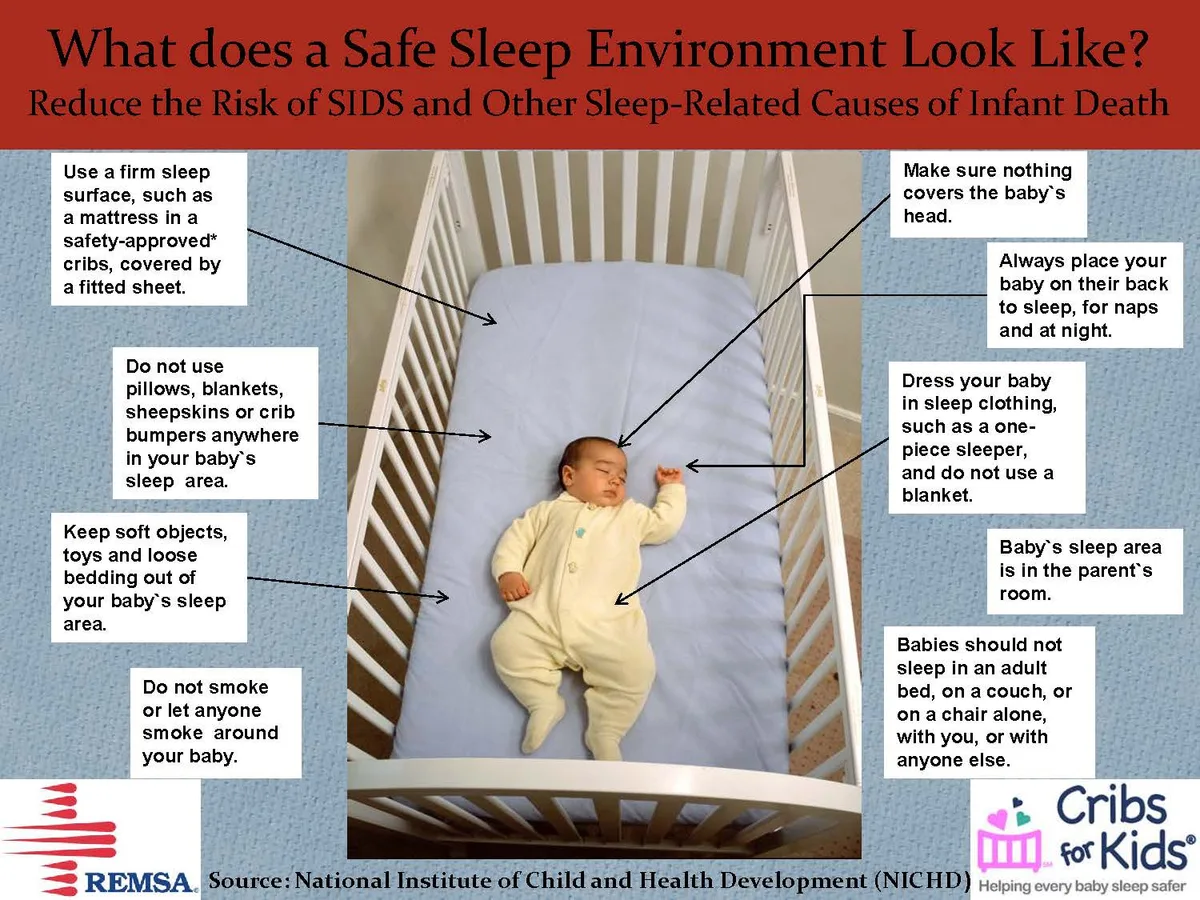
It's 7 p.m., the baby's rubbing her eyes, and you're doing the bedtime shuffle. Knowing how to check a baby's sleep space before bedtime takes about a minute once you know what to look for, and it's the single highest-value minute of the whole routine. The stakes are real: most sleep-related infant deaths happen in an unsafe sleep environment, not a defective crib.
The rules aren't guesswork, either. Federal crib standards under 16 CFR 1219 have banned drop-side cribs since 2011, and the American Academy of Pediatrics updates its safe sleep guidance regularly (most recently reaffirmed as of 2026). Below, we'll walk the actual check, step by step, in the order you'd walk the room.
Quick Answer
To check a baby's sleep space before bedtime, confirm the baby sleeps alone, on their back, on a firm flat surface. Remove all blankets, pillows, bumpers, and toys. Make sure the fitted sheet is snug and the mattress fits with no gaps.
Check that cords, blinds, and monitors are out of reach. Dress the baby in a wearable blanket instead of loose bedding.
Why the 60-Second Sleep Space Check Matters More Than Any Baby Monitor
Here's a hard truth from the data: according to the CDC, roughly 3,400 babies die each year in the US from sleep-related causes, and most of those deaths happen in spaces with soft bedding, an unsafe surface, or an adult bed. The environment is the risk. That's what your minute of checking actually targets.
A monitor doesn't prevent a loose blanket migrating over a face. It just lets you watch it happen. Prevention beats surveillance every single time.
There's a second benefit nobody mentions: consistency. If you, your partner, a grandparent, and a babysitter all run the same check, the crib is safe no matter whose hands did bedtime tonight. That's the whole point of making it a routine instead of a judgment call.
The Core Rule: The ABCs of Safe Sleep (And What "Bare Crib" Actually Means)
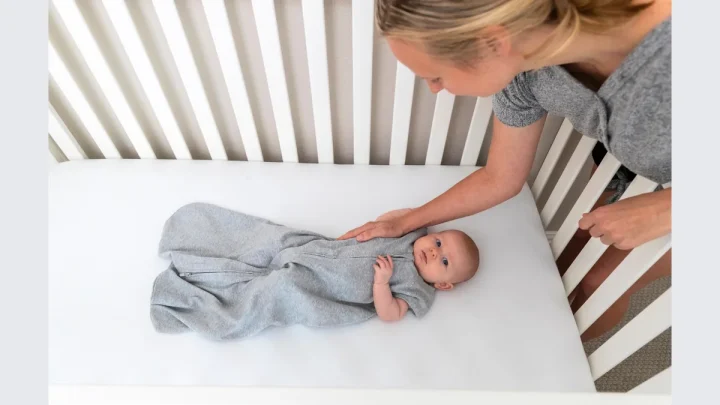
The American Academy of Pediatrics distills everything into the ABCs: Alone, on their Back, in a Crib (or bassinet or play yard). Every step of the bedtime check flows from those three letters, so let's define what each one really means in practice.
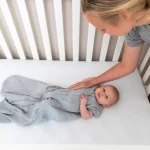
- Alone means nothing in the sleep space except the baby and a fitted sheet. No pillows, no quilts, no stuffed animals, no bumpers. Yes, even the adorable one grandma embroidered.
- Back means placed on their back for every sleep, naps included, until the first birthday.
- Crib means a surface built and certified for infant sleep. Not a couch, not an adult bed, not a lounger or a swing.
"Bare is best" trips people up because product marketing fights it constantly. Loungers, positioners, and fancy "sleep aids" get marketed as safe when they're not approved for unsupervised sleep at all. If a product isn't a crib, bassinet, or play yard meeting federal standards, it doesn't belong in the sleep space.
Period.
Your Step-by-Step Pre-Bedtime Check: From Mattress to Cords
Run this in order, top to bottom. It takes about a minute once it's habit.
The Mattress and Sheet Check
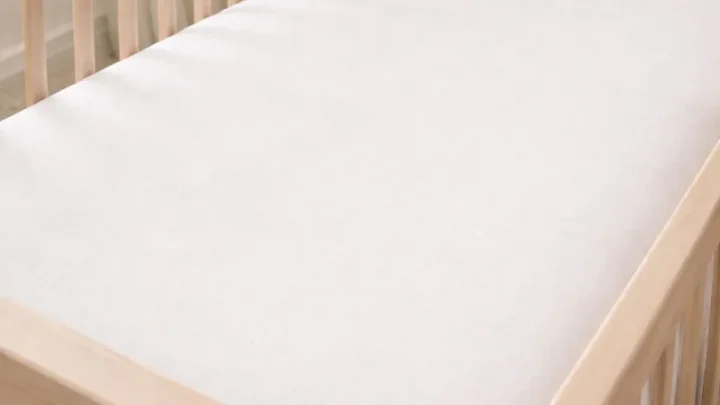
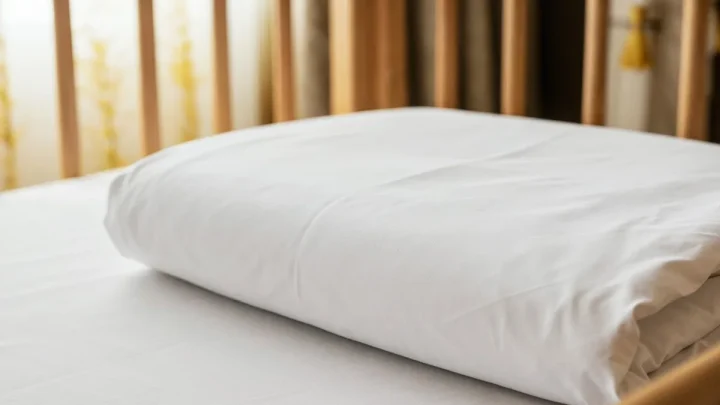
Start with the surface, because everything sits on it. Press your hand into the mattress: it should bounce back firmly and not mold around your palm. If it holds an indent, or if anyone added a memory foam topper, that's a fail.
Soft surfaces let a face sink in, and that's the suffocation risk in one sentence.
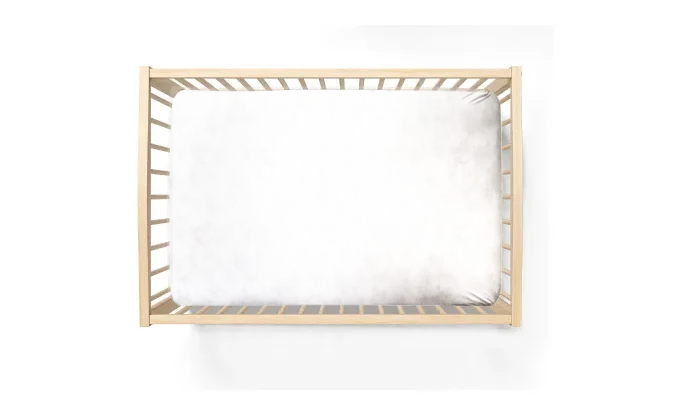
Next, the fit. Standard guidance says no more than two fingers should fit between the mattress edge and the crib frame. A bigger gap can trap tiny arms, or worse, a head.
Then the sheet itself. It should pull taut at every corner with no bunching in the middle. Loose fabric is the thing that ends up over a face at 2 a.m.
Check your checklist in order:
- Mattress firm: springs back, no indent
- Mattress gap: two fingers max
- Sheet snug: taut corners, flat surface
- No mattress pad layers beyond a fitted sheet
What's In (and Out of) the Crib
Now sweep for the contraband. Blankets, loveys, pillows, bumpers, books, the burp cloth you tossed in earlier. All of it comes out before the baby goes in.
Loose bedding stays a suffocation hazard until at least 12 months of age, which is when the AAP says a thin blanket can finally be considered.
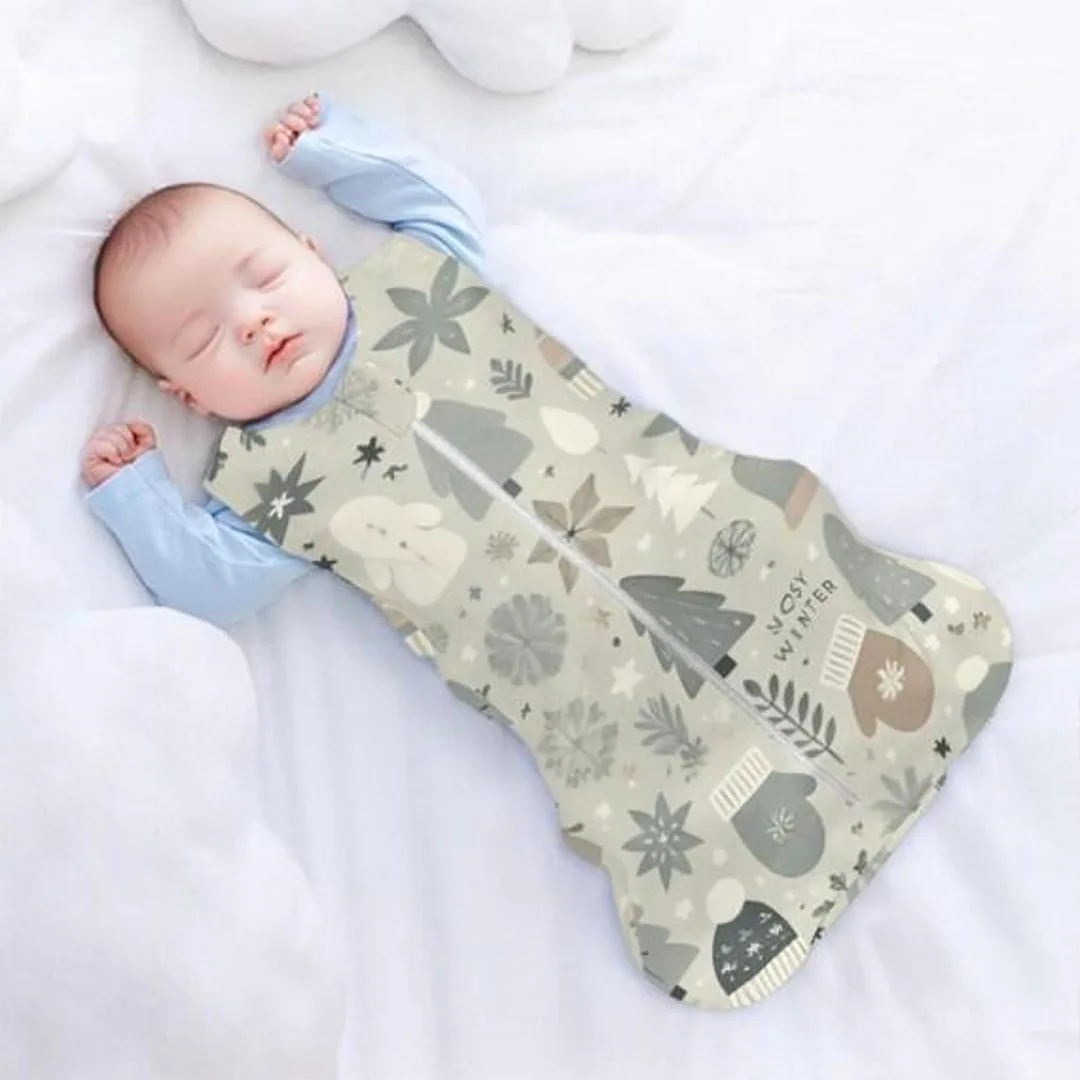
The fix for warmth is a wearable blanket, also called a sleep sack. It's a garment, not bedding, so it can't ride up over the face. In our research of caregiver routines, the sleep sack is the single change that makes bare-crib rules easiest to keep, because nobody's tempted to sneak a blanket back in on a cold night.
One more item: a pacifier is fine, and research links it to reduced SIDS risk. But don't clip it, and don't tether anything to the crib or the baby's clothing.
Placement, Cords, and Room Temperature
Last pass covers the room around the crib, and it's the step most skipped. Crib placement matters more than people think:
- Keep the crib at least 3 feet from windows, blinds, and curtain cords. Strangulation risk comes from reach, and babies reach farther than you'd guess.
- Position baby monitor cords well away from the crib edge, or use a cordless camera. Corded monitors have caused infant strangulation deaths.
- No shelves or wall art directly above the crib.
Then feel the room. Most guidance points to roughly 68 to 72°F as a comfortable range. The touch test works too: the back of the baby's neck or chest should feel warm, not sweaty.
Sweaty neck means overdressed, and overheating is an established risk factor. One less layer beats one more.
Age Changes Everything: Swaddles, Rolling, and Lowering the Mattress
A safe sleep space isn't a one-time setup. It changes as the baby changes, and three transitions matter most.
First, the swaddle retirement. Swaddling is fine for newborns, but the moment a baby shows any sign of rolling, often between 2 and 4 months, the swaddle ends. A swaddled baby who rolls onto their stomach can't free their arms to push up. Switch to a sleep sack with arms out the same week you see that first roll attempt.
Second, the mattress height. Newborns start at the highest setting. Once a baby can sit, drop it to middle. Once they can pull to stand, drop it to the lowest setting.
If the rule is "if the baby can climb out, the crib is done," the lowest setting buys you months.
Third, the rolling exception. Once a baby can roll both ways on their own, you don't need to flip them back all night. Put them down on their back every time, then let them settle where they land. But the bare-crib rule never relaxes.
Rolling babies actually need an empty crib more, because mobility meets bedding is the worst combination.
Write the current stage on a sticky note inside the nursery door if both parents share bedtime duty. Sounds silly. Works.
The Hand-Me-Down Problem: Recalls, Drop-Sides, and Secondhand Cribs
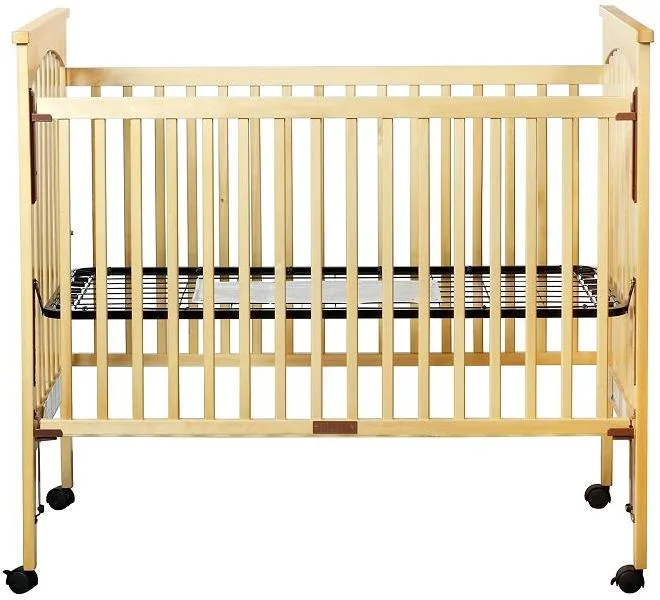
If the crib predates 2011, stop and check before tonight. That's the year the CPSC's mandatory federal standard took effect, and it banned drop-side cribs outright after dozens of infant deaths tied to hardware failures. Family heirlooms and garage-sale finds are where this rule gets tested.
Here's the quick triage for any secondhand crib:
- Drop sides? It's out. No exceptions, even "it worked fine for all my kids."
- Missing hardware or instructions? Out, unless you can get the exact original parts from the manufacturer. Substituting bolts voids the safety certification.
- Broken, cracked, or repainted? Out. Old paint may contain lead, and damaged slats create gaps.
- Wobbly frame? Out. Check all screws and brackets while you're at it.
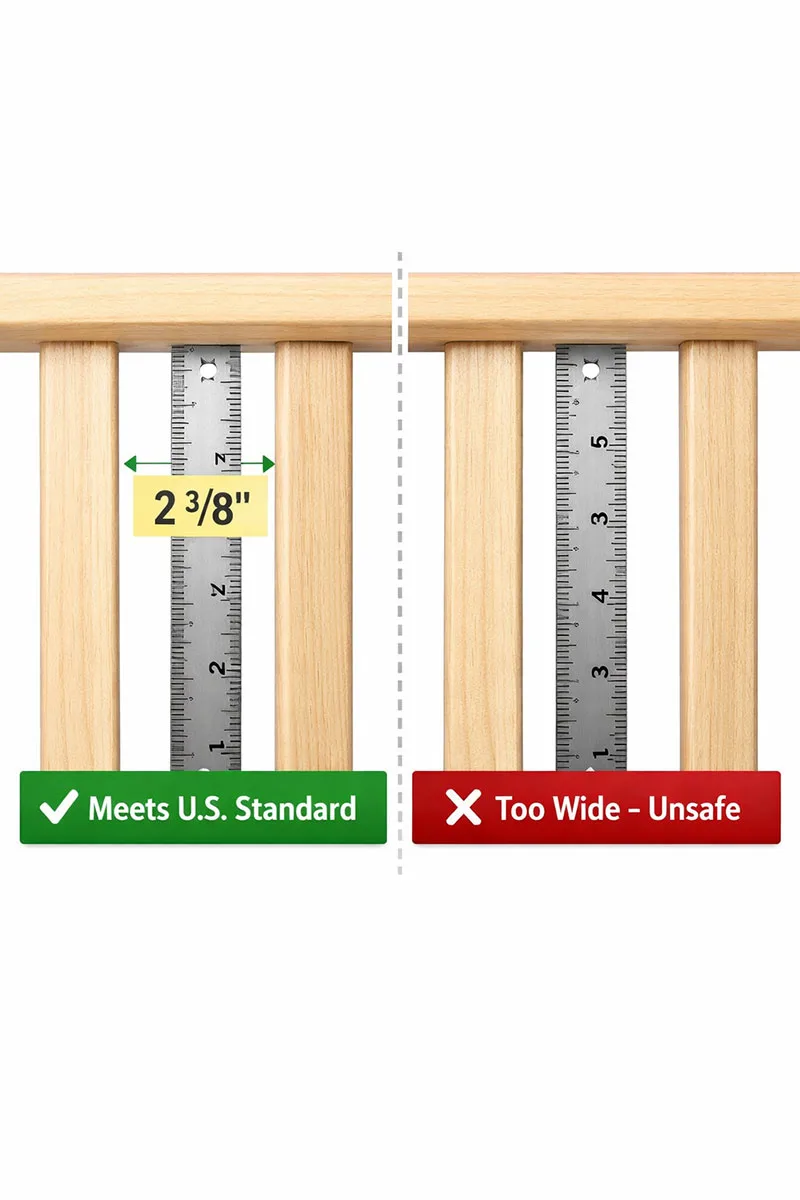
For any crib with a model number, run it through the CPSC recall database at cpsc.gov. It takes two minutes and it's free. Secondhand cribs are also where slat-spacing problems hide: gaps must be no more than 2 3/8 inches apart, about the width of a soda can.
If a soda can slides through, so can a baby's head.
If a passed-down crib fails any of these, a new budget crib costs less than you'd think. The bassinet on a stand from a cousin might still pass every check. Judge each piece on its own merits, against the standard, not against sentiment.
Common Mistakes Even Careful Parents Make
The loving grandparent setup is mistake number one. Pillows, a plush quilt, three stuffed animals arranged just so. It looks cozy.
It's the exact environment the AAP warns against, so hand caregivers a printed copy of the ABCs before their first solo bedtime.
Overdressing runs a close second. New parents stack a onesie, footed pajamas, a swaddle, and a hat, then wonder why baby wakes sweaty. Per safe sleep guidance, dress the baby in one more light layer than you'd wear, and skip hats indoors entirely.
The night-feed trap deserves its own warning. Falling asleep with the baby on a couch or in an adult bed is one of the highest-risk scenarios in the CDC data, because soft surfaces and heavy adult bodies combine badly. If you're exhausted, feed the baby inside the crib's room, seated, with the empty crib right there for the transfer.
A few quieter ones:
- Using a wedge or rolled towel "for reflux" unless the pediatrician specifically prescribed a setup
- Leaving the bedside bassinet packed with burp cloths and spare swaddles
- Letting the fitted sheet get loose in the wash cycle and never re-tightening it
When to Talk to Your Pediatrician
The sleep space check handles the environment. Some questions belong to your pediatrician instead, and knowing the difference saves you worry.
Call for guidance if your baby has diagnosed reflux, a breathing concern, or a preterm birth history. Preemies and babies with special medical needs sometimes get individualized sleep instructions that override standard guidance. Never improvise those with wedge pillows or positioners bought online, since inclined products are explicitly unsafe and federally warned against.
Also worth a conversation: chronic congestion that makes back-sleeping look labored, head-flattening on one side (there are safe repositioning strategies that don't involve sleep position changes), and persistent night sweating that doesn't resolve with lighter sleepwear.
And if anxiety around sleep checks is spiking, say so at a checkup. Postpartum anxiety is common and treatable, and a pediatrician can point you to support rather than leaving you checking the crib every twenty minutes. A safe routine should lower your stress, not feed it.
Safe Sleep Check FAQs
When can my baby sleep with a blanket?
Wait until at least 12 months, per AAP guidance. Before then, loose bedding is a suffocation and SIDS risk factor. A wearable blanket or sleep sack covers warmth needs from birth onward.
After the first birthday, a thin blanket tucked at the foot of the crib is the cautious way to start.
Do I need to flip my baby back if they roll onto their stomach?
No, once they can roll both directions on their own. Always place them on their back to start sleep. If they roll themselves, let them be.
If they're still one-directional rollers, flip them back gently and retire the swaddle immediately if you haven't already.
Are crib bumpers ever safe?
No. Padded crib bumpers are banned under the federal Safe Sleep for Babies Act, signed in 2022 and enforced since. "Breathable" mesh liners carry the same entry risk and add no real protection.
A properly assembled crib needs nothing on its sides at all.
How do I know if my crib was recalled?
Find the model number, usually on a label on the headboard or mattress support, then search the CPSC recall database at cpsc.gov. It's free and takes about two minutes. Do this for any secondhand crib, and register new cribs with the manufacturer so recall notices reach you directly.
Is a bedside sleeper the same as bed-sharing?
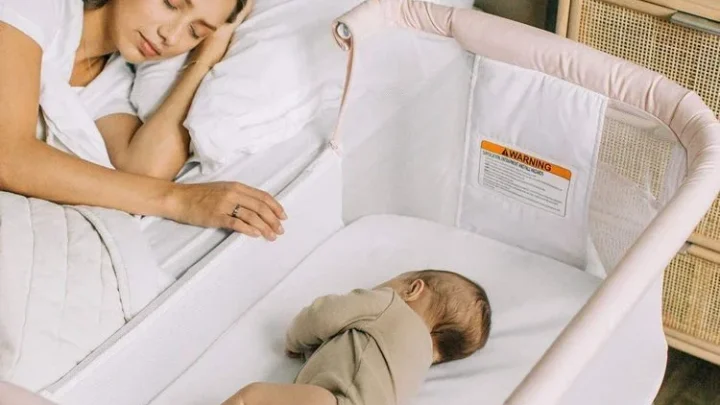
No. A bedside sleeper is a certified infant sleep product that attaches to your bed with a rigid barrier. Room-sharing with the baby on their own surface is the AAP-recommended arrangement for at least the first six months.
Bed-sharing, where the baby sleeps on the adult mattress, carries documented suffocation risk.
The Final Sweep: A Quick Checklist You'll Run on Autopilot
Here's the whole system compressed into one pass. Tape it inside the nursery door until it's automatic.
- Baby alone in the crib: nothing but the baby and a fitted sheet
- Baby on their back, dressed in a sleep sack sized for the season
- Mattress firm, sheet taut, two-finger gap test passed
- Crib at least 3 feet from cords, blinds, and shelves
- Room around 68 to 72°F, neck feels warm not sweaty
- Crib meets the 2011 federal standard, recall-checked, hardware tight
Run it the same way every night. The point isn't paranoia, it's that a one-minute check beats a lifetime of wondering. Safe sleep gets easier, not harder, once the setup stops changing.

Similar Posts