How to Choose a Firm, Safe Mattress for Infant Sleep
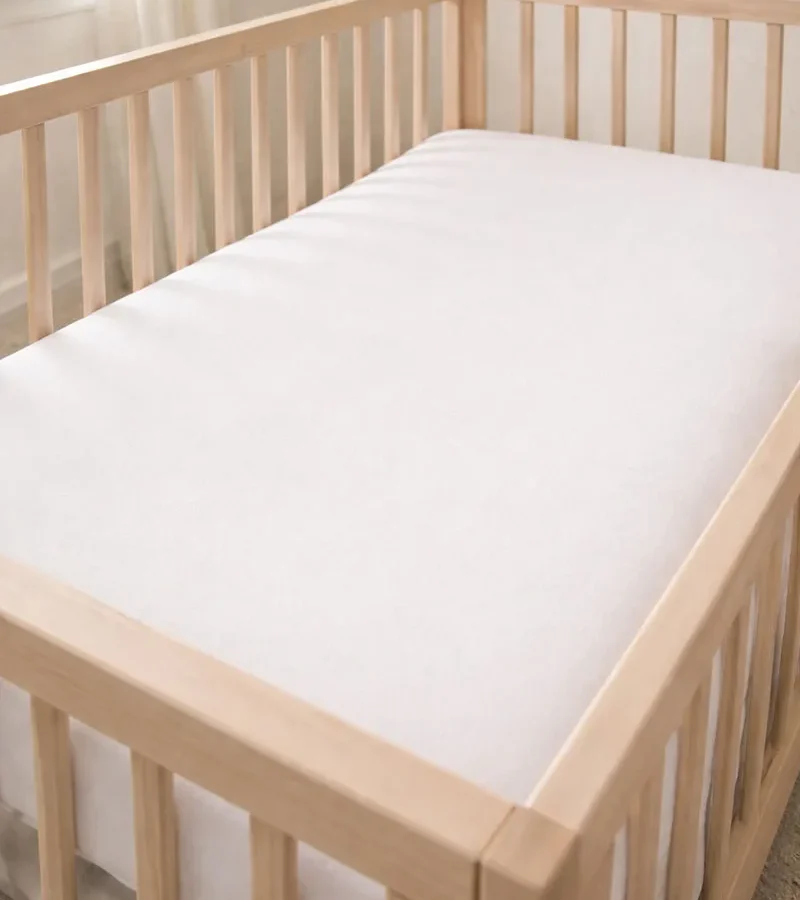
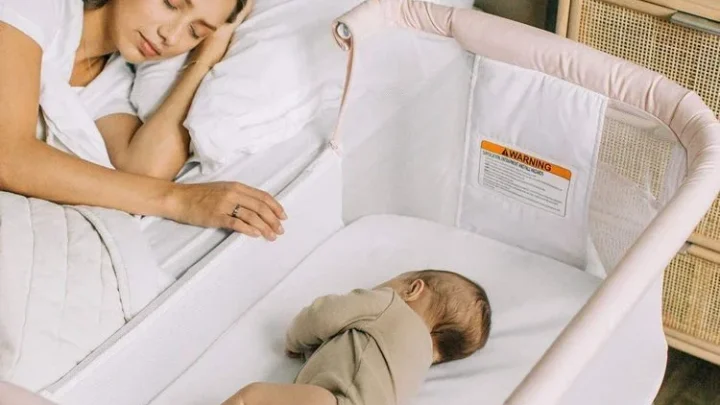
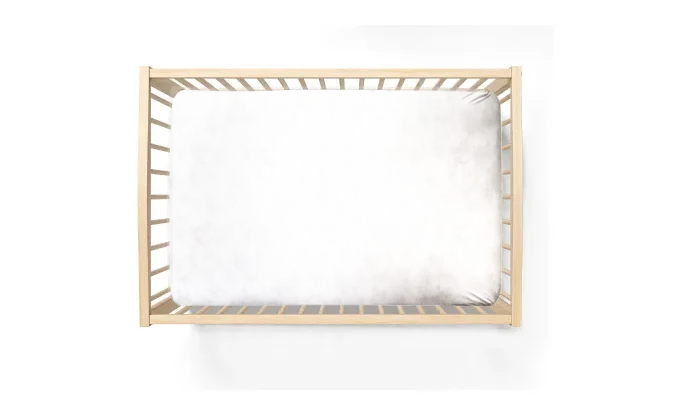
If you've ever pressed your hand into an adult mattress and thought "this feels perfect," that's exactly the instinct we need to override. Babies aren't small adults. Choosing how to pick a firm flat infant sleep mattress comes down to one idea: a surface hard enough that a newborn's face can't sink into it, and flat enough that nothing tilts their airway.
Softness feels kind. For a baby under 12 months, it's a genuine suffocation risk.
In our research across pediatric guidance and federal rules, the numbers are sobering: roughly 3,500 sleep-related infant deaths occur annually in the US, many tied to soft or inclined surfaces. Since mid-2022, every crib mattress sold in the US must pass the CPSC's federal safety standard (16 CFR Part 1241). Below, we'll walk through what that means for the mattress you actually bring home.
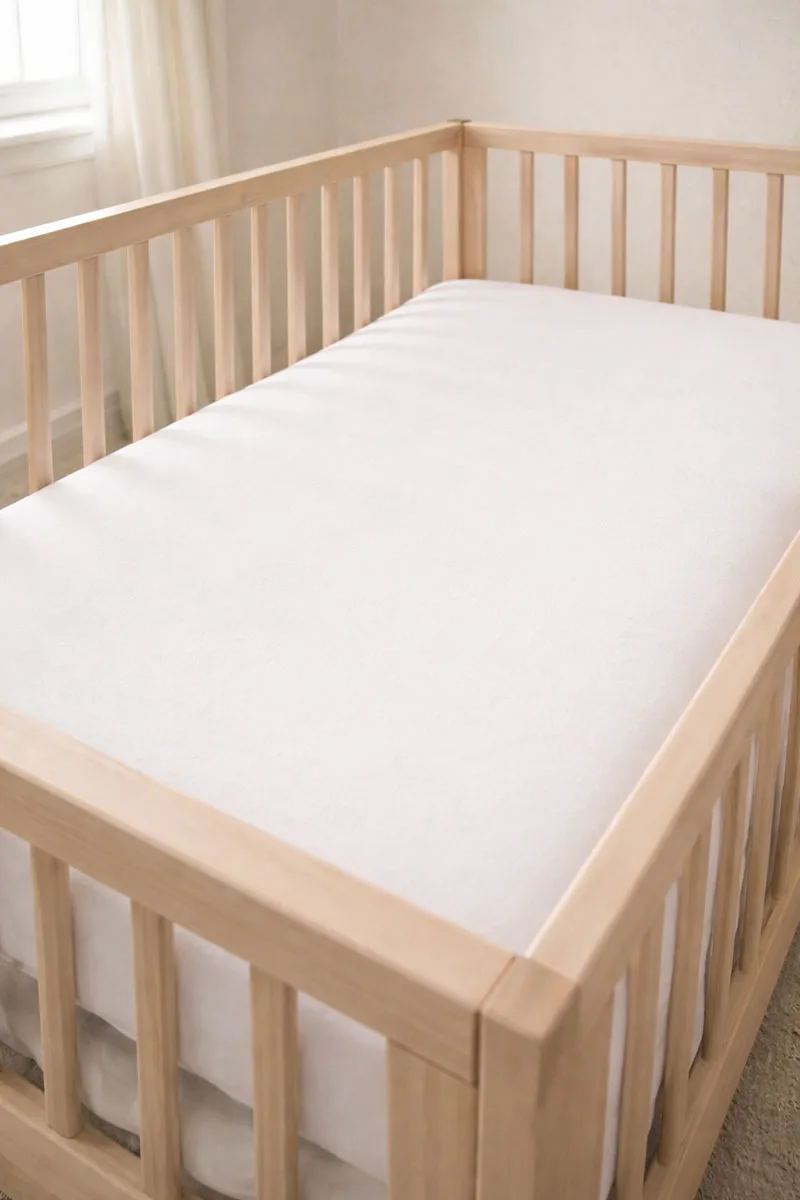
Image source: Bing (Web (fair-use with source credit))
Why "Firm and Flat" Isn't Just a Suggestion — It's a Suffocation Prevention Rule
A newborn can't lift or turn their head the way you or I do. If their face presses into a soft surface, they can't push away. That's the core of the problem.
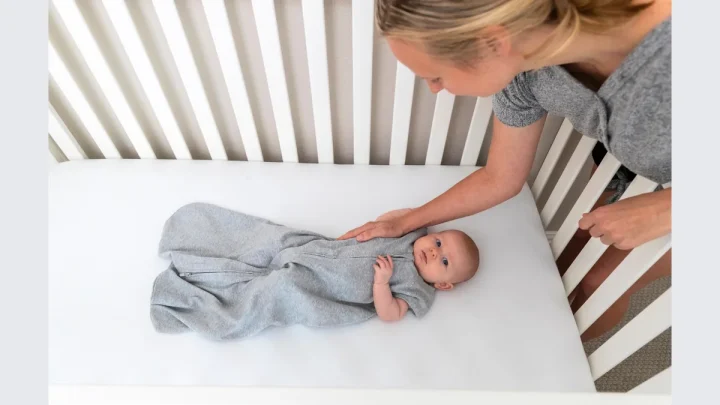
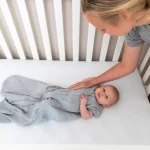
The American Academy of Pediatrics recommends a firm, flat, non-inclined sleep surface for every sleep until age one. Firmness prevents the baby's face from conforming to the mattress. Flatness keeps the head and neck in a neutral position, which keeps the airway open.
The risk has a name: rebreathing. When a face sinks into soft foam, the baby breathes back their own exhaled carbon dioxide instead of fresh air. Elevated CO2 exposure is one of the mechanisms researchers associate with SIDS.
Two things follow from this:
- Incline products (wedges, positioners, "reflux" sleepers) are banned from sale in the US under the Safe Sleep for Babies Act of 2022.
- Firmness isn't negotiable. There's no "slightly soft for comfort" version that's safe.
Quick Answer: What a Safe Infant Mattress Looks Like
Choosing a firm flat infant sleep mattress comes down to five checks. Pick a mattress that's federally compliant, passes the hand-press firmness test, and stays completely flat. Confirm a snug fit with no more than two fingers of gap at the edges.
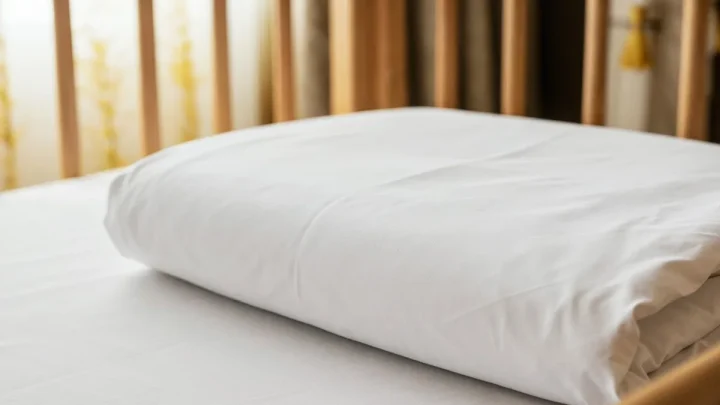
Use a fitted sheet only, with no pillows, blankets, or bumpers.
The Firmness Test: How to Actually Judge Firmness in the Store or at Home
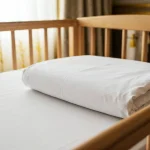
The first sentence answers the question: press your hand firmly into the mattress, then lift it. If your handprint stays behind, or the surface visibly contours, walk away.
A safe infant mattress should rebound instantly. It should feel "hard" by adult standards, closer to a firm carpeted floor than a bed. Manufacturer specs give you numbers too: look for high-density foam around 1.5 pounds per cubic foot or higher.
For innerspring models, a coil count of roughly 135 to 250 with reinforced borders signals proper support.
Here's the three-step check:
- Press hard with one hand. It should bounce back immediately, no imprint.
- Press near the edges. Soft edges mean weak borders, which hurt support and fit.
- Lay your palm flat and push. Your hand shouldn't sink in more than a few millimeters.
Don't trust the word "firm" on the label. It's marketing, not a standard. The hand test is the real filter.
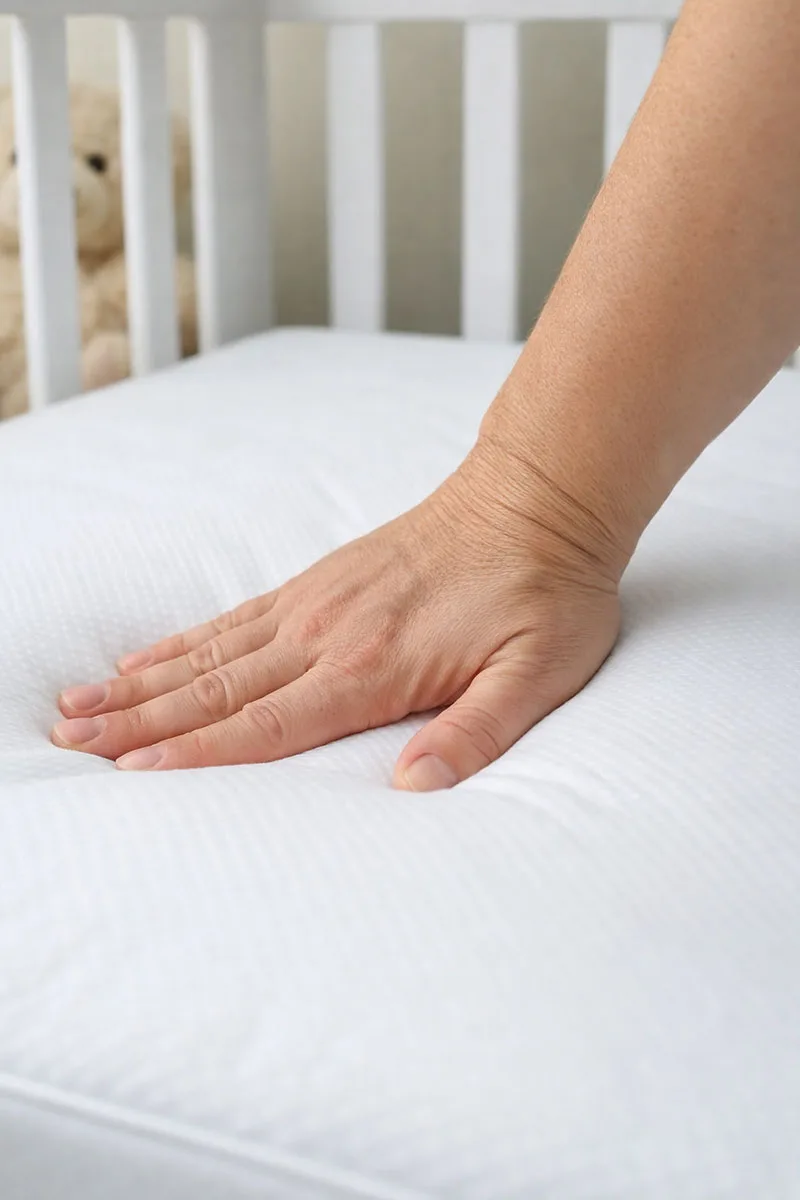
Image source: Bing (Web (fair-use with source credit))
Fit Matters as Much as Firmness: Sizing, Gap Checks, and Playard Warning
Direct answer first: a safe mattress fills the crib with almost no gap on any side. The federal standard requires full-size crib mattresses to measure at least 27¼ by 51¼ inches, designed to fit a 28 by 52 inch interior crib frame.
The field test is simple. Put the mattress in the crib. Try to fit two fingers between the mattress edge and the crib wall, one on each side of a corner.
If both fingers slide in side by side with room to spare, the fit is too loose. Gaps create entrapment risk, and a baby can wedge a head into a space narrower than you'd guess.
A few fit rules worth committing to memory:
- Never add an aftermarket mattress to a playard or pack-and-play. Those thin pads are engineered with the specific model, and swapping them voids the safety design.
- Match mini cribs and bassinets with the manufacturer's specified mattress only.
- Check the fit again after moving the mattress or switching cribs.
One common mistake: buying a "standard" mattress for an older or imported crib with slightly off-spec dimensions. Measure the interior first, then buy.
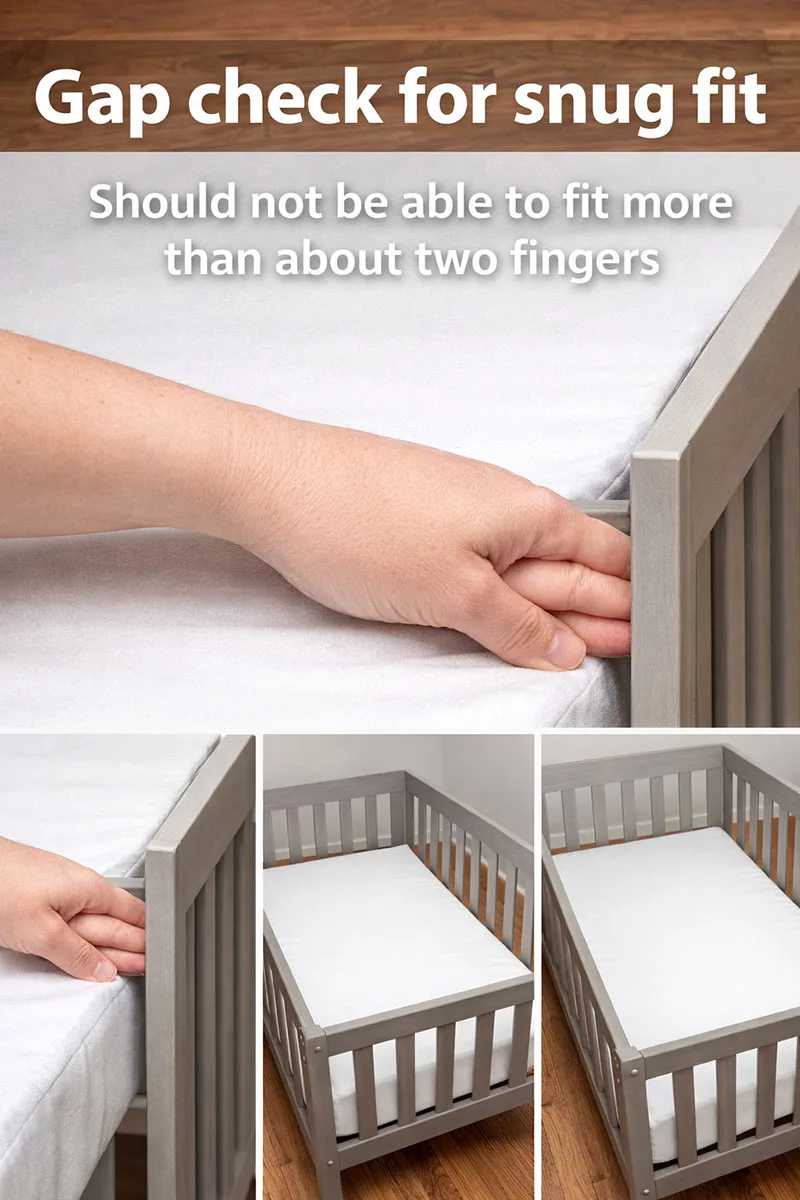
Image source: Bing (Web (fair-use with source credit))
Foam, Innerspring, or Organic: Which Mattress Type Is Right for You
All three types are safe if they meet the standards. The difference is weight, price, and longevity.
Foam mattresses are the lightest and cheapest, usually $40 to $100. Quality depends entirely on foam density, so check the spec sheet rather than the marketing copy. Innerspring models cost more ($80 to $250) and last longer, which matters if you're planning a second child.
Organic options, built with coir, natural latex, cotton, or wool, run $200 to $400 and appeal to parents avoiding petroleum-based foams.
Here's the side-by-side:
| Type | Typical Price | Weight | Best For |
|---|---|---|---|
| Foam | $40–$100 | 5–10 lbs | Budget buys, frequent sheet changes |
| Innerspring | $80–$250 | 15–25 lbs | Longevity, multiple kids |
| Organic/natural | $200–$400 | 10–20 lbs | Low-VOC priorities, natural materials |
For foam, look for CertiPUR-US certification, which limits VOC emissions and banned flame retardants. For organic claims, a GOTS or Greenguard Gold certification means something. "Natural" and "eco" on a label mean nothing without third-party verification.
Whichever type you choose, the surface must still pass the hand-press test. Some organic mattresses run softer than their foam equivalents, so verify before buying.
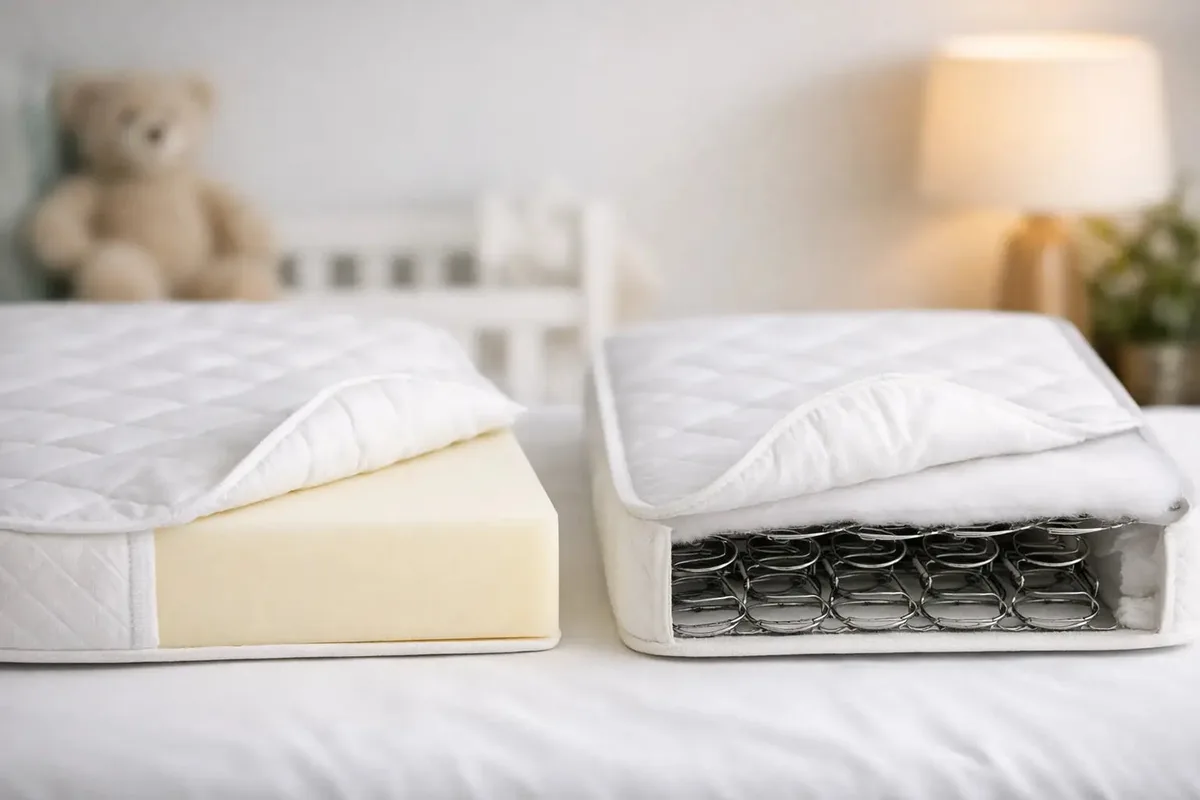
Image source: Bing (Web (fair-use with source credit))
Safety Standards and Certifications to Look For (CPSC, ASTM, GREENGUARD)
Start with the one that's mandatory: CPSC compliance. Under 16 CFR Part 1241, in force since mid-2022, every crib mattress sold in the US must pass tests for firmness, seam integrity, and fit. If a retailer can't confirm compliance, that's a hard no.
Beyond the legal floor, these voluntary certifications add real information:
- ASTM F2933: the industry safety standard for crib mattresses, covering performance and labeling.
- Greenguard Gold: independent testing for low chemical emissions, useful if off-gassing worries you.
- CertiPUR-US: applies to foam, confirming no harmful levels of certain chemicals.
- GOTS: genuine organic certification for textile and fiber claims.
As of 2026, compliance labeling is required on the product itself, so check the tag or spec sheet before checkout. Per CPSC guidance, a mattress that meets the federal rule with one or two of these extras covers nearly every family's needs.
Mistakes to Avoid: Used Mattresses, Incline Sleepers, and Comfort Instincts
The costliest mistakes aren't exotic. They're the well-meaning ones, made by grandparents, gift-givers, and tired parents at 2 a.m.
Here's what our research keeps surfacing:
- Using a hand-me-down mattress. The UK's Lullaby Trust advises against secondhand mattresses where possible, partly because unknown histories raise hygiene and sagging concerns. If you must reuse one, check for firmness loss, mold, tears, and a valid fit.
- Adding comfort layers. Memory foam toppers, quilts, and blankets defeat the firmness you paid for. A fitted sheet is the only bedding that belongs on top.
- Buying for reflux. Inclined sleepers and wedges are federally banned for sleep. If reflux is severe, talk to your pediatrician rather than tilting the mattress.
- Trusting "organic" or "breathable" labels alone. Neither term is regulated. A breathable mesh mattress still needs to meet the firmness standard, and an organic one still needs the hand-press test.
- Leaving the plastic wrap on. New mattresses ship in plastic for a reason: take it all off. It's a suffocation hazard and traps condensation.
One more that surprises people: room-sharing without bed-sharing. Per the CDC, keeping the baby's crib or bassinet in your room for at least the first six months lowers SIDS risk. The mattress choice and the sleep location work together.
Frequently Asked Questions
How firm should an infant mattress be?
Firmer than feels comfortable to you. Press your palm into it: the surface should rebound instantly with no handprint or contour. Manufacturer specs confirm this too, with high-density foam at 1.5 pounds per cubic foot or more.
If it feels plush by adult standards, it's too soft for a baby under 12 months.
Can I use a secondhand crib mattress?
It's best avoided. You can't verify its history, and used mattresses may sag, harbor mold, or no longer meet current standards. Aggregate pediatric guidance, including NHS advice in the UK, recommends a new mattress where possible.
If budget forces reuse, inspect firmness, seams, and fit carefully before use.
Is a breathable mesh crib mattress safer?
Not automatically. These mattresses allow airflow through the sides, but rebreathing risk depends mainly on surface firmness. Any mesh model must still pass the CPSC federal standard and the two-finger fit test.
Treat breathability as a bonus feature, never a substitute for firmness and a snug fit.
Do I need a mattress protector?
A thin, waterproof, fitted protector is fine and practical. Skip anything quilted or padded, since padding softens the surface. A wipeable mattress cover alone often does the job, since crib mattresses already have waterproof surfaces.
Whatever you use must stay smooth and tight under a fitted sheet.
When can my baby sleep on a softer mattress?
Most families transition around 18 months to 2 years, or when the crib converts to a toddler bed. There's no single official date, so follow your pediatrician's guidance and the mattress manufacturer's age ratings. Dual-firmness mattresses make this simple: flip to the toddler side when the time comes.
What about mattresses for reflux or colic?
Always flat for sleep, every time. Inclined products are banned under the Safe Sleep for Babies Act of 2022 because they raise airway risk. For diagnosed reflux, your pediatrician may recommend holding the baby upright after feeds.
That happens while awake, never on an elevated sleep surface.

Similar Posts