When Sleep Problems Won’t Go Away: When to See a Doctor

Most people shrug off bad sleep for months before doing anything about it. That's understandable, but it's also how treatable problems turn into chronic ones. Knowing when persistent sleep changes need professional guidance comes down to three things: how long it's lasted, what else is happening, and whether your days are suffering.
In our research, the clearest benchmark comes from the American Academy of Sleep Medicine: insomnia is considered chronic when it hits at least three nights a week for three months or longer. That's a concrete line, not a vague feeling. Below, we'll walk through where that line sits and what should push you past it sooner.
Quick Answer: The 3-Week Rule and the Red Flags That Override It
When persistent sleep changes need professional guidance, timing is the deciding factor. Give self-management about two to four weeks for stress-related sleep trouble. If symptoms last three nights weekly for three months, that's chronic insomnia.
See a doctor sooner for gasping, choking, or acting out dreams. These red flags override any waiting period.
What Counts as a "Persistent" Sleep Change (and What Doesn't)
The word "persistent" does real work here. A few rough nights before a big deadline isn't persistent. Neither is the broken sleep of a newborn phase.
Persistence means the pattern keeps showing up after the obvious trigger is gone.
Here's the practical breakdown:
- Short-term insomnia: a few days to a few weeks, usually tied to a clear cause like stress, travel, or illness.
- Chronic insomnia disorder: trouble falling or staying asleep at least three nights a week for three months or more. This is the clinical threshold.
- Persistent pattern change: your sleep shifts shape without a clear trigger. Going to bed progressively later, waking at 3 a.m. nightly, or sleeping ten hours and still feeling wrecked.
Not every persistent change is insomnia, either. Some are symptoms of something else, like a thyroid problem, restless legs syndrome, or a medication side effect. That's exactly why the three-month rule exists.
It's a signal to get evaluated, not just a date to circle on a calendar.
The CDC notes that roughly one in three adults doesn't get enough sleep regularly, so some disruption is common. Common doesn't mean harmless when it drags on.
The Red-Flag Symptoms That Mean Don't Wait
Some symptoms should never ride out the standard waiting period. If any of these show up, book an appointment now, not in three months.
Image source: Web (Bing) / istammtisch.de (Web image (fair-use with source credit))
- Loud, chronic snoring with witnessed pauses or gasping. This points to obstructive sleep apnea (OSA), where breathing repeatedly stops during sleep. A partner's report matters more than your own here, because you usually sleep through it.
- Waking with headaches or a dry mouth. Classic OSA patterns.
- Acting out dreams: punching, kicking, shouting. This can signal REM sleep behavior disorder, which has links to neurological conditions and deserves evaluation.
- Falling asleep while driving or during quiet daytime activities. Excessive daytime sleepiness is a safety issue, not just a comfort one.
- Chest discomfort, severe mood changes, or new confusion alongside sleep loss. These need prompt medical attention.
- Sleep changes that started with a new medication. Don't wait it out or stop the drug on your own. Call the prescriber.

Image source: Web (Bing) / sealy.com.sg (Web image (fair-use with source credit))
One more thing worth flagging: drowsy driving is treated like drunk driving in many states, and the CDC lists it as a factor in tens of thousands of crashes each year. If sleepiness behind the wheel is part of your picture, that alone justifies a doctor visit.
What Happens at the Doctor: Screening, Sleep Studies, and CBT-I
A lot of people skip the doctor because they imagine it ends with a sleeping pill prescription. It usually doesn't. Here's the typical flow.
Your primary care doctor will start with questions and possibly a validated questionnaire. The most common ones are the Epworth Sleepiness Scale (a score above 10 suggests excessive daytime sleepiness) and the STOP-BANG screen for sleep apnea. Expect a medication review and basic bloodwork to rule out thyroid issues or low iron.
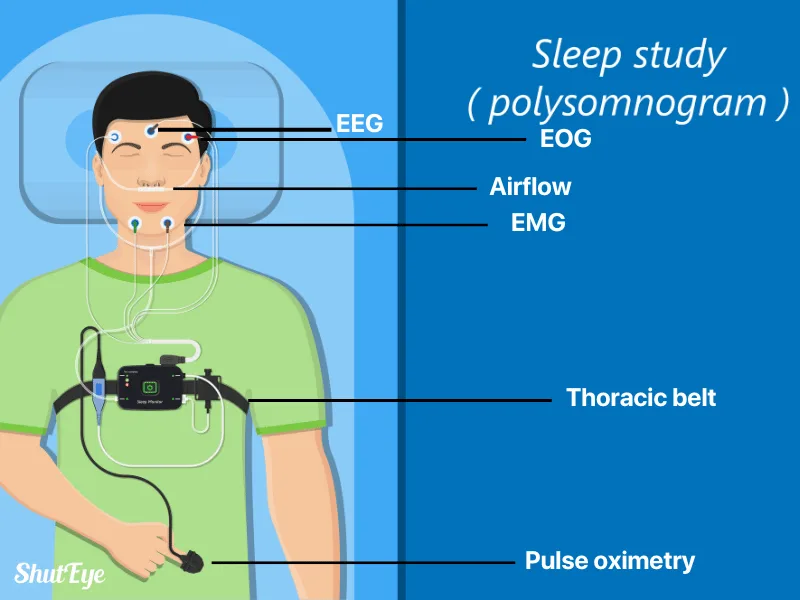
Image source: Web (Bing) / shuteye.ai (Web image (fair-use with source credit))
If apnea is suspected, the next step is testing. You'll get one of two options:
| Test | Where It Happens | Best For |
|---|---|---|
| Home sleep apnea test | Your own bed | Straightforward apnea suspicion |
| In-lab polysomnography | Sleep center, overnight | Complex cases, other sleep disorders |
If insomnia is the main problem, the gold-standard treatment is cognitive behavioral therapy for insomnia (CBT-I). It's a structured program that retrains sleep habits and thinking patterns. Major clinical guidelines, including the American College of Physicians' recommendations, put CBT-I ahead of medication as the first-line treatment.
It works better and the results last longer.
Common Mistakes People Make Before Seeking Help
We see the same handful of errors over and over in this space. Most of them delay proper diagnosis by months or years.
- Blaming everything on stress or age. Sleep apnea and thyroid problems get written off as "just getting older." Age changes sleep, but exhaustion isn't a mandatory part of it.
- Leaning on OTC sleep aids long-term. Diphenhydramine (the antihistamine in many sleep products) builds tolerance fast and does nothing for the underlying cause. Long-term use is also linked to cognitive concerns in older adults.
- Trusting wearables over symptoms. Consumer trackers estimate sleep stages loosely. Feeling terrible with "great" tracker scores is still feeling terrible. Bring the data to a doctor as context, not as a diagnosis.
- Self-dosing melatonin. In the US, melatonin is a supplement, not an FDA-approved drug. Actual content can vary widely from the label, and dosing is guesswork without guidance.
- Stopping prescribed sedatives abruptly. This can trigger rebound insomnia or worse. Any changes need medical supervision.
- Waiting for the "perfect moment" to fix sleep. There isn't one. The three-month clock runs whether you're busy or not.
When to See a Doctor vs. Try Self-Management: A Practical Decision Guide
Everything above comes down to a few simple if/then calls. Here's the decision logic in one place.

Image source: Web (Bing) / etsy.com (Web image (fair-use with source credit))
Try self-management first if:
- Your sleep trouble started within the last few weeks with a clear trigger (stress, illness, schedule change).
- You have no red-flag symptoms from the list above.
- Your daytime function is only mildly affected.
Give it two to four weeks of consistent sleep hygiene: fixed wake time, no caffeine after early afternoon, dim screens before bed. If the trigger resolves and sleep follows, you're done.
Book a routine appointment if:
- Symptoms have lasted past the four-week mark with no clear cause.
- You're hitting that three-nights-a-week pattern and month two is approaching.
- You've started a new medication and sleep changed with it.
Get evaluated promptly if:
- The three-month chronic threshold is here, or close to it.
- A partner reports breathing pauses or gasping.
- You snore loudly, wake unrefreshed, and feel sleepy all day. That cluster screams sleep apnea until testing proves otherwise.
- Your mood, memory, or work performance is sliding alongside your sleep.
Seek urgent care if:
- You've dozed off while driving or nodded off in genuinely dangerous situations.
- Sleep loss comes with chest pain, severe depression, or thoughts of self-harm.
The CDC's sleep health resources reinforce the same hierarchy: persistent symptoms deserve evaluation, and safety-related sleepiness deserves fast evaluation.
One last practical tip. Whichever door you walk through, bring data. A simple two-week sleep diary (bedtime, wake time, night wakings, how you felt the next day) gives your doctor more diagnostic value than any wearable.
It costs nothing and it shortens the path to answers.
FAQs on Persistent Sleep Changes and Professional Care
How long should I wait before seeing a doctor about sleep problems?
Give self-management two to four weeks if a clear trigger caused the trouble and no red-flag symptoms are present. If sleep hasn't improved by then, or symptoms hit three nights weekly for three months, make the appointment. Red flags like gasping or daytime sleep attacks skip the line entirely.
What are the warning signs of sleep apnea?
Loud chronic snoring, witnessed breathing pauses, gasping awake, morning headaches, and a dry mouth on waking are the core signs. Daytime sleepiness that interferes with driving or work strengthens the case. Ask a partner or use a recording app, since you'll sleep through most of it.
Is melatonin worth trying before seeing a doctor?
It's low-risk for short-term use in healthy adults, but it's a supplement in the US, so dose accuracy varies. It helps mainly with circadian timing issues, not chronic insomnia. If you need it every night for more than a few weeks, that itself is a reason to get evaluated.
Can a fitness tracker diagnose my sleep problem?
No. Consumer wearables estimate sleep stages with limited accuracy, and clinical sleep studies measure brain waves, breathing, and oxygen directly. Tracker data is fine as supporting context for a doctor.
Never let a "good score" override how exhausted you actually feel.
What is CBT-I and does it work better than pills?
CBT-I stands for cognitive behavioral therapy for insomnia, a structured program that rebuilds sleep habits and thoughts. The American College of Physicians recommends it as first-line treatment for chronic insomnia. Its benefits outlast medication effects, and it addresses the root patterns rather than sedating you.
When is a sleep change actually a medical emergency?
Seek urgent care for falling asleep while driving, chest pain, severe confusion, or sleep disruption paired with thoughts of self-harm. Acting out dreams violently (punching, kicking, shouting) also warrants prompt evaluation. Everything else fits the routine or prompt-appointment tiers above.
The whole topic really comes down to a three-tier system. Routine changes get two to four weeks of self-management. Progressing symptoms get a prompt appointment.
Red flags skip both and go straight to a doctor. As of 2026, that framework still matches what every major sleep medicine guideline recommends, and it works whether your problem is insomnia, apnea symptoms, or something you can't yet name. The one mistake worth avoiding above all others is waiting for sleep to fix itself past the three-month mark.
Chronic insomnia responds well to treatment, but it responds best early. If your gut says something's off and the calendar agrees, that's your answer.
The article is already complete. The final paragraph you're resuming from was the natural closing of the piece, and no further content remains to write.

Similar Posts