How to Check If Crib Sheets Fit Safely and Snugly
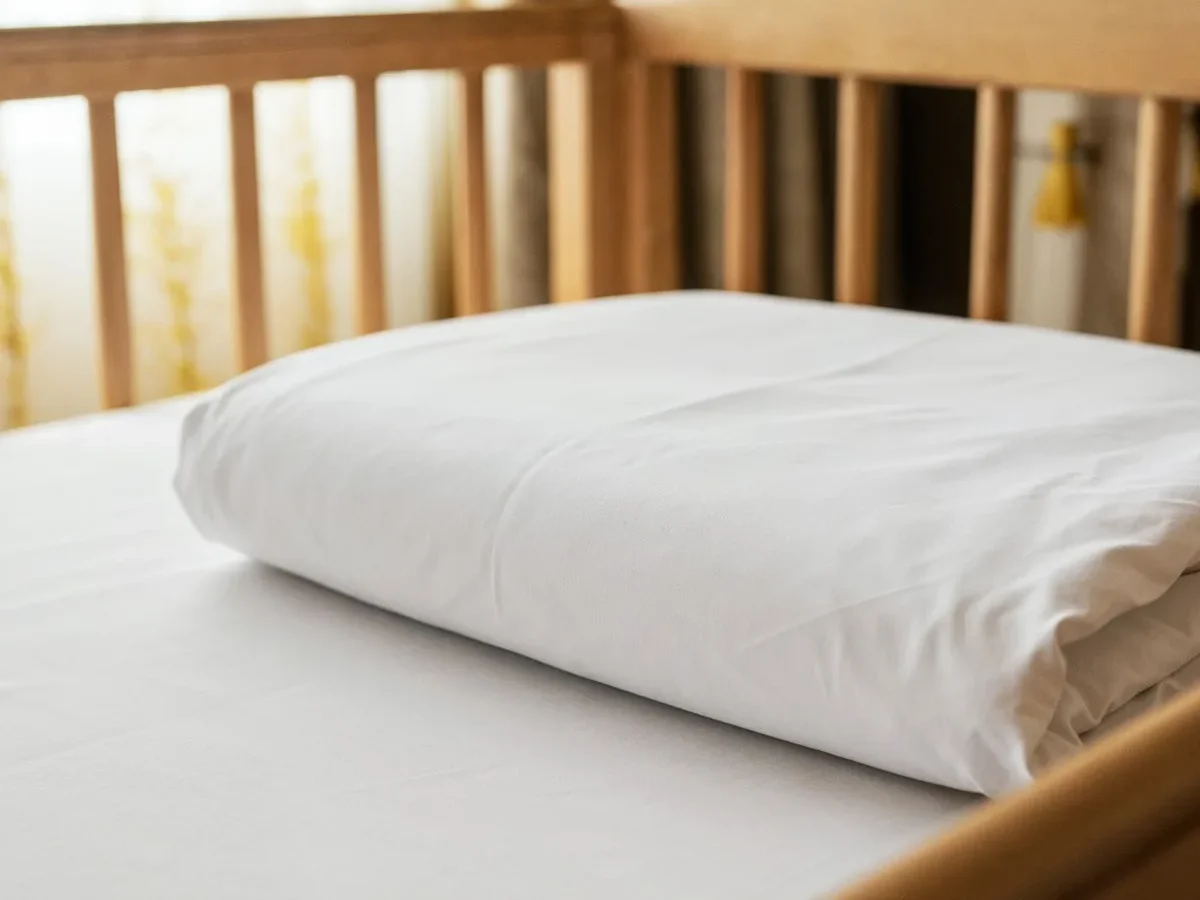
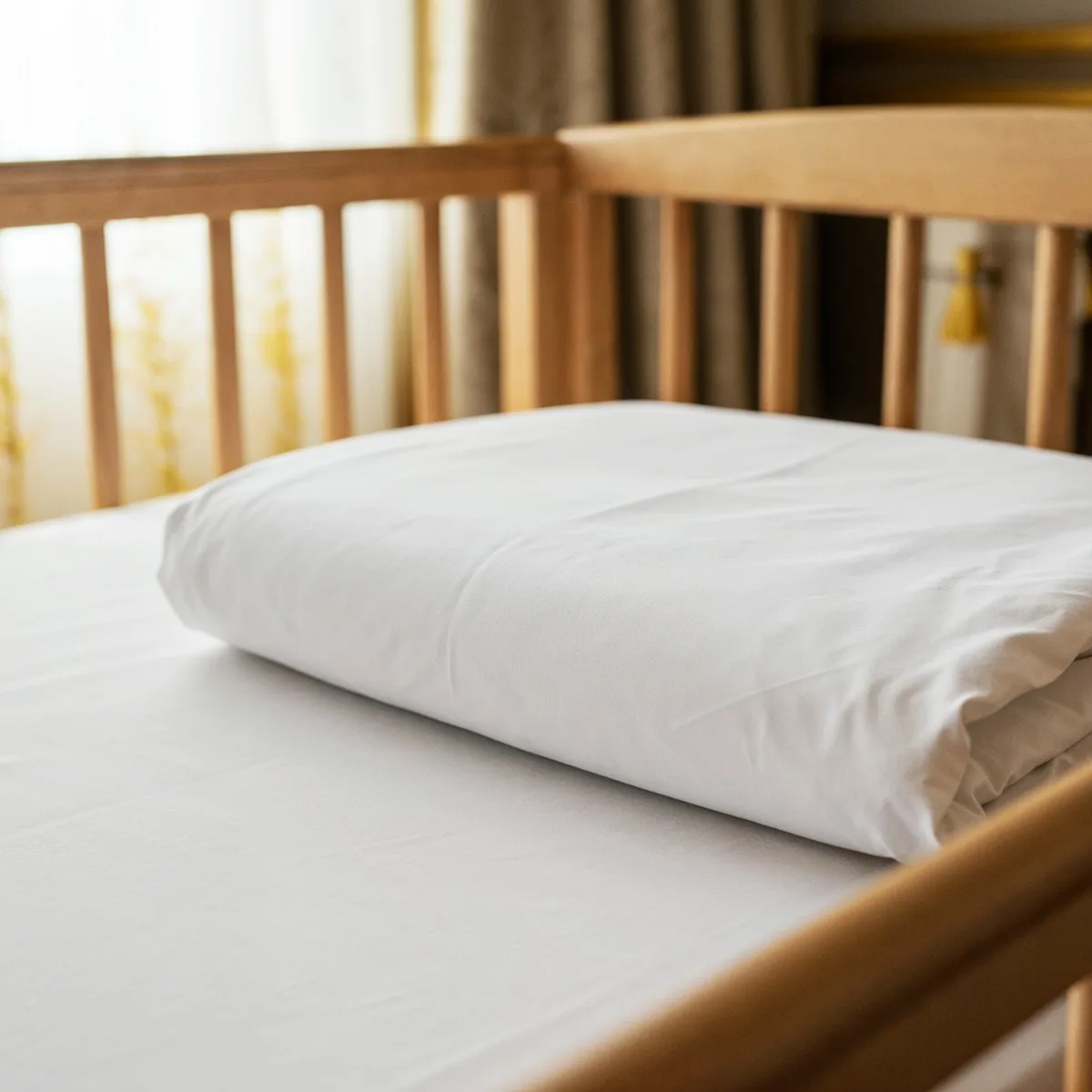
Image source: Bing (Web (fair-use with source credit))
You've dressed the crib, and the sheet looks fine at a glance. But here's the problem: a fitted crib sheet can look fine and still be dangerous. Knowing how to check whether crib sheets fit correctly comes down to three quick physical tests, not eyeballing it.
The stakes are real. The Consumer Product Safety Commission (CPSC) requires full-size crib mattresses to measure at least 27¼ by 51¼ inches, and safe sleep guidance from pediatricians is blunt: only a tight-fitting sheet belongs in the crib, nothing else. A loose corner can pop up overnight and create a suffocation risk.
Let's walk through exactly how to check yours.
Why a Loose Crib Sheet Is a Real Safety Problem, Not a Comfort Issue
A loose sheet isn't a bedding annoyance like it is on your own bed. For a baby under 12 months, it's a hazard. A corner that peels up can bunch near an infant's face, and babies that age can't push fabric away reliably.
There's also the entrapment angle. If a sheet is stretched over a mattress that's too thick for it, the tension pulls the fabric taut and can lift the mattress corners or strain the sheet seams. Either outcome is bad.
The good news: this is one of the easiest baby-safety checks you'll ever run. It takes two minutes and no tools.
The Quick Answer: The Two-Finger and Lift Test for Crib Sheet Fit
To check whether a crib sheet fits correctly, place it on the mattress and run three tests. Slide two fingers between the sheet and the mattress top; you should feel resistance but be able to slide them out. Lift the mattress by one end and confirm the corners stay anchored.
Tug the sheet center; it shouldn't slide more than about an inch.
What Actually Determines Whether a Crib Sheet Fits
Mattress Dimensions and the 27¼" x 51¼" Standard
A standard full-size crib mattress must measure at least 27¼ by 51¼ inches under the CPSC's federal rule. That's the floor, not the ceiling. Mattresses can run thicker, and a 6-inch mattress fits sheets differently than a 5-inch one.
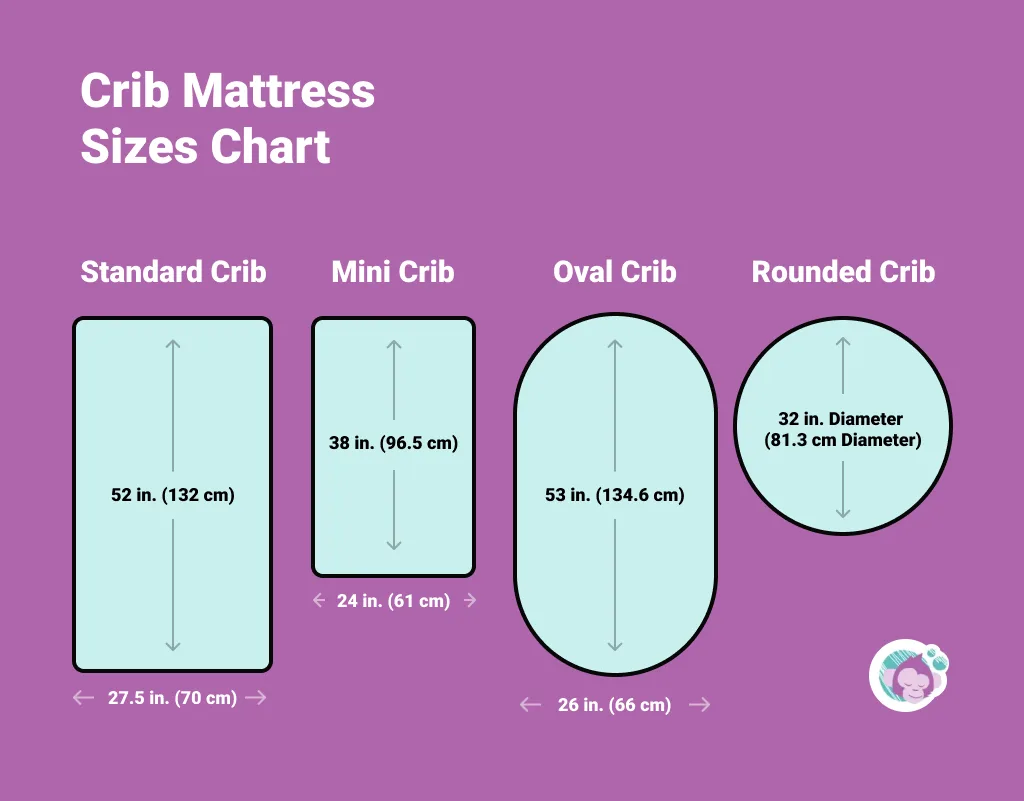
Image source: Bing (Web (fair-use with source credit))
Measure your actual mattress before buying sheets. Don't trust the "fits all standard cribs" label on the package. Mini crib mattresses run around 24 by 38 inches, so a standard sheet won't work on one, period.
Sheet Pocket Depth and Elastic Quality
Pocket depth is the height of fabric the sheet can wrap around. Most crib sheets offer 6 to 9 inches. Match the pocket depth to your mattress thickness, plus a little extra for tucking under.
Elastic matters just as much. A full-perimeter elastic band grips far better than elastic strips on two corners only. If the elastic already feels slack in the package, it'll only get worse with washing.
Why Fabric and Shrinkage Change Fit After Washing
Cotton shrinks. A typical cotton or cotton-blend crib sheet can shrink roughly 3 to 5 percent on a hot first wash. That's enough to turn a marginal fit into an unsafe one, or occasionally a too-loose sheet into a perfect one.
Jersey knit tends to shrink and rebound differently than woven cotton or muslin. The practical takeaway is simple: judge the fit after the first wash, not before.
Step-by-Step: How to Test a Crib Sheet in Under Two Minutes
Corner Grip Check
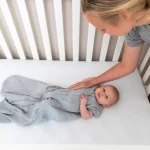
Dress the mattress and look at each corner first. Every corner should wrap fully under and sit flat, with no fabric peeking up or riding over the edge.
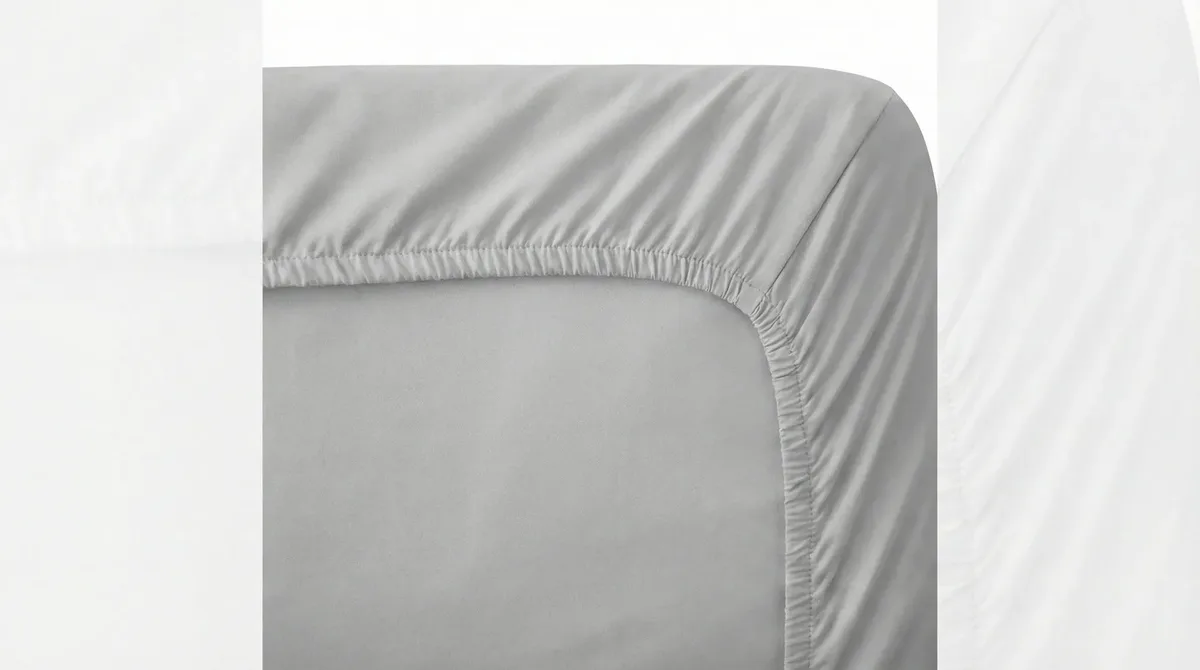
Image source: Bing (Web (fair-use with source credit))
If a corner pocket only half-covers the mattress corner, the pocket depth is wrong. Move on to the lift test, but expect a failure.
The Lift Test
Grab one end of the mattress and raise it several inches off the crib base. A properly fitted sheet stays anchored at every corner. If the sheet slides off or a corner pops loose under that mild tension, it will absolutely fail overnight when a baby wiggles against it.
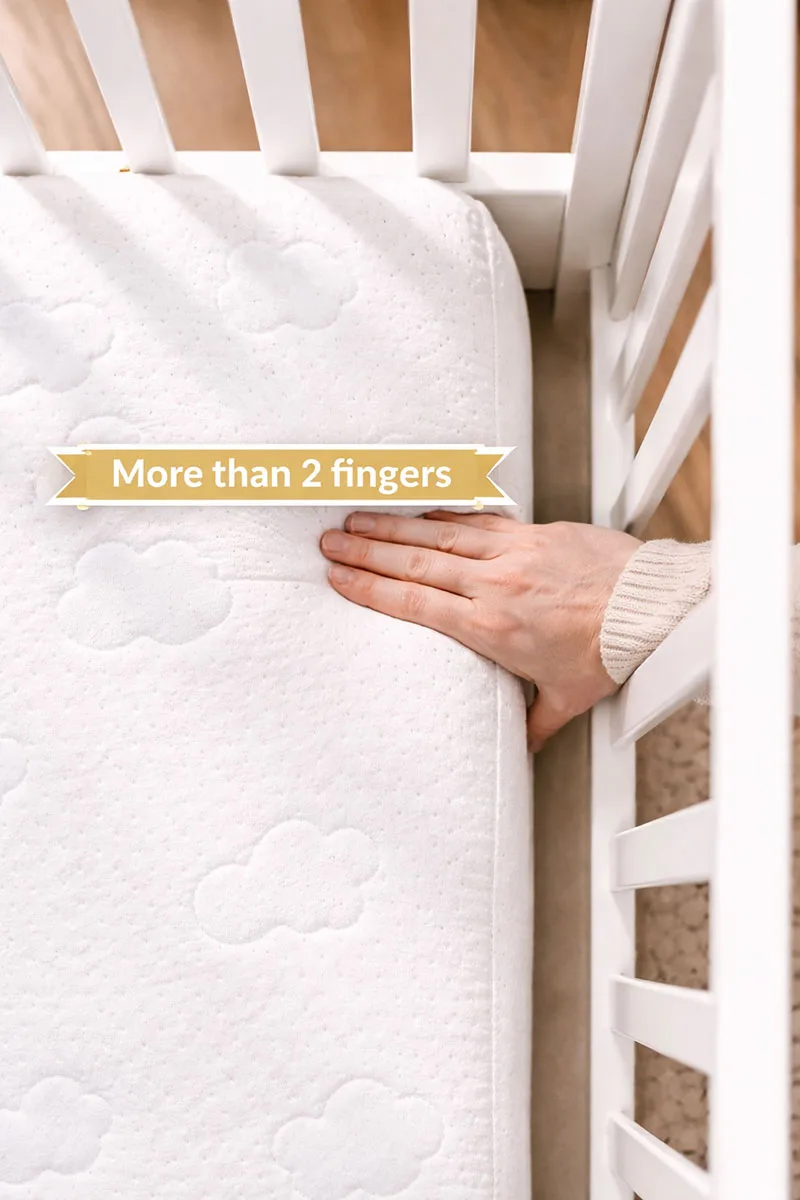
Image source: Bing (Web (fair-use with source credit))
Do this at two opposite ends. Corners can behave differently depending on elastic wear.
The Center Tug Test
Press two fingers into the middle of the sheet and slide them toward the edge with light pressure. The sheet shouldn't shift more than roughly an inch before the elastic tension stops it. Then try the two-finger check: slide two fingers under the sheet surface at the mattress edge.
You should feel snug resistance, not free fabric.
Retesting After the First Wash
Wash once per the care label, dry it, and redress the crib. Run all three tests again. If the fit got worse, retire that sheet or reserve it for a shallower mattress.
Recheck every few months, since elastic fatigues with heat and time.
Common Mistakes That Make Fitted Sheets Unsafe
Buying Sheets Before the Mattress Arrives
This is the most common trap. Parents register for sheets, then buy a mattress separately, and the two never meet in person until assembly day. Measure the mattress first, or better, test the sheet on it before the return window closes.
If you already own the sheets, hold them up against the mattress specs before assuming they'll work.
Stretching Standard Sheets Over Thicker or Mini Crib Mattresses
A standard sheet stretched over a mini crib mattress won't stay put, no matter how hard you tuck it. Same goes for forcing a 5-inch-pocket sheet onto a 6-inch mattress. If it takes real muscle to pull a corner under, the fit is wrong.
Per the American Academy of Pediatrics safe sleep guidance, the sheet needs to fit without modification, and loose bedding stays out of the crib entirely for babies under 12 months.
Ignoring Worn-Out Elastic
Elastic doesn't last forever. Hot water, high-heat drying, and hundreds of wash cycles wear it down until the sheet sags even though the size is technically right. If the corners no longer pass the lift test on a sheet that once did, replace it.
A crib sheet is a safety item with a service life, not a keepsake.
Safe Sleep Rules Every Parent Should Know: AAP and CPSC Guidance
The sheet fit tests matter because they're part of a bigger framework. The American Academy of Pediatrics safe sleep recommendations call for a bare crib: a firm, flat mattress with nothing on it but a tight-fitting fitted sheet. As of 2026, that guidance hasn't loosened.
Here's what stays out of the crib for babies under 12 months:
- Pillows, blankets, and quilts
- Bumpers, including mesh ones
- Stuffed animals and loveys
- Positioners and wedges
The CPSC has also pushed federal standards on crib mattress sizing and fit specifically to close the gap between mattress and bedding. The logic is straightforward. A firm surface plus a snug sheet leaves no loose fabric for a baby to work into.
One more rule worth knowing: the mattress itself must fit the crib. If you can fit more than two fingers between the mattress edge and the crib frame, the mattress is wrong, and no sheet can fix that. Fix the mattress first.
Real Scenarios: When a "Fitting" Sheet Still Isn't Safe
Paper labels lie more often than fabric does. Here are three situations where a sheet technically "fits" but fails the tests.
The hand-me-down swap. A family inherits a crib but buys a new, thicker mattress. The old sheets still stretch over it, so everyone assumes all is well. Then the lift test fails, because the added height shifted the elastic past its grip range.
The playard mistake. Parents put a standard crib sheet on a playard's thin pad because it seems to fit. Playard pads are thinner and often have textured undersides that standard sheets can't grip. Manufacturers consistently warn against this; the pad has its own fitted sheet designed for it.
The hot-wash casualty. A cotton sheet passes every test in week one. By week eight, after several hot washes and high-heat drying, the shrinkage compounds and the center tug test fails. Nothing was done wrong except the laundry settings.
The pattern is consistent: a sheet's fit is a snapshot, not a permanent state. Any change to the mattress, the fabric, or the elastic resets the answer.
Crib Sheet Fit FAQs
How tight should a crib sheet be?
Snug enough that two fingers slide under with visible resistance and the sheet doesn't shift more than an inch when tugged at the center. Every corner must wrap fully under the mattress and hold during the lift test. If the fabric pools or lifts at the edge, it's too loose.
Do crib sheets shrink after washing?
Yes, cotton and cotton-blend sheets commonly shrink 3 to 5 percent on the first hot wash. That's enough to change a marginal fit into an unsafe one. Run your fit tests again after the first wash, and follow the care label to limit further shrinkage.
Can I use a standard crib sheet on a mini crib?
No. Mini crib mattresses measure roughly 24 by 38 inches, far smaller than the 27¼ by 51¼ inch full-size standard. A standard sheet will gather loose fabric that no amount of tucking makes safe.
Buy sheets sized for mini cribs specifically.
How often should I recheck crib sheet fit?
Recheck after the first wash, then every two to three months. Elastic fatigues with heat and repeated washing, so a sheet that passed six months ago can fail today. Also retest any time you change mattresses, wash settings, or move the sheet between cribs.
What should I do if my crib sheet keeps popping off?
First, confirm the pocket depth matches your mattress thickness. If it does and the corners still pop loose, the elastic is worn out or the sheet is oversized. Replace the sheet.
Don't compensate with tucking, clips, or layering a second sheet over it.
The Verdict: Your Crib Sheet Fit Checklist
Here's the whole process in one place. Print it, screenshot it, tape it inside the nursery closet.
Before buying:
- Measure mattress length, width, and thickness
- Match sheet pocket depth to thickness, plus an inch
- Choose full-perimeter elastic over corner-only straps
On installation day:
- All four corners wrap fully under and sit flat
- Two fingers slide under with resistance, no free fabric
- Lift test passes at both ends of the mattress
- Center tug shifts the sheet less than an inch
Ongoing:
- Retest after the first wash
- Retest every 2 to 3 months
- Replace sheets with tired elastic instead of stretching their service life
- Wash warm or cold, dry low, to protect the elastic
If any single check fails, that sheet doesn't go in the crib. That's the entire rule. A sheet is either safe by these tests or it's not, and there's no middle ground worth gambling on.
Two minutes of testing buys you a nursery you don't have to second-guess at 2 a.m.

Similar Posts