Why Your Newly Rolling Baby Is Suddenly Waking More

Your baby just learned to roll, and suddenly nobody's sleeping. If you're searching for why a newly rolling baby wakes more often, the short answer is that a brand-new motor skill scrambles your baby's brain at night. They practice in their sleep, flip onto their tummy, and can't always get back.
That means more wakeups, more crying, and more 3 a.m. crib rescues for you.
In our research across pediatric sleep guidance and parent-reported timelines, the disruption usually peaks in the first one to two weeks. The American Academy of Pediatrics sets the safety rules that matter here: back to sleep for every placement, and stop swaddling the moment rolling starts. Once you understand what's driving the wakeups, you can fix the setup and shorten the phase.
Quick Answer
A newly rolling baby wakes more often because the new skill gets rehearsed during light sleep. Babies flip onto their tummy and sometimes get stuck. Their arousal threshold is naturally low at this age, around 3 to 6 months.
Each half sleep cycle, roughly 40 to 50 minutes, becomes a chance to roll. Most babies adapt within one to two weeks.
Why Your Baby Suddenly Wakes More Once They Start Rolling
Rolling is usually the first big motor milestone, and it typically shows up between 3 and 6 months. Learning it takes serious brain power. Your baby's nervous system spends nighttime consolidating that new skill, and that consolidation looks a lot like restless sleep.
Here's the frustrating part. Babies this age cycle through light and deep sleep every 40 to 50 minutes. Adults do the same thing over roughly 90 minutes, but we've had decades of practice rolling over in our sleep without waking.
Your baby hasn't. Every time they surface into light sleep, their body tries out the new move.
Then one of two things happens. Either the rolling wakes them up on its own, or they flip onto their tummy and realize they don't know how to get back. Both end in crying.
The wakeups feel random, but they're really your baby's brain doing exactly what it's supposed to do.
The good news: this is a phase, not a permanent sleep problem. Babies who are allowed to practice and figure it out usually settle within days to a couple of weeks.
What's Actually Happening: Rolling, Sleep Cycles, and the Startle Reflex
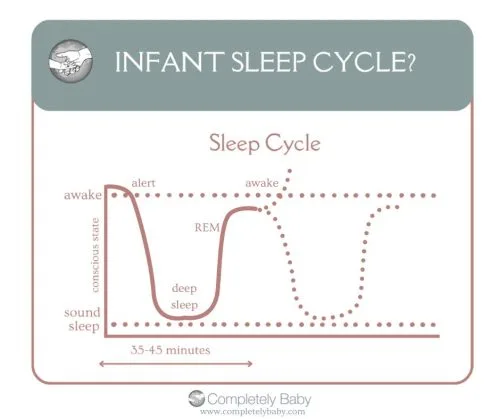
Three things stack up at once during this phase. Understanding them helps you respond correctly instead of accidentally making things worse.
New movement awareness. Rolling changes how your baby's body feels in space. Their vestibular system, which senses balance and position, is suddenly getting new input. That input can jolt them toward wakefulness, especially during active sleep when infants spend about half their sleep time.
A lower arousal threshold. Young infants wake more easily from light sleep than older children do. That's protective, but it means every new sensation, like a hip twisting or an arm flopping over, can trigger a full wakeup.
The Moro reflex. Also called the startle reflex, this is the involuntary arm-fling babies do in response to a sensation of falling. A mid-roll wobble can set it off. This is exactly why swaddling used to help, and it's why losing the swaddle at rolling age creates a rough stretch.
Per CDC safe sleep guidance, none of this means you should restrain or prop your baby. The reflexes and the practice both fade with time. Your job isn't to stop the rolling.
It's to make the environment safe so your baby can work through it.
Is It Rolling or the 4-Month Sleep Regression? How to Tell the Difference
The first sentence answer: rolling disruption is tied to a specific new skill, while the 4-month regression is a permanent change in how your baby's sleep cycles mature. They often overlap around 4 months, which is why parents confuse them.
Here's a quick way to sort it out.
| Clue | Rolling disruption | 4-month regression |
|---|---|---|
| Timing | Right after first rolls | Around 3.5 to 5 months, gradual |
| Wakeup pattern | Baby is on tummy, or mid-flip | Wakes fully between cycles, no rolling involved |
| During the day | Lots of rolling practice, growing skill | New alertness, distractible feeding |
| Resolution | 1 to 2 weeks once rolling is old news | Doesn't fully revert, sleep patterns mature |
The practical takeaway: if your baby is crying while stuck on their tummy, that's rolling. If they're waking every cycle but staying on their back, it might be both happening at once. Honestly, many babies hit both together.
The response is similar anyway. Keep the sleep space safe, keep routines consistent, and avoid introducing habits you'll need to unwind later, like rocking fully to sleep every single time.
The Rolling Wake-Up Decision Tree: What to Do When Baby Flips at Night

This is where most parents freeze at 2 a.m. Should you flip the baby? Leave them?
The answer depends on what your baby can actually do. Work through these branches in order.
If Baby Rolls Onto Their Tummy and Can't Roll Back
Wait briefly first. Give it 30 to 60 seconds of observation before intervening. Many babies fuss for a moment and either roll back or settle on their tummy.
If they're crying hard or their face is pressed down, go in and roll them onto their back calmly. Keep the lights low and interaction minimal. If you flip them repeatedly all night, some babies start treating it as a game or a comfort request.
Limit flipping to safety situations, and lean hard on daytime practice so they learn the reverse roll faster.
If Baby Rolls but Sleeps Fine on Their Tummy
If your baby rolled there themselves and can roll back, you can leave them. The AAP's guidance is clear on this: always place your baby on their back to start sleep, but you don't need to stay up all night re-flipping a baby who rolls independently. Back is the starting position, not a permanent lockdown.
If the Swaddle Is the Problem
If your baby is still swaddled and rolling, that's the immediate fix. Stop swaddling tonight, no exceptions. A swaddled baby who flips face-down can't push up or turn their head freely.
Expect a rough 3 to 7 nights while they adjust to having free arms. A transition sleep sack replaces the swaddle safely and keeps the startle reflex from waking them as often. Most babies adapt to arms-out sleep faster than parents expect, especially with a consistent routine on either side of it.
The Safe Sleep Setup That Makes This Phase Easier

A safe crib does double duty here. It protects your baby and gives them the freedom to learn to roll back on their own. Run through this checklist before tonight.
- Firm, flat mattress. No wedges, no incline, no soft toppers.
- Empty crib. No pillows, blankets, stuffed animals, or bumpers, including mesh ones. Loose items are suffocation hazards.
- Back to start every sleep. Naps and nights, every time.
- Sleep sack instead of swaddle. Pick a TOG rating that matches your room temperature so cold arms don't add extra wakeups.
- Bassinet check. Most bassinets have weight limits around 15 to 20 pounds, and a rolling baby needs room. If yours feels tight, it's time for the crib.
One thing you should never buy: an anti-roll device or sleep positioner. These products are not safety-approved for infant sleep, and the AAP warns against them because they create suffocation risk. The rolling itself isn't the danger.
An cluttered or propped sleep space is. Clear the crib, trust the setup, and let your baby practice their way out of this phase.
The One-Week Action Plan: Daytime Practice, Nighttime Response
Daytime practice is the single biggest lever you have. Every supervised roll your baby does while awake shortens the nighttime disruption. The logic is simple: the faster rolling feels boring, the faster their brain stops rehearsing it at 2 a.m.
Here's what a solid practice day looks like.
- Floor time, 3 to 4 sessions. Spread them across the day, 10 to 15 minutes each. Bare feet on a firm surface helps them push off.
- Lure the roll. Hold a favorite toy just out of reach to one side. Let them work for it.
- Practice the return trip. Most babies learn tummy-to-back first. Gently guide their legs through the reverse roll a few times so the movement feels familiar.
- Stop before bedtime. No rolling games in the last hour before sleep. Wind-down only.
At night, keep your response boring and consistent. Low light, few words, quick safety check, done. If you've gone in to flip a stuck baby, put them down on their back and leave before they're fully asleep.
If you rescue every single wakeup with bouncing or rocking, you're teaching a habit that outlasts the rolling phase itself.
One more tip that helps a surprising number of families: slightly cool rooms sleep better. Aim for 68 to 72°F, and dress for the room temperature, not the season outside.
Mistakes That Stretch This Phase From Days Into Months
Most families who struggle here aren't doing anything wrong on purpose. They're making one of a handful of very common mistakes. We've seen the same patterns repeat in parent forums and pediatric sleep clinics alike.
- Keeping the swaddle "just one more night." This is the dangerous one. A swaddled baby who rolls loses their ability to push up or turn their head. Stop the same night you see the first roll.
- Flipping baby back every time, all night. If baby can roll independently, constant re-flipping becomes a game or a sleep crutch. Flip for safety only.
- Adding pillows or positioners as a "fix." These are suffocation hazards and the AAP explicitly warns against them. They don't work either.
- Practicing rolling right before bed. You're winding baby up when they need to wind down. Save it for morning and midday floor time.
- Assuming it's teething or a growth spurt. Those get blamed constantly. If the timing matches the first rolls, it's the rolling. Treat the actual cause.
- Inconsistent responses. One night you flip, the next you don't, the third you bring baby into bed. Confusion stretches the phase longer.
Avoid these, and the timeline usually holds at one to two weeks. Break several at once, and you can end up with a 7-month-old still waking hourly over a skill they mastered months ago.
FAQs
Should I keep putting my baby on their back if they roll onto their tummy?
Yes. Always start every sleep on the back, even if baby rolls immediately. The AAP guidance is firm on this.
Once a baby rolls to their tummy independently and can roll back, you don't need to re-flip them all night. Back is the starting position, not a restriction that lasts forever.
Is it safe for my baby to sleep on their stomach if they rolled there themselves?
If your baby rolled there on their own, can roll back, and the crib is clear, this is generally fine. Keep placing them on their back at the start of every sleep. Never place a baby tummy-down.
Never leave loose bedding, pillows, or bumpers in reach. The safe sleep rules from the CDC still apply no matter how your baby ends up positioned.
How long does the rolling sleep disruption last?
Most babies settle within one to two weeks, per aggregate parent-reported timelines. Babies who get lots of daytime rolling practice often adjust in just 3 to 5 days. If waking persists past two weeks with no improvement, look at other causes.
Overtiredness, room temperature, and feeding changes are the usual suspects.
When exactly should I stop swaddling?
The moment your baby shows any sign of rolling, stop. This applies regardless of age, even at 8 weeks. A swaddled baby who rolls face-down cannot push up or turn their head freely, which raises suffocation risk.
Switch to a sleep sack the same night. Expect 3 to 7 rough nights while your baby adjusts to free arms.
Why does my baby cry when stuck on their tummy but not roll back?
Because the reverse roll is genuinely harder. Most babies master tummy-to-back first, then spend a week or two figuring out back-to-tummy-to-back cycles. Gently practice the return roll during daytime floor time.
Guide their legs and hips through the movement a few times each session. Until they've got it, a brief wait and a calm flip at night is your best move.
Should I sleep train during the rolling phase?
You can, but many families wait 1 to 2 weeks until the skill is consolidated. If your baby is waking purely because they're stuck or practicing, sleep training adds frustration without fixing the cause. If you're dealing with rolling plus a genuine dependence on rocking to sleep, a gentle method can work alongside the rolling adjustment.
When It Should Be Getting Better — and When It Isn't
Now you know why a newly rolling baby wakes more often, and you've got a plan. Here's how to judge whether things are on track.
- Days 1 to 3. Worst stretch. Expect frequent wakeups, stuck-baby crying, and swaddle-adjustment fussiness. Hold the routine.
- Days 4 to 7. Noticeable improvement for most babies. Fewer stuck moments, faster resettling.
- Week 2. Rolling feels old news. Wakeups should be close to your pre-rolling baseline.
- Week 3 and beyond. If you're still up every 45 minutes, something else is going on.
That last point matters. If night waking persists past the two-week mark, check the usual suspects first. Is the room too warm?
Are wakeups tied to feeds that used to be night feeds? Is bedtime too late, creating overtiredness? Fix those before assuming something is wrong with your baby.
There are also times to loop in your pediatrician. Call if your baby shows breathing pauses, unusual limpness, poor feeding, or if waking comes with genuine distress that doesn't fit any pattern. Trust your gut.
You know your baby better than any article does, and "something seems off" is always a valid reason to make the call.
For most families, though, this phase ends the way it arrived: suddenly. One night your baby just rolls over, flops onto their tummy, and sleeps straight through it. You'll wonder what all the fuss was about.
That's how motor milestones work, and it's the first of many you'll get through together.

Similar Posts