Safe Sleep Setup at Grandparents’ House: A Parent Guide
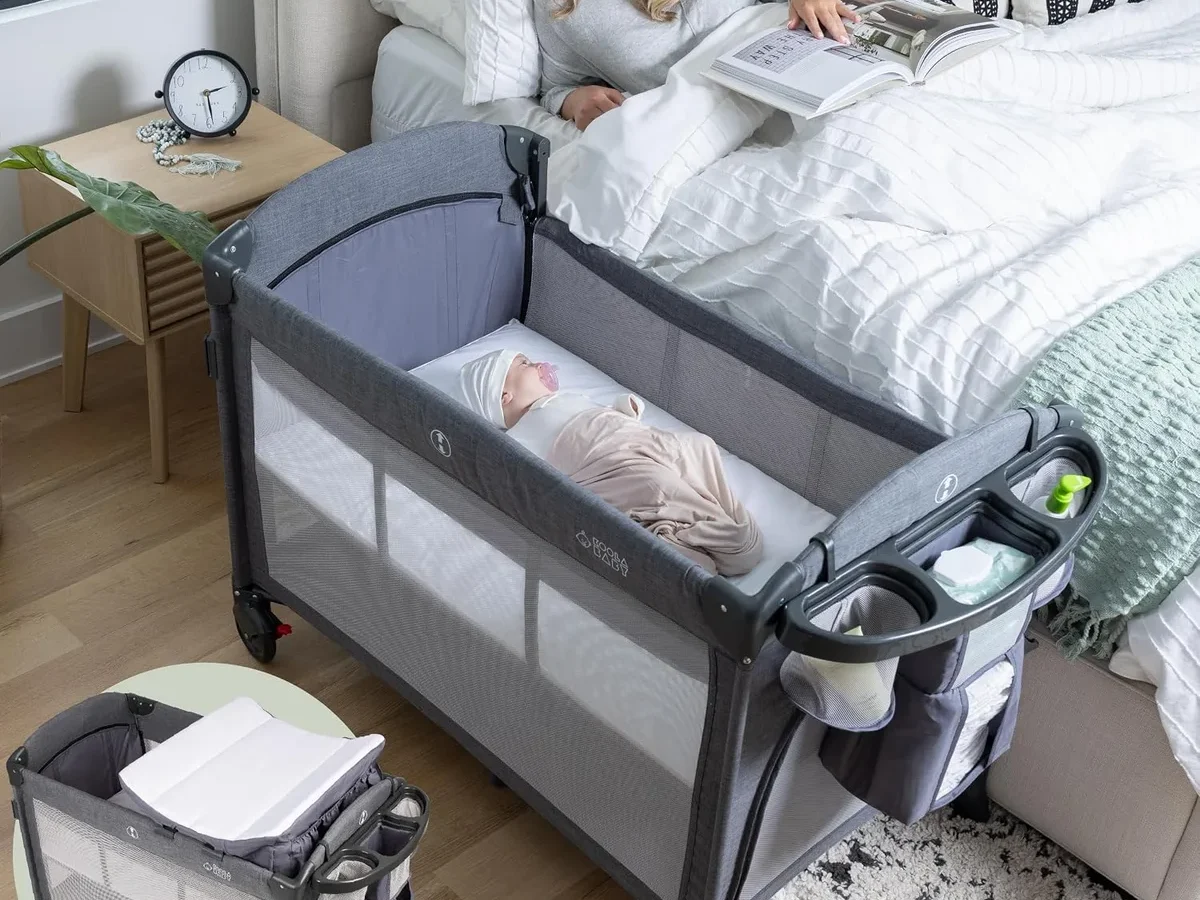
Your baby's sleep setup at your parents' house is just as important as the one in the nursery, and knowing how to organize safe sleep arrangements at grandparents' homes comes down to three things: a safe sleep space, the right gear, and a clear conversation with the grandparents. Get those right and overnight visits stop being stressful.
The stakes are real. The CDC reports around 3,400 sudden unexpected infant deaths in the US each year, and unsafe sleep conditions are a leading contributor. The American Academy of Pediatrics (AAP) safe sleep guidelines apply in every home, every time, not just yours.
Here's how to make grandma's house measure up.
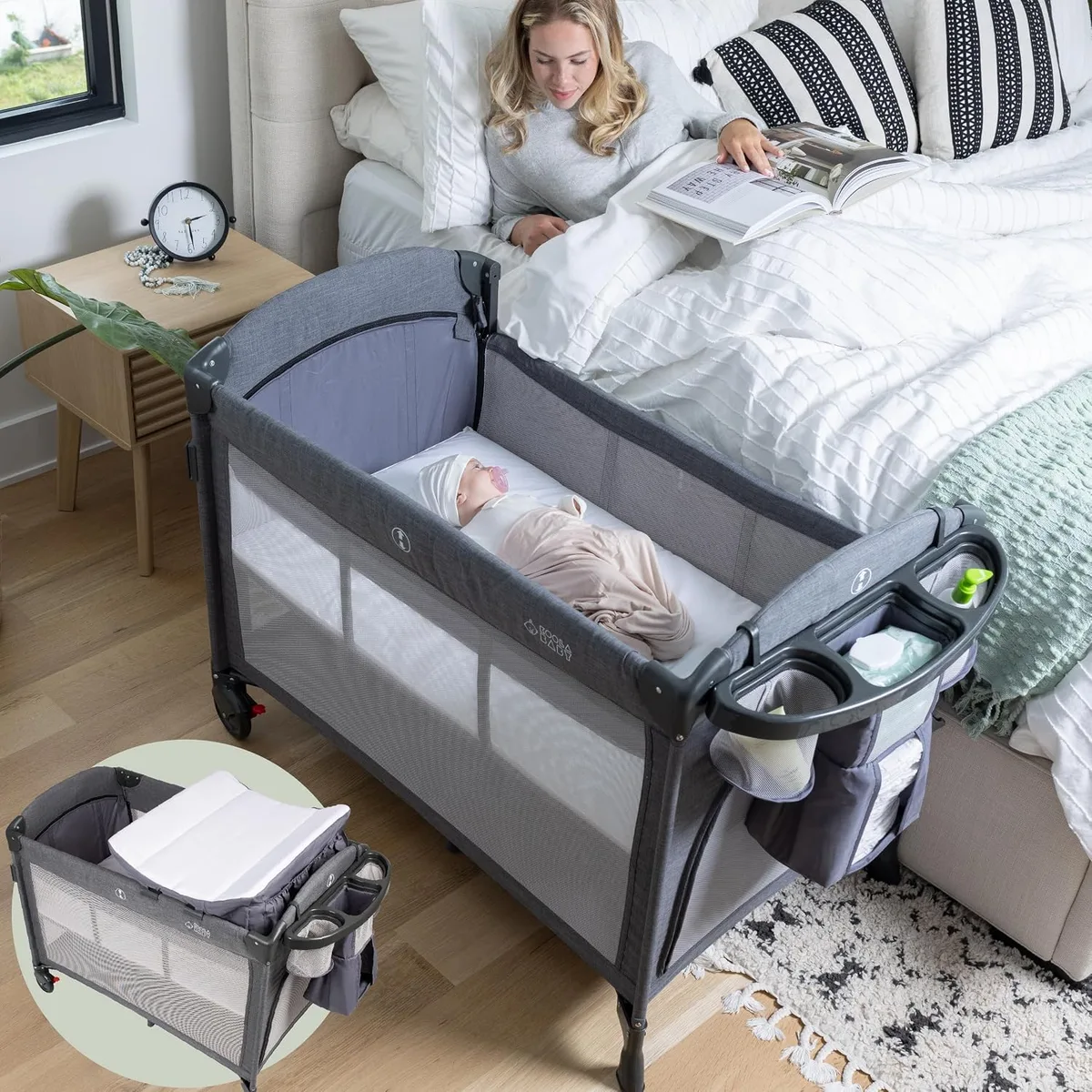
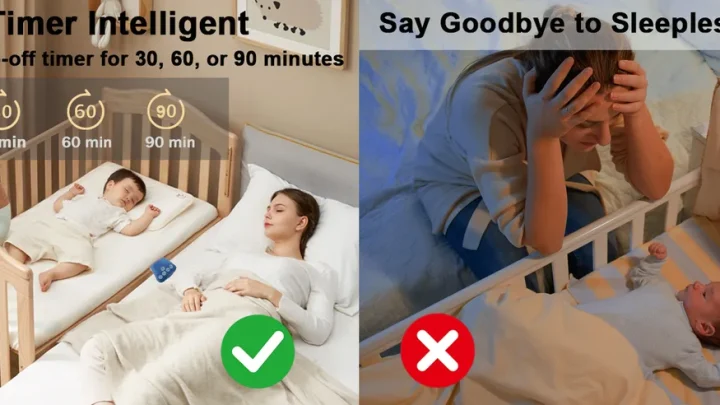
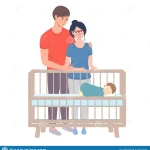
Image source: Web (Bing) / amazon.com (Web image (fair-use with source credit))
Quick Answer
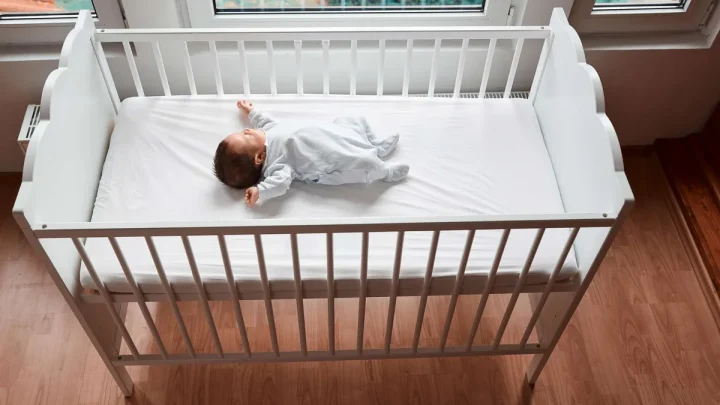
To organize safe sleep arrangements at grandparents' homes, set up a certified portable crib or play yard with a firm mattress and fitted sheet only. Place baby on their back, every sleep. Remove all blankets, pillows, and toys.
Verify the crib meets current CPSC standards. Talk grandparents through the rules before the visit.
Why Safe Sleep at Grandma's House Is a Bigger Deal Than You Think
Grandparents raised babies under older rules, and those rules have changed dramatically. Tummy sleeping was once standard advice. Drop-side cribs were sold everywhere.
Loose blankets in the crib were normal.
Today, we know better. Research consistently links back sleeping, firm flat surfaces, and bare sleep spaces with lower SIDS risk. The AAP updated its guidance in 2022 to reinforce all of it, and that guidance applies to every location where a baby sleeps.
The problem is practical, not emotional. Grandparents' homes often hold decades-old furniture, hand-me-down cribs, and well-meaning habits. A baby who sleeps perfectly safely at home can end up on a plush adult bed at grandma's, simply because nobody prepared the space.
The good news is that fixing this takes one afternoon. Most of the work happens before you even leave your house.
The Non-Negotiable Rules: AAP Safe Sleep Basics That Apply Everywhere
These rules don't flex by location. If a setup wouldn't pass at your house, it doesn't pass at grandma's either.
- Back to sleep, every time. Place baby on their back for naps and nights until age one.
- Firm, flat surface. The mattress shouldn't indent under your hand. No inclined sleepers, ever.
- Bare is best. Fitted sheet only. No pillows, blankets, bumpers, stuffed animals, or positioners.
- Room-share, don't bed-share. Baby sleeps in the same room as the adult, but on a separate surface, ideally for at least six months.
- No couches or armchairs. Falling asleep with a baby on a sofa or recliner is one of the highest-risk scenarios in the AAP guidance.
- Avoid overheating. Dress baby in one more layer than you'd wear. A sleep sack replaces loose blankets entirely.
If grandparents remember nothing else, teach them this short version: back, firm, bare, separate.
The Grandparent Danger Zone: Hand-Me-Down Cribs, Drop Sides, and Recalled Gear
This is where most second-home setups fail. The crib that stored your cousins' coats since 1998 isn't automatically safe just because it "always worked."
Drop-side cribs are the top offender. The CPSC banned them in 2011 after deaths linked to side rails detaching and trapping babies. Millions are still in attics and guest rooms. If the crib at grandma's has a rail that slides down, it needs to go.
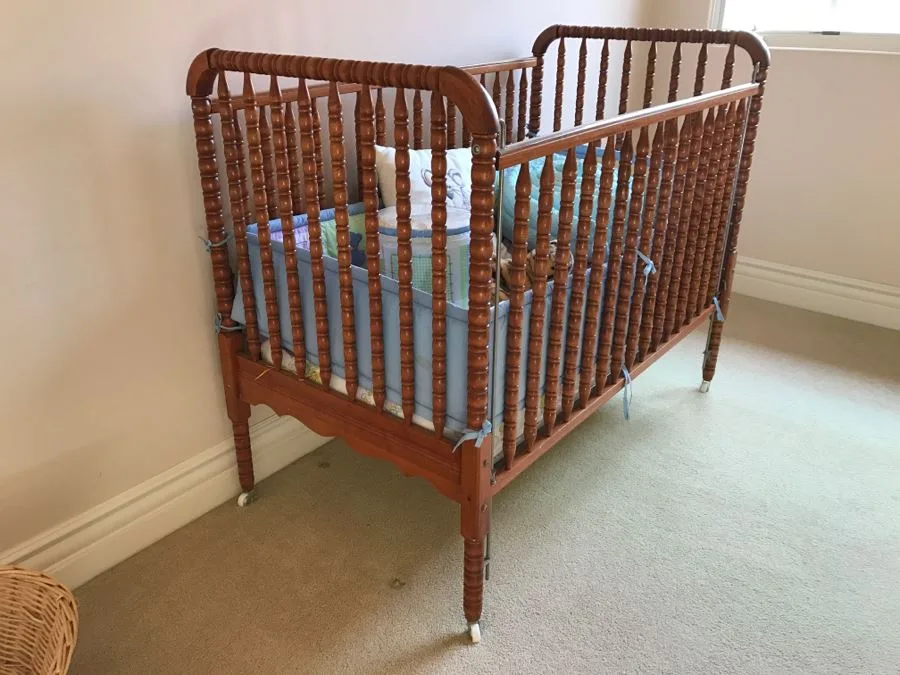
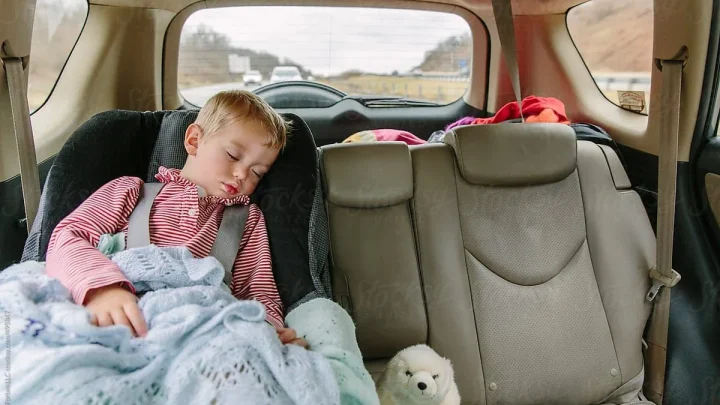
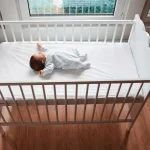
Image source: Bing (Web (fair-use with source credit))
Other common problems we see flagged in recall data and safety reports:
- Recalled inclined sleepers, including the 2019 Fisher-Price Rock 'n Play recall affecting roughly 4.7 million units.
- Cushioned bassinets from the 1990s with soft sides and no current certification.
- Missing or mismatched hardware on disassembled cribs.
- Mattress gaps wider than two fingers between the mattress and crib sides.
Before any visit, search the crib or sleeper's model number in the CPSC recall database at SaferProducts.gov. It takes two minutes and it's the single fastest safety check you can run.
How to Check a Crib Before Your Baby Sleeps in It
You don't need special training. You need five minutes and a checklist.
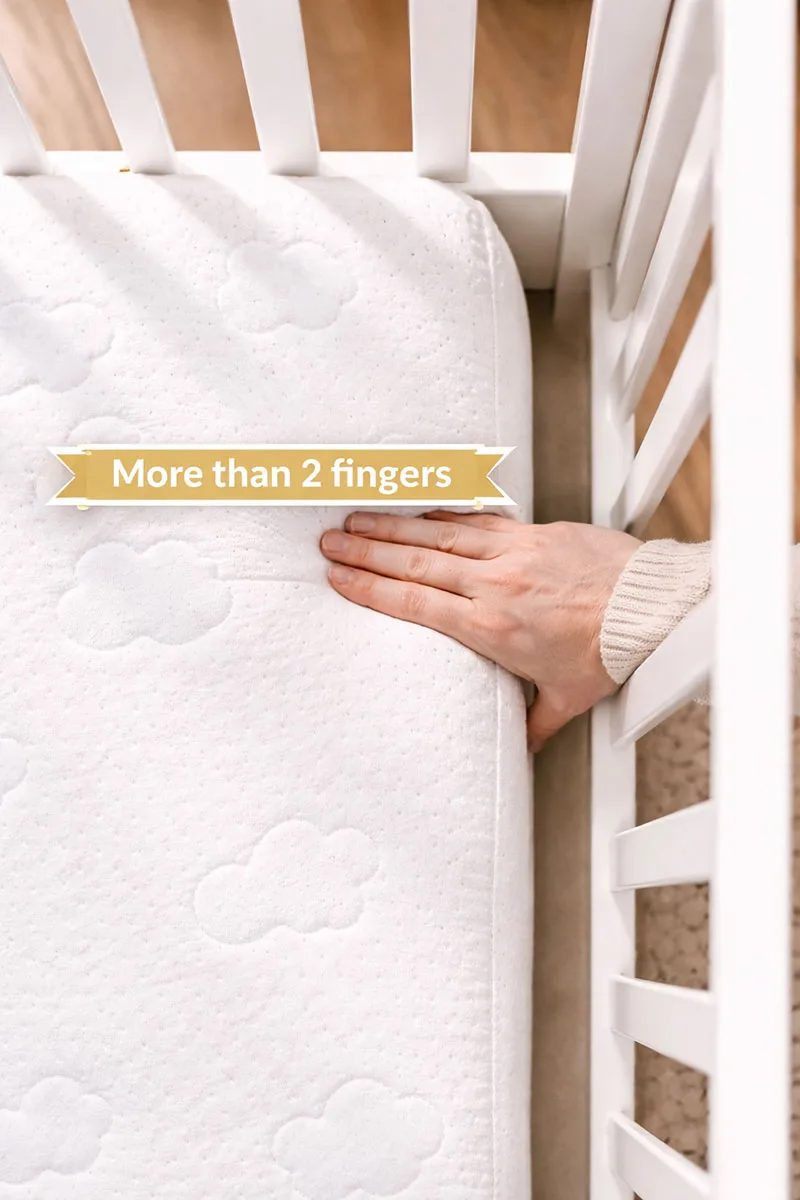
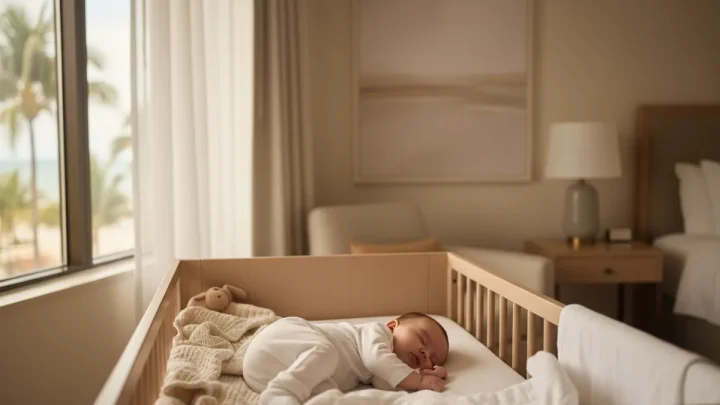
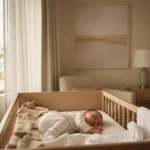
Image source: Web (Bing) / unique-baby-gear-ideas.com (Web image (fair-use with source credit))
Run through these steps:
- Confirm the date. Manufacturing date should be after June 2011, when the federal standard (16 CFR 1219) took effect.
- Shake test. Grab the crib and rock it hard. It shouldn't wobble or creak.
- Gap check. Try the two-finger test between mattress and sides. If two fingers fit snugly, the mattress is wrong.
- Firmness check. Press the mattress. It should snap back instantly with no dent.
- Hardware check. Every bolt, bracket, and screw present and tight. No jury-rigged repairs, zip ties, or duct tape.
- Recall check. Model number into SaferProducts.gov.
If the crib fails any of these, don't gamble. A basic certified play yard that meets ASTM F406 costs far less than the alternative risk. That's usually the smarter route for a second home anyway.
Setting Up the Sleep Space: A Room-by-Room Walkthrough
Pick the room before the visit and treat it like a mini nursery. Placement matters as much as the gear itself.
Location rules:
- Sleep space goes in the room where the supervising adult sleeps, at least for babies under six months.
- Keep it away from windows, blind cords, wall heaters, and radiators.
- Nothing hangs over or near the crib. No shelves, no picture frames, no decorative garlands.
Environment checks:
- Temperature: aim for 68 to 72°F. Older homes with radiator heat run hot; a cheap room thermometer solves the guesswork.
- Light: blackout curtains or a portable shade help naps stick to schedule.
- Sound: a portable white noise machine on low, placed across the room, masks household noise.
The Step-by-Step Setup Checklist
| Step | Action | Why It Matters |
|---|---|---|
| 1 | Assemble play yard, lock all sides | Partially collapsed rails create entrapment gaps |
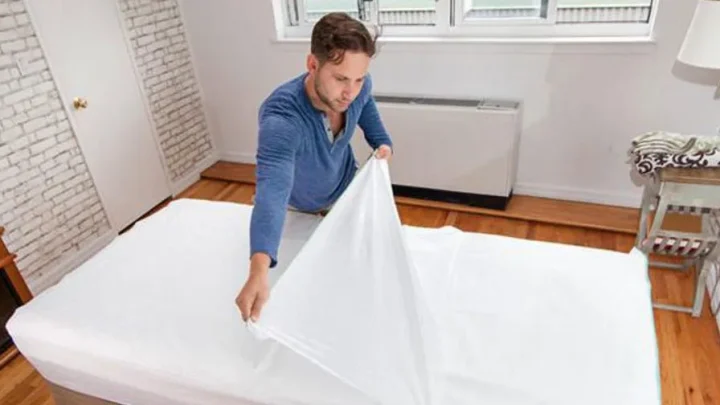
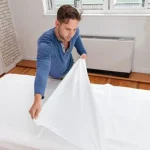
| 2 | Fit the snug fitted sheet | Loose bedding is a suffocation hazard |
| 3 | Add sleep sack, no blankets | Replaces loose bedding safely |
| 4 | Position away from cords, heaters | Prevents strangulation and overheating |
| 5 | Do a trial nap on day one | Confirms the setup works before a full night |
That trial nap is underrated. It surfaces problems, a monitor that doesn't reach, a too-warm room, while you're still there to fix them.
Pack vs. Buy: What to Bring from Home and What to Keep at Grandma's
The smartest move for regular visits is a permanent setup. If grandparents host your baby more than a few times a year, buy duplicate gear and leave it there. One-time packing works better for occasional trips.
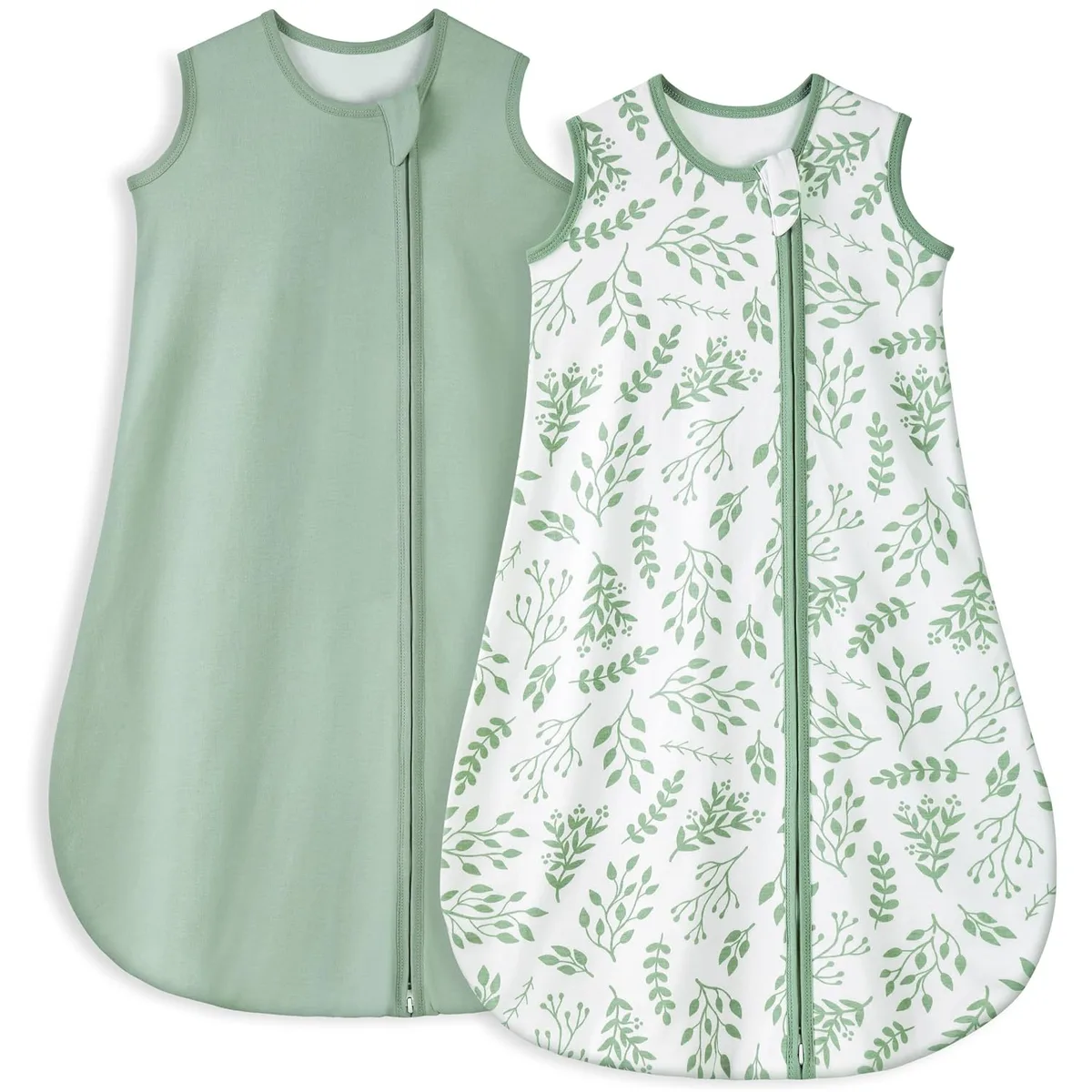
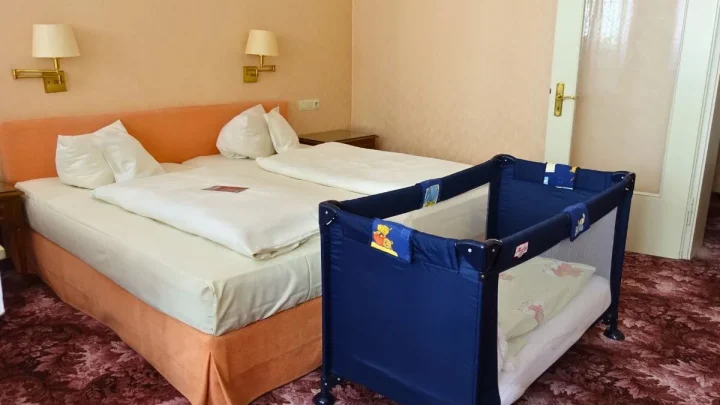
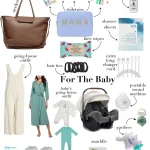
Image source: Web (Bing) / amazon.com (Web image (fair-use with source credit))
Keep at grandma's (if visits are regular):
- Certified play yard or portable crib
- Two fitted sheets sized for that mattress
- A sleep sack in the current season's tog rating
- Portable white noise machine
- Room thermometer
- Blackout curtains or clip-on shades
Always pack from home:
- Sleep sack and pajamas sized for your baby right now
- Any familiar comfort item (kept out of the crib until age one)
- Your monitor if theirs doesn't reach
As of 2026, a basic play yard that meets ASTM F406 runs roughly $70 to $120, and a wearable sleep sack costs $20 to $35. That's the whole investment for a standing second setup. Compare that to buying or hauling gear every trip, and the math gets obvious fast.
For travel-specific runs like the holidays, a collapsible travel bassinet certified under ASTM F406 makes sense. But it's the weaker option for standing arrangements, since babies outgrow most bassinets by 15 to 20 pounds.
The Conversation with Grandparents: Getting Everyone on the Same Page
Most sleep setups at grandma's fail on communication, not equipment. Grandparents do what they did with their own kids unless you tell them otherwise. So tell them, clearly and kindly, before the first visit.
Frame it as expert guidance, not criticism. Something like: "The recommendations changed since we were babies, and our pediatrician follows the current AAP rules." That removes the implication that their way was wrong.
Set these expectations explicitly:
- Back sleeping for every sleep, naps included. No exceptions for fussiness.
- Nothing goes in the crib except baby and a fitted sheet. No "just a small blanket."
- If she's drowsy, she goes in the crib. Nobody holds a sleeping baby on the couch or recliner.
- Wake you for night feeds. Grandparents shouldn't improvise overnight routines.
A one-page checklist taped inside the guest room closet works better than ten reminders by text. Aggregate feedback from parenting forums consistently shows grandparents follow written rules far more reliably than verbal ones.
If grandparents resist, make it non-negotiable: the baby sleeps safely or the visits shorten. The NIH's Safe to Sleep campaign offers free downloadable materials designed exactly for caregivers, and handing over an official sheet beats arguing from memory.
Common Mistakes That Undo a Perfect Setup
A flawless crib means nothing if the habits around it slip. These are the errors we see most often in real second-home situations.
- The "quick nap" transfer. Grandparent falls asleep holding baby on an armchair. This is the single riskiest scenario in the AAP guidance, riskier than almost any crib mistake.
- Layering up in winter. Radiator-heat rooms plus a fleece sleep sack equals overheating. Dress for 68 to 72°F, not for how cold the hallway feels.
- Swaddling a roller. Once baby can roll, swaddles stop. If grandma's stash includes swaddles, swap them for sleep sacks.
- Adding comforts "just this once." One stuffed animal becomes a pattern. The bare-crib rule has no trial period.
- Ignoring the trial nap. Skipping the day-one test run means discovering a broken monitor at 2 a.m.
- Assuming an older sibling's old gear is fine. Age matters more than condition. A 2005 crib that "looks great" still fails the standard.
The fix for nearly all of these is the same: walk the grandparents through the setup in person the first time. Ten minutes of hands-on demonstration prevents months of phone corrections.

Similar Posts