How to Handle Different Nap Schedules at Home and Daycare

Your baby naps like a champion at home, then comes home from daycare wrecked and wired. Sound familiar? Learning how to manage different nap patterns between home and daycare comes down to three things: knowing the daycare's actual schedule, protecting nighttime sleep, and accepting that home naps will look different for a while.
Here's the reassuring part: most kids adapt within 2 to 6 weeks, and the fix usually isn't a perfect schedule. Per American Academy of Pediatrics guidance, toddlers ages 1 to 2 need 11 to 14 hours of total sleep per day, and daycare naps count toward that total. What matters is how you compensate at home.
Let's figure out what's actually going wrong first.

Image source: Bing (Web (fair-use with source credit))
Quick Answer
Managing different nap patterns between home and daycare starts with matching your home schedule to the daycare's clock. Ask for their nap times in writing. Shift bedtime earlier on daycare days to cover short naps.
Keep weekend wake times within an hour of weekday routines. Most children adjust within 2 to 6 weeks.
Why Your Baby Naps Fine at Home but Falls Apart at Daycare
Daycare is a completely different sleep environment, and that's the root of the problem. At home, you control the room: blackout curtains, white noise, a quiet crib. At daycare, your child sleeps in a room with 8 to 12 other kids, fluorescent-adjacent lighting, and constant background noise.
Then there's timing. Most daycare centers run one group nap window, typically 12:00 to 2:30 pm, because teachers need all kids down at once. If your 7-month-old naturally naps at 9:00 and 1:00, that structure clashes with their wake windows.
Sleep pressure is the third piece. A short 40-minute daycare nap doesn't build enough sleep pressure to last until your usual 7:00 bedtime. That's why you get the evening meltdown, the bedtime battle, and the 5:00 am wake-up.
None of it means you're doing anything wrong. It means the two environments don't match, and your job is to bridge the gap.
What's Actually Different About Daycare Sleep (Timing, Environment, and Sleep Pressure)
Before you fix anything, know exactly which levers differ between the two settings. There are three, and each one needs a different response.
| Factor | Home | Typical Daycare |
|---|---|---|
| Nap timing | Flexible, follows your child's cues | Fixed group window, usually 12:00–2:30 pm |
| Environment | Dark, quiet, crib in own room | Shared room, ambient noise, cots or mats |
| Nap duration | Full 60–90 minute cycles | Often capped at 30–60 minutes |
Timing is the hardest to change. Teachers can't hold one baby's nap back or stretch another's forward without disrupting the whole room. Environment works both ways: some kids actually sleep better with daycare's background hum, and others can't settle without their sleep sack or white noise.
Sleep pressure is the one you can influence most. If daycare delivers less daytime sleep than home did, your child carries a sleep debt into the evening. You can't control the daycare room, but you can control bedtime and weekends.
That's where the strategy lives.
Step 1: Diagnose Your Nap Mismatch Type
The right fix depends on which mismatch you have. Get the daycare's nap log for a week, then compare it to home. You'll land in one of three buckets.
- Timing mismatch: Daycare's nap window sits far outside your child's natural rhythm. If your 6-month-old naps at 9:00 and 1:00 at home but daycare starts at 12:15, that's a timing problem.
- Duration mismatch: Naps happen at the right time but run short, usually 30 to 45 minutes. New environments make it hard to link sleep cycles, so this is extremely common in the first month.
- Environment mismatch: Your child refuses sleep entirely at daycare, or only naps with teacher holding. This one shows up most in infants under 10 months and kids with strong separation anxiety.
Here's the if/then logic. If naps are short but the timing is fine, you compensate with bedtime and let adaptation do its work. If timing is the issue, you gradually shift the home schedule toward daycare's clock over 1 to 2 weeks.
If it's environment, you focus on comfort objects and teacher routines instead of the schedule. Most families deal with a blend, so prioritize in this order: timing first, environment second, duration last.
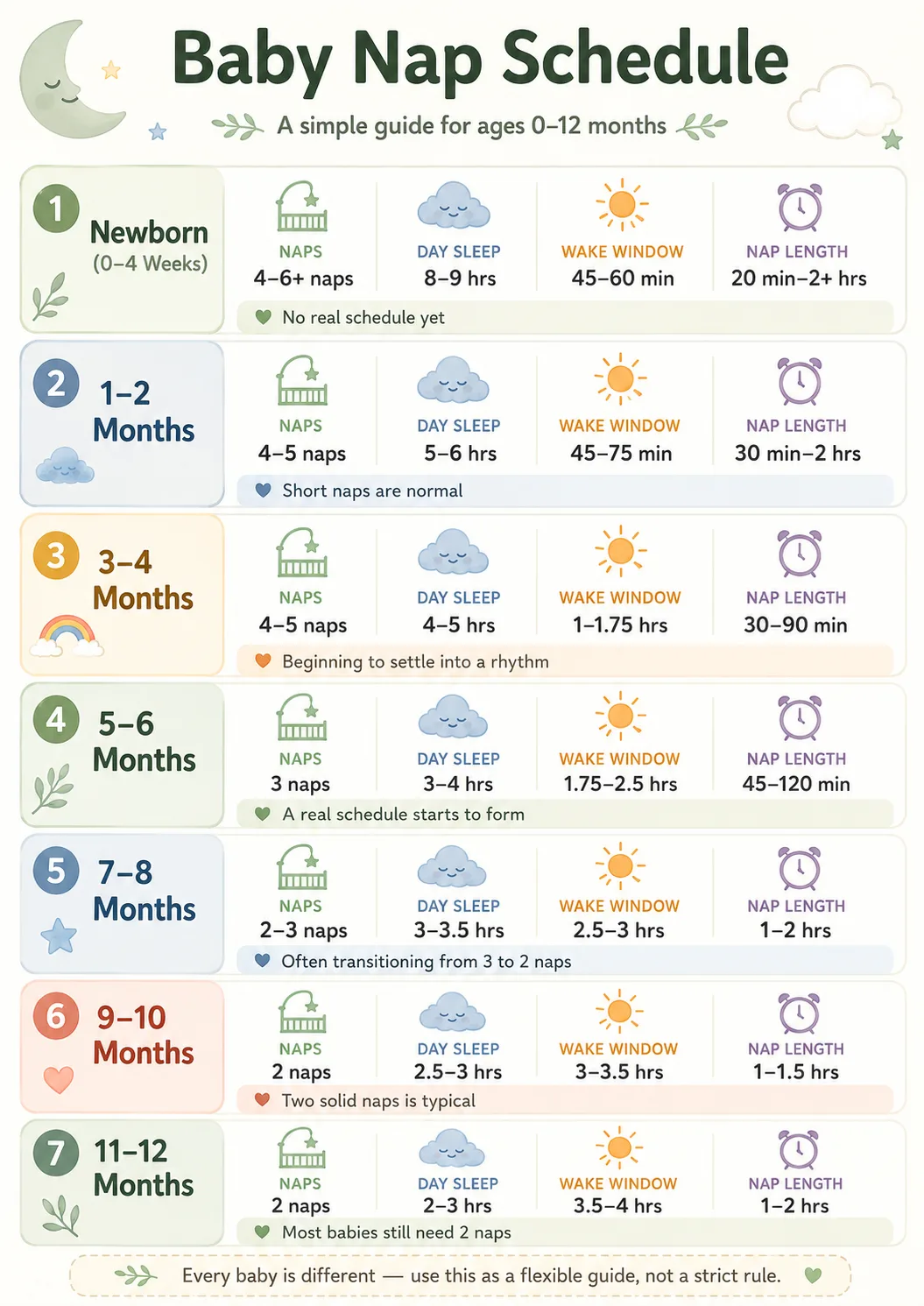
Your Action Plan Based on Your Child's Age and Schedule
Age changes everything here, so find your bracket and follow it.
4 to 12 months. Your baby likely needs 2 to 3 naps, but most infant rooms consolidate to one midday nap by around 12 months. If daycare only offers one nap and your baby needs two, then bedtime needs to move earlier, often to 6:00 or 6:30 pm. Yes, that's early.
It's temporary. Per CDC sleep guidance, babies this age need 12 to 16 total hours daily, so an earlier bedtime protects the overnight piece.
12 to 24 months. This is the collision zone. Most toddlers transition from 2 naps to 1 between 13 and 18 months, and daycare's fixed 12:30 nap often forces that transition earlier than home would. If your toddler still takes two naps at home on weekends, expect Monday roughness.
The cleanest path is moving to a single nap at home too, starting around 12:00 to 12:30 to match the center.
24 months and up. Preschoolers usually run one nap, so timing matches more easily. The common problem flips: your child fights the group nap because they'd rather skip it, then crashes at 5:00 pm. If daycare requires quiet rest time but your child won't sleep, cap the damage.
Ask that the nap not run past 2:30, and hold bedtime at a consistent 7:30 to 8:00.
How to Fix Bedtime When Daycare Naps Are Short or Late
Bedtime is your compensation lever, and it's the most powerful tool you have. The math is simple: subtract lost nap minutes from your usual last wake window.
Say your 15-month-old normally sleeps 7:00 pm to 6:30 am with a 2-hour nap. Daycare delivers 45 minutes instead. That's 75 lost minutes of daytime sleep, so bedtime moves to roughly 6:00 pm on daycare days.
Ignore anyone who says an early bedtime will cause an early wake-up. Overtiredness does that, not a well-timed 6:00 bedtime. Sleep research consistently shows early bedtimes extend night sleep rather than shorten it.

Watch for the overtired trap signs: hyperactivity at 6:00 pm, fighting sleep despite clear yawns, and early morning wakings. Those all mean you shifted bedtime too late, not too early. Move it 15 minutes earlier and reassess for three nights.
Keep the routine identical on daycare days and home days. Same three or four steps, same order, same dim room. The routine is the signal that sleep is coming, and it matters more on hard days, not less.
Weekend Schedules: Protect Sleep Without Ruining Monday
Here's the trap most parents fall into. Saturday feels unscheduled, so the toddler sleeps in, takes a marathon 3-hour nap, and goes down late. Monday morning, daycare's 12:30 nap suddenly feels like nothing, and the whole week starts overtired.
The fix is simpler than a strict weekend lockdown. Keep wake-up time within an hour of weekday mornings, and let one nap day be flexible. If/then logic applies here: if your child's total weekend sleep runs close to weekday totals, then a looser schedule won't hurt.
If they're banking 3-hour weekend naps after a week of 45-minute daycare naps, you'll pay for it Monday.
One rule worth keeping regardless: don't let a weekend nap start after 3:00 pm for toddlers. Late naps push bedtime back, and bedtime drift is what breaks the week.
How to Work With Daycare Teachers (and What They Can Actually Change)
Teachers want your child to sleep. A rested kid is easier to manage than a cranky one, so approach this as teamwork, not a request list.
Start with the sleep log. Ask for nap start and end times daily for the first month, not just "he napped okay." Exact data shows you patterns you'd never spot otherwise.
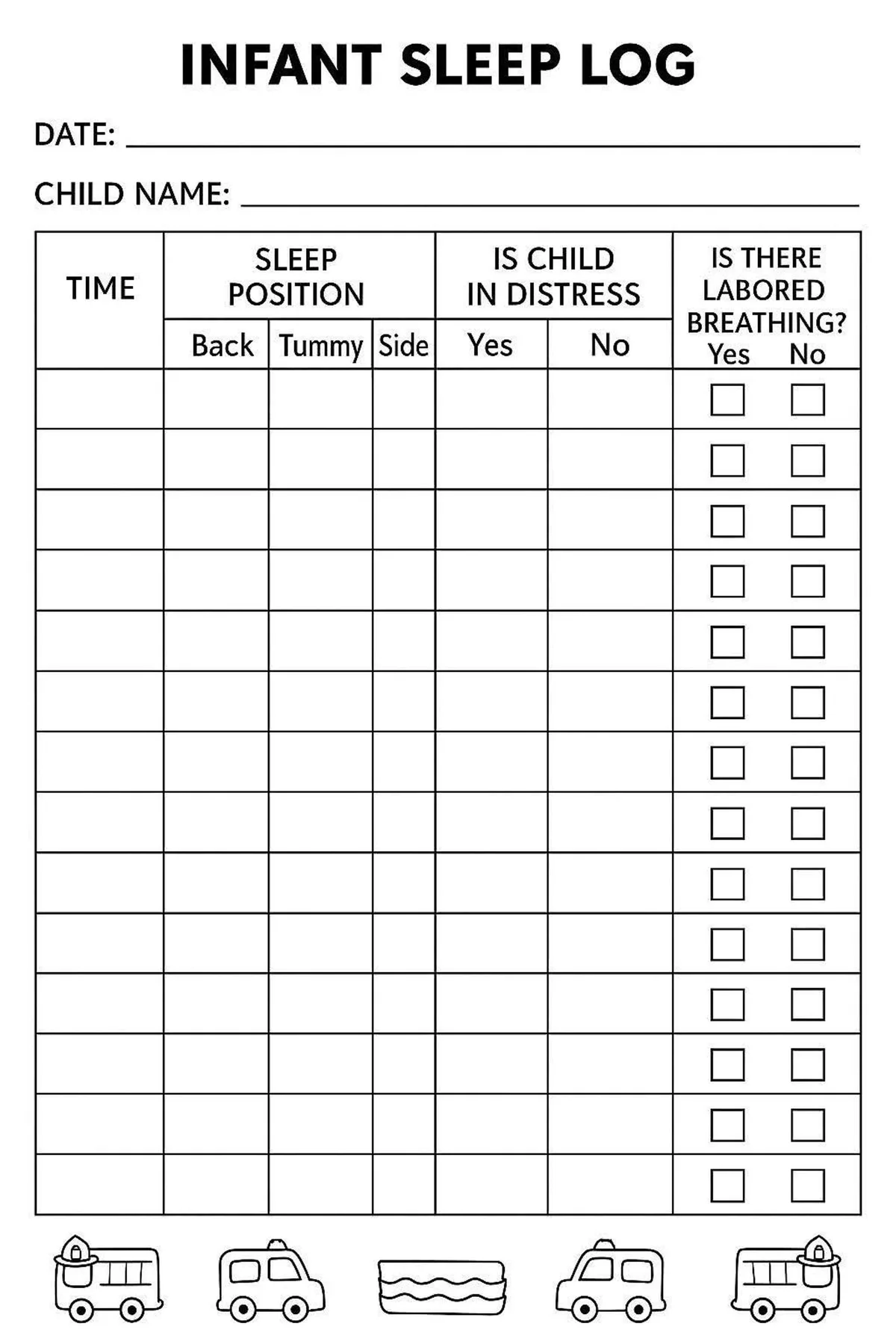
Then ask what's flexible. Many centers can accommodate the following:
- Placing your child's cot near a quieter corner or away from the door
- Using your sleep sack or comfort object from home
- Patting or shushing per your home routine (within licensing rules)
- Capping a late nap for toddlers who struggle at bedtime
What they usually can't change is the group nap window itself. State licensing rules often require a set rest period for the whole room, so don't burn goodwill asking for individual timing. Send your child fed, in comfortable clothes, with familiar sleep items.
Small things move the needle more than you'd expect.
Mistakes That Keep the Nap Struggle Going
These are the patterns we see over and over in parent reports and sleep research. All are fixable.
- Chasing perfect equality. Home and daycare naps don't need to match. They need to add up to enough total sleep.
- Shifting bedtime too late "to be safe." Overtiredness, not an early bedtime, causes night wakings and 5:00 am starts.
- Rescuing every short nap. If you rush in at the first peep, you teach cycle-breaking dependency. Wait 5 to 10 minutes unless there's real distress.
- Changing the schedule weekly. Kids need 3 to 5 consistent days to settle into any new rhythm. Constant tweaking resets the clock.
- Skipping the sleep log. Guessing at daycare naps means compensating wrong.
- Adding a car or stroller nap daily. Motion naps work, but they don't build the same sleep quality as a crib nap and they're not sustainable long-term.
If nothing improves after 6 consistent weeks, talk to your pediatrician. Persistent short naps past the adjustment window can point to reflux, apnea, or other medical issues worth ruling out. The CDC also lists red-flag sleep signs by age worth reviewing.
Nap Adjustment FAQs
How long does it take a baby to adjust to daycare naps?
Most children settle into daycare naps within 2 to 6 weeks. Infants under 10 months often take the full 6 weeks because of separation anxiety and the new environment. Track the sleep log weekly, and look for gradually lengthening naps as your progress marker.
Should I keep my baby's home nap schedule on weekends?
Partially. Keep wake-up time within an hour of weekdays, and hold the first nap near the daycare clock if your child is on one nap. Total sleep matters more than perfect timing.
Avoid weekend naps starting after 3:00 pm for toddlers, since they push bedtime late.
What if my toddler only naps 30 minutes at daycare?
Compensate with an earlier bedtime using the lost-minute math: subtract the missing nap time from the usual last wake window. A 30-minute nap instead of 2 hours means bedtime roughly 90 minutes earlier. Most toddlers lengthen daycare naps on their own within a month.
Can I ask daycare to change their nap schedule for my child?
You can ask, but most centers can't move the group nap window because state licensing requires a set rest period. What's usually flexible is placement in the room, comfort items from home, and how teachers respond at the start of the nap. Ask specifically about those.
Is it bad that my child sleeps more at daycare than at home?
It's fine as long as nighttime sleep holds. Some kids sleep better in the busy daycare room because the background noise masks startles. If night sleep stays consolidated and mood is good, total sleep is adequate.
Watch bedtime, then, not the daycare nap.
When should I worry about my child's daycare napping?
Give it 6 consistent weeks first. Then talk to your pediatrician if naps stay under 30 minutes, your child shows signs of sleep apnea like loud snoring, or nighttime sleep keeps fragmenting despite a good routine. Persistent struggles after the normal adjustment window deserve a medical look.

Similar Posts