How to Keep Bedtime on Track After a Busy Daycare Day

If you've ever picked your kid up at 5:45, raced through dinner, and then watched bedtime turn into a 90-minute standoff, you already know the problem. Figuring out how to maintain bedtime after a busy daycare day isn't about being stricter. It's about working with the sleep pressure your child built up (or burned off) that day.
Here's the reassuring part: the fix is mostly structural, not willpower. The American Academy of Sleep Medicine recommends 11 to 14 hours of total sleep for toddlers and 10 to 13 for preschoolers, and most daycare kids only get a fraction of that during the day. That math is what the rest of this article solves.
Why Bedtime Falls Apart After Daycare (and What's Really Going On)
The core issue is a compressed evening. By the time you get home, you might have 90 minutes to fit in dinner, a wind-down, and lights out. Something always gets squeezed.
There's a second layer most parents miss. Your child has been regulating their behavior all day in a stimulating environment with 15 other kids. Pediatric sleep researchers call the evening fallout "restraint collapse." The tantrum at bedtime isn't defiance.
It's release.
Add a long or late daycare nap into the mix and you've got competing forces. Too much daytime sleep lowers the sleep pressure your child needs to fall asleep at 7:30. Too little, and they're overtired, which triggers a stress response that keeps them wired.

The routine itself isn't usually broken. The conditions around it are. Once you diagnose which condition you're dealing with each night, the routine gets easy to hold.
Quick Answer: The 30-Minute Evening Framework That Works
Maintaining bedtime after daycare comes down to three moves. Anchor the routine to the same sequence every night, not the exact same clock time. Prep dinner and pajamas before pickup so nothing gets pushed later.
And adjust bedtime up or down based on the day's nap, within the 7:00 to 8:30 PM window most toddlers and preschoolers do best with.
Your Three Condition Variables: Nap, Pickup Time, and Overtiredness
Every daycare evening is different, and the right move changes with the day. Check these three variables before you lock in a bedtime.
- Nap length and end time. Ask daycare what time nap ended. A nap ending after 3:00 PM steals sleep pressure from bedtime.
- Pickup time. A 5:00 pickup gives you a full runway. A 6:00 pickup means you're working with 60 to 75 minutes.
- Overtiredness signs. Clinginess, giddy behavior, or melting down over small things all point to a second wind starting.
If Your Kid Napped Long at Daycare
If nap ran two hours and ended late, keep your normal bedtime. Don't push it back, even if your child seems energetic at 7:00. That energy is often deceptive, and a 30-minute later bedtime can create a stubborn 9:00 sleeper.
Stick to the sequence and trust the routine.
If Pickup Was Late or the Day Ran Long
If you didn't walk in the door until 6:15, compress, don't skip. A 15-minute routine (pajamas, one book, a snuggle) beats no routine. Consistency of sequence matters more than length.
Kids read the pattern, not the runtime.
If You're Dealing with a Second Wind
If your child is bouncing off the walls at 7:00, that's the overtiredness second wind. The body releases cortisol to fight fatigue. The counterintuitive fix is an earlier bedtime, not a later one.
Aim for lights out within the next 15 minutes, with lights already dimmed house-wide.

Here's a quick reference for the three scenarios:
| Condition | Best bedtime move | Biggest risk |
|---|---|---|
| Long, late daycare nap | Keep normal bedtime | Pushing it later on a "wired" kid |
| Late pickup | Compress the routine | Skipping steps and losing the pattern |
| Second wind | Move bedtime 15–30 min earlier | Waiting for the child to "calm down" |
The Step-by-Step Bedtime Workflow, From Car Door to Lights Out
The routine starts before you pull out of the daycare parking lot. Here's the sequence that holds up on busy nights.
- Decompress in the car (10, 15 min). No screens, calm music, low-key chatting. Screens during the drive reset the nervous system and sabotage the wind-down you're about to ask for.
- Arrival buffer (10 min). Unstructured calm time. Puzzles, coloring, or just puttering. No roughhousing, no errands, no "quick" stops on the way home.
- Dinner, early and light if needed. If your pickup runs late, serve a protein snack in the car or right at arrival so dinner doesn't push bedtime past 8:30.
- Bath or wipe-down. A warm bath about an hour before bed nudges the body's temperature drop that signals sleep. On rushed nights, even a warm washcloth works.
- Dim the house. Overhead lights off, lamps on. Light suppresses melatonin, and a bright kitchen reads as "daytime" to a tired brain.
- Same sequence, same spot. Pajamas, teeth, one or two books in the same chair every night. Predictability is the whole point.
- One reconnection moment. Sixty seconds of talking about their day or a specific snuggle. This is what fills the cup that makes kids stop stalling.
- Same goodbye phrase, lights out. Leave before they're fully asleep. Kids who fall asleep with a parent present wake looking for that condition again at 2 AM.

Prep is what makes this repeatable. Pack the daycare bag the night before, lay out pajamas with the morning clothes, and have a rotation of two easy dinners. Per CDC guidance on children's sleep, consistent routines are one of the strongest predictors of healthy sleep duration in young kids.
Mistakes That Sabotage Even a Good Routine
Most bedtime failures come from a handful of predictable errors. We see these over and over in parent surveys and sleep clinic case reports.
- Pushing bedtime later on an overtired kid. It feels logical. It backfires almost every time, because the second wind is already running.
- Letting the car nap happen. If your child falls asleep at 5:30 for 20 minutes, you've reset their sleep clock. Keep them awake on short drives home, even if it's an unpleasant conversation.
- Guilt-driven routine stretching. "Just one more book, one more hug, one more song." Extra connection is great. Extra negotiation teaches stalling.
- Weekend drift. A 7:30 weekday bedtime with a 9:30 weekend bedtime creates social jetlag, and Monday's daycare drop-off shows it.
- Screen time on the drive home. This is the most common one. A 20-minute show feels like a decompressor. It does the opposite.
- Inconsistency between parents. If one parent holds the line and the other negotiates, the routine splits into two different bedtimes.
One honest caveat: some stalling is just being three. If the routine is consistent and your child still takes 45+ minutes to fall asleep most nights for weeks, it's worth a conversation with your pediatrician rather than another routine tweak.
What the Sleep Numbers Say (and When to Bend Them)
The benchmarks give you a target, not a rigid rule. Here's how the guidance breaks down by age, based on American Academy of Sleep Medicine consensus recommendations.
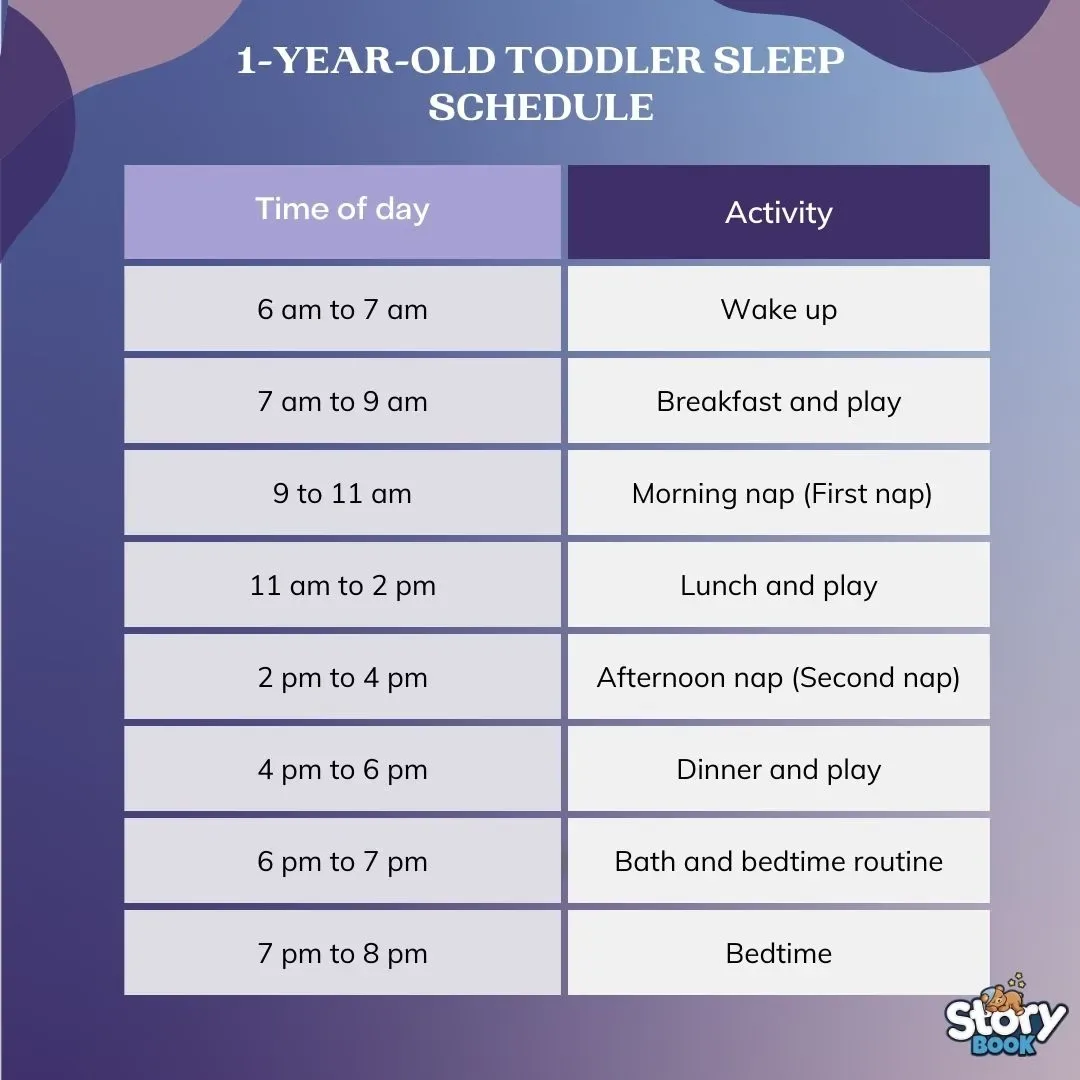
| Age | Total sleep per 24 hrs | Typical bedtime window | Nap status |
|---|---|---|---|
| 12–24 months | 11–14 hours | 7:00–8:00 PM | One midday nap |
| 2–3 years | 11–14 hours | 7:00–8:30 PM | Nap usually holding |
| 3–5 years | 10–13 hours | 7:30–8:30 PM | Nap fading or dropped |
Two numbers matter most for daycare parents. First, the nap cutoff: research on sleep timing consistently shows naps ending after mid-afternoon shrink nighttime sleep. If daycare reports nap ending at 3:30, ask whether they can wake your child earlier.
Second, sleep onset: a healthy sleeper drops off in 15 to 20 minutes. Taking an hour every night means bedtime is mistimed, not that your routine is broken.
When to bend the numbers? If your child sleeps 12 hours overnight and thrives on the low end of their range, don't force more. The ranges have flex built in.
What doesn't flex is consistency. The CDC's children's sleep guidance emphasizes regular bedtimes as a core habit for young kids, alongside duration targets.
Real Scenarios: Two Working Parents, Two Very Different Evenings
Abstract advice is easier to trust when you see it applied. Here are two composite situations drawn from common patterns in parent sleep forums and clinic case reports.
Scenario one: the 6:00 pickup, napping toddler. Parents arrive home at 6:20. Daycare nap ended at 2:30, so sleep pressure is solid. Their move: protein snack at arrival, dinner at 6:35, routine starts 7:10, lights out 7:40.
Total routine time, 30 minutes. Sleep onset runs about 15 minutes. The whole evening works because nothing competes with the sequence.
Scenario two: the late pickup, dropped-nap preschooler. Pickup at 5:45 with a 40-minute commute. No nap means the child is running on fumes by 6:30. Screen time on the drive made things worse, so they cut it and switched to audiobooks.
Bedtime moved from 8:15 to 7:45, and the hour-long battle dropped to roughly 20 minutes.
The lesson across both cases isn't the specific times. It's that each family diagnosed their variables first, then adjusted one thing at a time. If you change the routine, the snack, and the bedtime all in one week, you'll never know what worked.
Frequently Asked Questions
What time should my toddler go to bed after daycare?
Most toddlers do best with lights out between 7:00 and 8:30 PM. If pickup was late or your child skipped their nap, shift bedtime earlier rather than later. Overtired kids fall asleep faster with an early bedtime, not a pushed-back one.
Should I wake my child from a daycare nap?
You can't control the daycare nap directly, but you can ask them to cap it. Most centers will wake a child after two hours or by mid-afternoon if you request it in writing. Ask what time nap actually ended rather than relying on the daily report sheet.
How long should a bedtime routine take on busy nights?
Aim for 20 to 30 minutes on normal nights. On late-pickup nights, a compressed 10 to 15 minute version (pajamas, one book, one snuggle) still works. The sequence matters more than the length, so never skip steps entirely.
Why does my kid melt down more at home than at daycare?
It's called restraint collapse. Your child spent all day holding it together in a stimulating group setting, and home is where they feel safe enough to release it. A calm arrival buffer and a predictable routine reduce it, but some of it is normal development.
Is it okay if bedtime slips an hour on weekends?
Keep weekend bedtimes within 30 to 60 minutes of the weekday time. Larger drift creates social jetlag, which shows up as rough Monday mornings and harder daycare drop-offs. A flexible weekend bedtime is fine; a different sleep schedule is not.
When should I worry about my child's sleep?
If your child consistently takes more than 45 minutes to fall asleep, snores loudly, or wakes multiple times nightly for weeks, talk to your pediatrician. Persistent sleep problems deserve a medical look rather than another routine adjustment, especially before considering any supplement like melatonin.

Similar Posts